

VTDigger posts regular coronavirus updates on this page. You can also subscribe here for daily coronavirus news. Please send your Covid-19 questions to coronavirus@vtdigger.org
The Scott administration on Monday laid out a plan to close a nearly $200 million hole in this year’s state budget caused by the coronavirus crisis.
The budget adjustment proposal uses excess Medicaid dollars, additional revenue from alcohol sales, and reserve funds to balance this year’s budget, which ends June 30.
The state general fund is expected to lose $48 million in revenue this year because of the economic toll wrought by the pandemic.
The governor is proposing to use Medicaid dollars to close the gap. A Covid-19 aid package signed by President Donald Trump in March gave the state an additional $40 million in Medicaid funding.
The administration is proposing to use $38 million of that and an additional $8.7 million in Medicaid funding unspent this year to replace lost revenues.
The leftover Medicaid dollars are the result of fewer people seeking treatment, according to Adam Greshin, the finance commissioner.
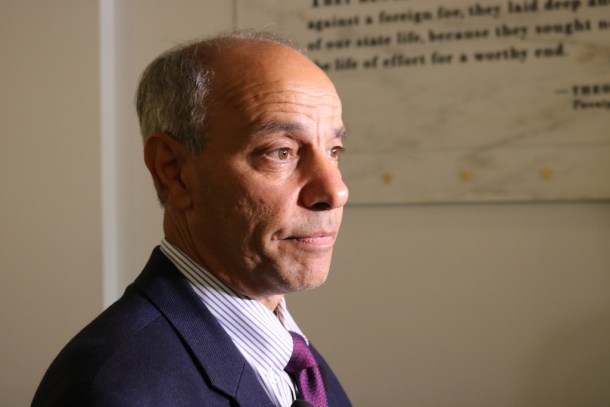
“Here we are taking advantage of kind of a bizarre side effect of the Covid-19 crisis,” Greshin told the House Appropriations Committee.
“And that is despite the fact that we’re in a full blown health care crisis, the usage of health care you might say is down sharply,” he said.
Greshin also said “for better or worse,” tax receipts from liquor sales during the Covid-19 crisis were up by $4.6 million.
Most of the governor’s budget adjustment — $138 million — will come from general fund reserves.
The proposal is to replace those funds at the start of the next fiscal year when individuals and businesses are expected to pay $142 million in taxes on the new July 15 deadline. Several tax deadlines were pushed back during the pandemic.
The general fund has $224 million in reserve.
The ratings agency Moody’s Analytics recently reported that Vermont is better positioned to weather the Covid-19 crisis than other states because of the reserves accumulated over the past decade.
The budget adjustment proposed by the governor does not reduce spending for departments and agencies. With very little time left in the current fiscal year, it wouldn’t be possible, or make sense to cut spending, officials said.
Rep. Kitty Toll, D-Danville, the chair of the House Appropriations Committee, said cuts wouldn’t produce any savings so late in the fiscal year, which ends June 30.
“We’re so late in the year right now with the budget adjustment,” Toll said.
“To make big changes, to try to put them into effect with two weeks left at the end after the signature might be difficult to do.”
Next year’s revenue picture looks even worse, with the latest projections showing losses are expected to triple.
“We’ve tried to close the books on this year and we’re well aware that there will be some challenges awaiting us in the FY21 budget,” Greshin said.
“So we thought we would kind of take it light this year.”
Since March, the state has paid out $40 million to cover the cost of its Covid-19 response so far, according to a breakdown by the administration.
Most of that spending will be covered by the $1.25 billion the federal government provided Vermont in the CARES Act to pay for expenses incurred by Covid-19.
In addition to the general fund, the education and transportation funds are also projected to see deficits by the end of the fiscal year. Fiscal analysts anticipate the education fund will see a $54 million hole and the transportation fund will face a $44 million budget gap.
Greshin said that these deficits will be tackled in separate pieces of legislation in the coming weeks.
Get the latest statistics and live updates on our coronavirus page.
Sign up for our coronavirus email list.
Tell us your story or give feedback at coronavirus@vtdigger.org.
Support our nonprofit journalism with a donation.

