Aunt Sadie’s Candles typically manufactures between 400 and 600 candles a day this time of year, said Gary Briggs, co-owner of the artisan shop in Lunenburg.
But only 150 have been made in the past week — all by Briggs, the only member of the six-person team at the company who is still working.
The Essex County candle manufacturer belongs to the Northeast Kingdom’s creative economy, an umbrella term for jobs and sectors that market in arts, culture, crafted goods and more. Creative industries are significantly more concentrated in the region than they are nationwide, according to one report, and Kingdom leaders believe that can draw tourists and grow wealth.
But the Covid-19 crisis has cornered creative businesses like Briggs’ and others, according to Jody Fried, executive director of Catamount Arts in St. Johnsbury and chair of the Vermont Creative Network.
“We’re all in essentially the same place,” Fried said. “There’s very limited scope as to what you can do from a traditional model.”
Catamount, which organizes stage shows and performances throughout the Kingdom, closed its doors and furloughed staff in mid-March.
“The reality is, it’s kind of the perfect storm for us and other arts organizations,” Fried said. Both of his group’s main sources of income — ticket revenues and donations — have dried up.
The Catamount center has become a makeshift manufacturing plant for personal protective equipment for local health care workers, Fried said, with a 10-person crew running sewing machines.
Aunt Sadies’ Candles saw a 58% decline last month, Briggs said, compared to last year, and this month’s sales had fallen by 88% from 2019.
“With very little expectation of incoming orders in the next two weeks, I doubt we’ll recover very far from that number,” he said.
Last April, the manufacturer had wholesale orders from 51 stores across the country. So far, only eight retailers have ordered wholesale, he said.
“Ninety-nine percent of our customers remain closed,” he said. Only online companies that sell specialty items, like gift baskets, are ordering.
Retailers grow more skittish by the day, he said, and few of his customers have the online capacity to make up for lost sales. Back in March, several asked to postpone orders for months.
On the supply side, the wick company Briggs buys from has been closed for more than a month, and because Aunt Sadie’s isn’t getting any revenue, the business hasn’t been able to pay raw material invoices.
“We will run out of wax in about two weeks and won’t be able to make any candles at all to fulfill even the few orders we’re getting,” he said. “In order to get any more wax to make candles, we will have to pay our outstanding invoice. There’s just no money to do that.”
The same applies to scents: Briggs said the company has little or no stock for some of its best-selling scents, so even if he had wax, he still wouldn’t be able to make those candles.
In March, Briggs said he planned to apply for several loans. As of last Friday, he had not heard whether Aunt Sadie’s had qualified for money from the $349 billion federal Paycheck Protection Program, which ran out of money last week.
“In all honesty, I doubt that we’ll ever see any money from any of these programs,” he said. He may decide to close the company through September.
Not every creative business in the Kingdom has been slammed during the pandemic.
Ellie Nina Roberts, working from home in West Glover, smiths metal jewelry from sterling silver and sometimes gold. Before the crisis, she mostly sold her designs in a few studios and businesses around the Kingdom.
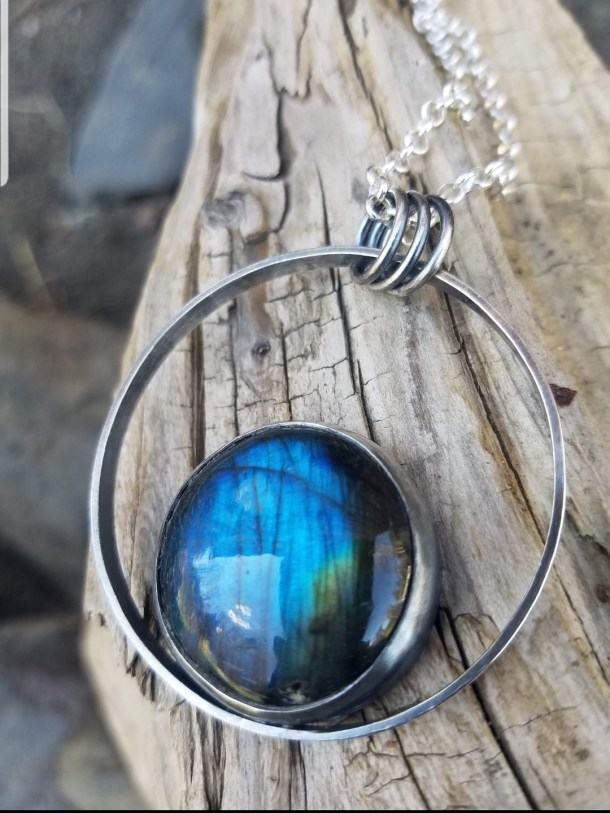
When those places closed, she started focusing on social media platforms and an online Etsy shop. She wasn’t sure how well jewelry would sell at a time like this.
“I’m really grateful to report that my Etsy sales have gone up 100%, both in and outside Vermont,” she said Tuesday. “Which really made me feel very supported as an artist with a community of customers.”
She attributed the increase to customers migrating online and the additional time she is putting into the craft.
Like Briggs, she’s also had concerns about material suppliers. Her solder source closed, so she had to find an alternative, she said. But most of her suppliers are working from home, and so she has had access to materials.
“The last 30 days have been more than comparable,” she said.
Fried, the Catamount Arts director, said his organization is looking to federal or state funding to survive.
The federal stimulus bill provided $75 million each of the National Endowment for the Arts and the National Endowment for the Humanities, as well as $25 million for the John F. Kennedy Center for the Performing Arts and $7.5 million for the Smithsonian Institution.
But Fried believes that “by the time they get to individual artists and individual arts organizations, it’s going to be tiny amounts of money.”
He pointed to Germany, which dedicated more than $50 billion in aid to the creative sector, and wants to see similar efforts in the United States.
“On the backside, as we start to ease up and move out of the crisis response … arts and culture are going to be a huge part of the economy,” he said. “They are essential for people’s well-being and for celebrating and having a sense of place.”
He says the arts give people a way to connect and express themselves emotionally.
“There’s a lot of isolation and loneliness that’s right now really prevalent,” Fried said. “There’s lots of anxiety and trauma, especially as people are seeing loved ones and friends who are being affected.”