


VTDigger is posting regular updates on the coronavirus in Vermont on this page. You can also subscribe here for regular email updates on the coronavirus. If you have any questions, thoughts or updates on how Vermont is responding to Covid-19, contact us at coronavirus@vtdigger.org
As Vermont’s largest hospitals prepare for a potential coronavirus surge, their smaller counterparts are toiling to simply survive.
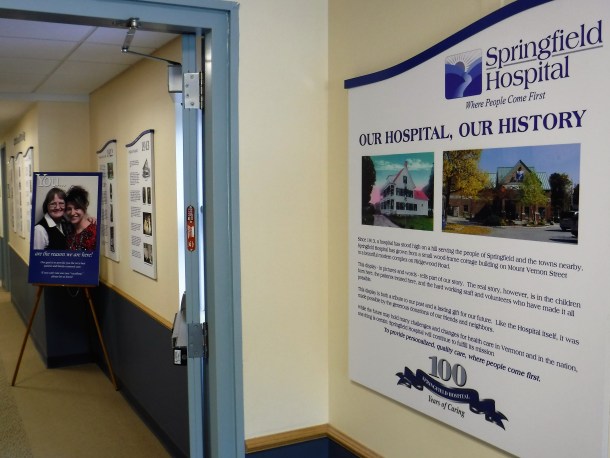
The 25-bed Springfield Hospital, just saved in bankruptcy court by a $1.3 million emergency state loan, is one of many local health care providers straining to stay solvent amid the coronavirus crisis.
“The financial piece of this is daunting,” Springfield interim CEO Michael Halstead says. “We were struggling before, without any cash reserves. Now we’re going pay period by pay period.”
Springfield is one of half of Vermont’s 14 hospitals to lose money in the last fiscal year and one of six to do so for three or more consecutive annual budgets.
Before Covid-19, health care providers were challenged by the state’s aging population, rising costs and the fact public insurance used by many patients pays less than private insurance.
The pandemic since has forced the postponement of profitable elective procedures that is costing Vermont hospitals a collective $115 million a month, according to state estimates.
“There is concern,” Alena Berube has informed her colleagues with the state’s Green Mountain Care Board, “that these additional pressures may put some of our hospitals and other providers over the edge, compromising access to care during a critical time.”
Smaller hospitals are particularly susceptible.
“Our hospital’s daily census and revenue are about half of what we’d expect them to be,” says Doug DiVello, president of the 19-bed Grace Cottage Hospital in Townshend. “Unfortunately we’re not able to lower our expenses by the same amount.”
Grace Cottage doesn’t have an operating room or intensive care unit, but instead serves as a rural outpost for emergency, primary and preventative care and rehabilitation as well as the only pharmacy in a 20-mile radius.
Larger hospitals in nearby Bennington, Brattleboro and Rutland have furloughed about 10% of their staffs to compensate for revenue cuts. But Grace Cottage, which faces the challenge of finding professionals willing to work in a smaller setting, is aiming to keep all 200 employees on its payroll.
“These are the people we depend on to be on the frontline in good times and bad,” DiVello says. “We’re finding ways to bring in financial support and keep everyone working.”
Grace Cottage so far is supplementing its $22 million annual budget with $300,000 in community contributions raised in the past month as well as $663,000 in federal Coronavirus Aid, Relief and Economic Security Act money.
For its part, Springfield just hammered out an agreement with the state Agency of Human Services to borrow $1.3 million.
“The debtor has demonstrated a need for emergency approval,” read papers submitted by both parties in U.S. Bankruptcy Court in Rutland. “Absent a new source of post-petition credit provided by the state, the debtor will not have adequate unrestricted cash to fund its upcoming payroll cycle and pay other necessary operating expenses.”
Springfield faced some $20 million in debt when it filed for Chapter 11 bankruptcy protection in June.
“We reduced our expenses and were doing very well,” says Halstead, who became interim CEO last year. “Then this happened.”
Since the pandemic, Springfield has laid off two of its 400 employees and asked 30 to reduce their hours. Even so, it expects to lose $6 million of annual projected revenue of $50 million if the current situation continues through May.
Springfield figures the emergency state loan will give it enough money to pay bills for about a month. But it has yet to receive any federal CARES Act funding and doesn’t qualify for the government’s new Paycheck Protection Program because of its bankruptcy status.
“If we can’t access funds to help us through this,” Halstead says, “that casts our fate.”
Nearby Mt. Ascutney Hospital, with 25 inpatient and 10 acute rehabilitation beds, also is facing a financial crunch. But unlike Grace Cottage and Springfield, the 400-worker facility is affiliated with a larger provider: Dartmouth-Hitchcock Medical Center, which has sent many of its post-acute patients to Windsor to keep its New Hampshire campus open for people with coronavirus.
“Our revenue has plummeted — we’re looking at a 40 to 50 percent cut,” Mt. Ascutney CEO and chief medical officer Joseph Perras says. “But we have not had to furlough employees at this time. Because we’re part of a larger system, we’ve got some backstopping.”
Although Vermont government has pushed local schools to consolidate to save money, the state wants all 14 of its hospitals open and available for emergencies such as the current pandemic.
“Today, the most important objective for our state is to meet the health care needs of our residents and to ensure capacity to provide quality care for all persons,” state officials have written federal colleagues in a plea for assistance.
But local health care providers say that’s only possible if they can survive long-term.
“We were in critical condition before this, and now we have a spotlight on us,” Grace Cottage spokeswoman Andrea Seaton says. “The shortfall in revenues and increase in expenses has been very challenging. This is the time that small rural hospitals need to put out a clarion call. We have to be really vocal and get the message out.”
