


Gov. Phil Scott vetoed legislation Monday that would raise Vermont’s minimum wage to $12.55 by 2022.
“Despite S.23’s good intentions, the reality is there are too many unintended consequences and we cannot grow the economy or make Vermont more affordable by arbitrarily forcing wage increases,” Scott wrote in his veto message. “I believe this legislation would end up hurting the very people it aims to help.”
The governor listed a variety of concerns about the adverse impact he believes an increased minimum wage would have on the state’s economy, from job losses to a higher cost of goods and services. He cited his particular concern for rural parts of the state.
“From workforce declines to overall economic recovery – or lack thereof – most of the state has simply not kept pace with Northwestern Vermont, particularly Chittenden County,” he said. “A statewide mandated wage increase would exacerbate this regional economic inequity.”
Senate leader Tim Ashe released a statement slamming the veto shortly after Scott’s message Monday evening. He said that for Vermonters working full-time at the current minimum wage, the veto “just wiped out nearly $5000 of income.”
“The governor’s veto signals that his use of the word ‘affordable’; has no meaning, most certainly not to the tens of thousands who will struggle to get by as a result of this action,” Ashe said in the statement.
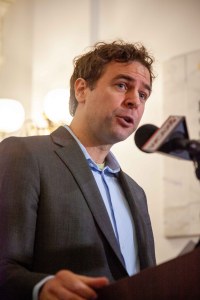
“Some will be tempted to view this in terms of a disagreement between the Legislature and the governor. Make no mistake, this is a battle between the governor and the tens of thousands of Vermonters who don’t seem to fit into his hollow affordability slogan,” he added.
The bill, S.23, was passed in January by both legislative chambers. It represents a compromise between House and Senate lawmakers. Last session, Senate Democrats wanted to raise the minimum wage to $15 within five years. But due to resistance in the House, legislators settled on the $1.59 raise over two years. The current minimum wage is $10.96.
But the governor said at a press conference in late January he still wasn’t on board, because the compromise still had the “same trajectory” as the bill he vetoed in 2018, which would have raised the rate to $15 by 2024.
“It’s halfway to what they want it to be,” he said at the press conference. “It’s the same trajectory, it’s the same thing, and next year I’m sure those same folks that say it’s a compromise are probably writing the bill right now.”
The bill passed with a veto-proof majority in the Senate — 23 in favor, six against. If lawmakers wanted to overturn the governor’s veto, the challenge would likely arise in the House where the bill passed seven votes short of a supermajority, 93-54.
Democrats are still reeling from a failed override vote on paid family leave.
Last week, a bill that would have given Vermonters paid time off benefits for parental and family medical leave funded by a payroll tax, failed a veto override by a painstaking margin: one vote.
Sen. Michael Sirotkin, D-Chittenden, indicated in a statement Monday night that lawmakers may stage another override attempt on minimum wage.
“With strong majorities in both the public and the legislature, it is my belief that this will not be the final word on increasing the minimum wage this year,” he said.
