


ST. JOHNSBURY — Officials here will ask voters to join a communications union district on Town Meeting Day. The decision is a win for advocates who have been trying to woo the town’s approval since August.
Selectboard members OK’d the ballot item 3-1 at their Jan. 13 meeting. When residents gather on March 3, they’ll join more than two dozen other towns in the Northeast Kingdom voting on membership in proposed district, which aims to expand broadband internet access in the region.
Selectboard Chair Kevin Oddy, who voted yes, hopes residents know the project won’t yield immediate results.
“We think it’s probably a good idea,” Oddy said Tuesday. “It’s just, how is it going to be built out and when is it that we could reasonably expect to see that high-speed broadband?”
He said it’s important for organizers of the effort to make sure people know what they’re voting on.
Later Tuesday, advocates did just that.
“I do not want people to vote for this and feel like they were misled when they don’t get better internet service next year,” said Nicolas Anzalone at meeting that night on Eastern Avenue.
“It’s going to take awhile,” Anzalone told the seven residents in attendance. “This is an investment in infrastructure in our community.”
Anzalone has been working on the effort in St. Johnsbury alongside Evan Carlson of Lyndon, who has been spreading the word among Caledonia County towns.
Katherine Sims, director of the Northeast Kingdom Collaborative, has been doing the same in the region’s northern two counties, Essex and Orleans.
The three counties have some of the lowest availability of broadband internet in the state.
Essex has the lowest rate at 21.7%, according to data from 2018. Orleans has the third-lowest at 50.6%, and Caledonia has the fourth-lowest at 51.2%. Those access problems translate into barriers for businesses and retention of residents.
Since last summer, activists have been angling for a solution: a communications union district, which is a type of governmental body created in 2015 that allows municipalities to join together to provide broadband service.
Under state law, a district can obtain municipal bonds for broadband projects, without direct financial risk for member towns. At least two municipalities are needed to create a district, and advocates have been asking towns to place the proposition on their Town Meeting agendas. So far, local officials have been interested.
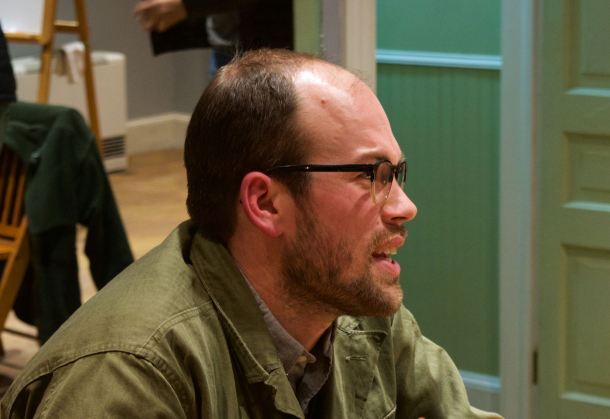
The attendees of Tuesday’s informational session were well acquainted with the region’s struggle.
“You look at other areas, and it’s like, ‘They’re killing it,’” resident Deborah Dolgin said. “And we’re still drowning.”
People at the meeting posed similar questions to those of the Selectboard in August, when Carlson and Rep. Scott Campbell, D-St. Johnsbury, pitched the project: Will a district replace current providers (no); is there a sense of the need in town (yes); what’s the risk level (“extremely low,” said Anzalone).
Oddy, the Selectboard chair, said part of his reasoning for voting to approve the ballot question was so that St. Johnsbury can have a voice in decision-making down the road.
“Unless you join the CUD, you don’t have a seat at the table,” he said, adding later, “In order to be a part of it, you pretty much have to vote for it.”
That echoed what organizers said Tuesday night.
“Even if St. Johnsbury said they weren’t going to join doesn’t mean they won’t necessarily get service eventually,” Anzalone said. “This is about helping to steer it — St. Johnsbury having a voice in what the plan is — that’s what this is about.”
