

BRATTLEBORO — Municipal leaders who’ve made headlines debating whether to sue local mom-and-pop pharmacies for helping to raise the town’s opioid-overdose rate to the highest in the state have dropped the idea.
“I think our local pharmacies are doing their due diligence, and I don’t have any evidence that they’re not,” Brattleboro Selectman Tim Wessel said Tuesday night as his board voted unanimously against the proposal.
Brattleboro sparked news this fall when, considering whether to join a growing roster of localities in a series of multi-district federal lawsuits, it talked of targeting small providers as well as national drug manufacturers and distributors and big-box chain pharmacies and benefit managers.
“I think it would be morally reprehensible to exclude any local pharmacies,” Wessel said at a board meeting last month. “Even though I am a huge fan of our local pharmacies and any pharmacy that operates as a family run business, I think we have to look at the entire picture. It’s a chain of links from the doctor to the pharmacy benefit managers to the pharmacies. All along the line, everyone’s role has to be examined.”
Bennington was the first Vermont town and St. Albans the first Green Mountain city to join national lawsuits on the issue, although neither has debated whether to include local druggists.
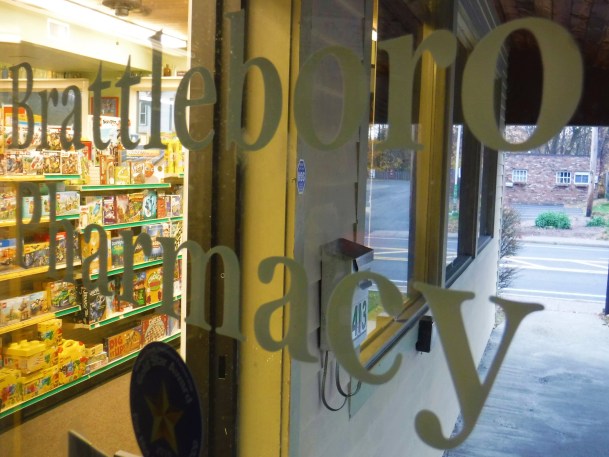
According to Brattleboro figures for the years 2006 to 2012, the town’s Rite Aid chain stores reported the most opioid dosage units in town at 2.7 million, with the locally owned Hotel Pharmacy second at 2.4 million, Walgreens third at 2 million and the locally owned Brattleboro Pharmacy fourth at 380,000 (the latter store’s lesser figure reflects the fact it opened in the fall of 2010).
Staffers at the town’s two locally owned pharmacies have blamed the problem on a “perfect storm” of the nation’s drugmakers introducing opioids at a time when authorities began to evaluate health care providers based on how well they managed patients’ pain, creating top-down pressure throughout the supply chain.
“All pharmacies and pharmacists have a legal responsibility when filling a prescription,” Brattleboro Pharmacy owner Andrew Miller wrote in a recent email to the Selectboard. “Who can explain specifically what the retail pharmacies are being charged with in this complaint, what they have done wrong and what role they have in the opioid crisis that they should be sued for?”
In response, the Selectboard said Tuesday it had information about national-chain pharmacies ignoring and violating laws that require they monitor and report suspicious orders. But the town can’t prove smaller stores did the same.
“We’ve taken preliminary measures to see what we can find out about the local pharmacies,” Selectwoman Elizabeth McLoughlin said Tuesday, “and at this time we have nothing to essentially charge them with.”
Added Selectman Daniel Quipp: “I don’t feel like I could stand up and talk to somebody who owned one of our local pharmacies and say, ‘This is why you have to be in this suit.’”
And Selectman David Schoales: “There’s no evidence of local culpability and there’s really no basis for us to put them through a legal process.”

Brattleboro isn’t the only Vermont locality struggling with addiction and aggravators such as poverty and mental illness. But the town, the first exit off Interstate 91 and the nearest to the New England heroin-route hubs of Holyoke, Massachusetts, and Hartford, Connecticut, has seen opiate use skyrocket from 20 overdoses in 2010 to a state high of upward of 100 and five resulting deaths this past year.
Brattleboro is taking its case to court in hopes of recovering municipal money spent on related police and public safety issues. In choosing to use the same legal team and terms as nearby Bennington, the town will forgo joining a related national lawsuit that automatically includes every community and county in the United States unless a locality opts out.
Brattleboro won’t have to invest any money and little time on the case, as lawyers will pay all court costs and receive 25% of any financial winnings.
Although local mom-and-pop pharmacies are off the lawsuit, they’re not necessarily off the hook.
“If somebody came up with hard evidence,” Selectboard Chairwoman Brandie Starr said, “we retain the right anytime to bring a pharmacy back into a suit.”
