

Angela Miller, the co-owner of Consider Bardwell Farm in West Pawlet, is still reeling emotionally from the blow of a huge cheese recall prompted by a positive listeria reading this fall.
But even as Consider Bardwell prepares to destroy $200,000 worth of its high-end goats’ and cows’ milk cheese, the business is stirring back to life.
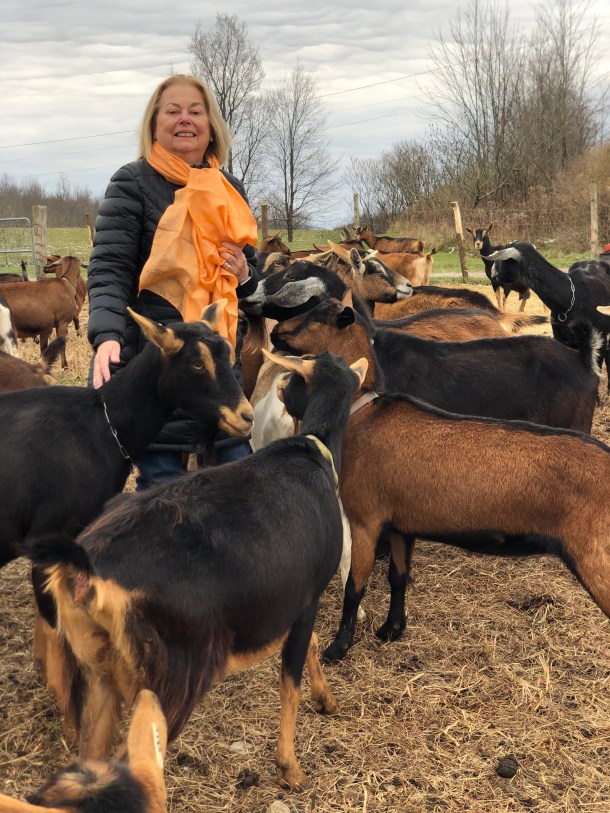
Potential investors have contacted Miller and husband Russell Glover about the farm, which occupies 300 acres in Vermont and New York. Vermont Farmstead, a Woodstock cheesemaker, has invited the pair to make cheese at their facility. Other goat farms have called offering to buy the herd. Miller hopes to get the money she needs to keep milking the farm’s 90 goats next spring, and she thinks she’ll have buyers for the milk.
And on Nov. 11, “a very top-notch, extremely prominent Vermont cheesemaker is coming to look at our facility about maybe leasing it for a while,” said Miller.
Things got very difficult at Consider Bardwell on Sept. 30 after the farm published an official notice that it had found listeria monocytogenes, a germ that can cause serious illness in pregnant women, newborns, older adults, and people with weakened immune systems, according to the Centers for Disease Control. The CDC said that about one in five people with the listeria infection die. When it occurs during pregnancy, it can lead to miscarriage, stillbirth, or newborn death.
The contamination was found through the farm’s routine testing and none of the contaminated cheese reached any market, said E.B. Flory, the dairy section chief at the state Agency of Agriculture, Food and Markets, on Oct. 7. Consider Bardwell had sold its raw cow and goat milk cheese through distributors at stores around the country, including Whole Foods, which issued its own recall notice for the company’s Dorset cheese in several stores.
On Oct. 24, the farm’s social media followers saw a notice from the company that it was no longer going to be selling its cheeses. Miller said Nov. 9 that an employee had published online a letter she’d written, without asking her. That prompted a flood of enquiries and testimonials from customers and other cheesemakers.
“That was my private letter to the wholesalers. I didn’t know it was going to be up there for the world to see,” said Miller, who had the letter taken down. She said she wouldn’t have made such a sweeping announcement to the public, and added that she is open to making cheese again. But she bears that employee no ill will.
“Everybody here was in a crazed state,” she said. “I have had employees here for 15 years who didn’t know if there was going to be a job for them.” She had to let those workers go; the only person employed there now is a farm manager who cares for the goats.
Miller said she and Glover are still picking up the pieces from the initial announcement.
“People brought me flowers, but it only made me cry,” she said. “I have been trying to get through the month with a clear brain.”
The recall has also been hard on the farms that supplied milk to Consider Bardwell. Next-door neighbor Wayward Goose Farm, Consider Bardwell’s primary cows’ milk supplier, hasn’t found a new market yet and is dumping milk, said Kate Turcotte, a former Consider Bardwell employee who now owns Orb Weaver, a tiny cheesemaker in New Haven. Wayward Goose, which milks fewer than 50 pastured cows, has started a GoFundMe campaign.
“They’ve been partners with Consider Bardwell for over 10 years,” said Turcotte, who is the former cheesemaker at Shelburne Farms and serves on the board of the Vermont Cheese Council. “They moved there to make milk for Consider Bardwell.”
But the pair are already talking once again about making goats’ milk cheese. They’re discussing a new partnership with Grafton Village Cheese, which – with Vermont Farmstead Cheese – had been buying Consider Bardwell’s goats’ milk for cheese. Grafton initially helped out by buying milk for a month to aid the two farms that had been relying on Consider Bardwell as their only customer, said Miller.
“I can’t say enough good about Grafton and how they came through for us and our farmers,” she said. “It was really a quite amazing loving experience.”
They’re also planning to wrangle with their insurance company, which so far has said the farm isn’t covered for the raw cows’ milk cheese.
“One of our financial advisors told us to do a little more investigating about that,” Miller said.
Consider Bardwell was buying a small amount of goat milk from a new farmer in New York State when the listeria discovery happened, said Miller.
“I think we found that was the root cause” of the positive test, she said.
Turcotte, who teaches food safety, said the Cheese Council feels Consider Bardwell handled the recall – the first of its type in the state in at least 35 years – with an excess of caution.
“Angela and Consider Bardwell did a really great job as far as their recall,” Turcotte said. “They were incredibly proactive and over-cautious starting from a month ago.”
Miller believes her farm will soon be making cheese again, although “I think I will choose on the side of super-safety and not make any raw milk washed-rind cheeses,” she said. “Washed-rind” is the term Miller used to describe the three soft cheeses that were recalled.
The Sept. 30 recall involved two raw-milk cheeses (the Slyboro goat cheese and Dorset cow cheese) and one cheese, Experience, made from pasteurized milk.
“Minimizing that risk would mean pasteurizing, and that’s what I would do if I ever decided to get back into the washed-rind cheeses,” Miller said.

