

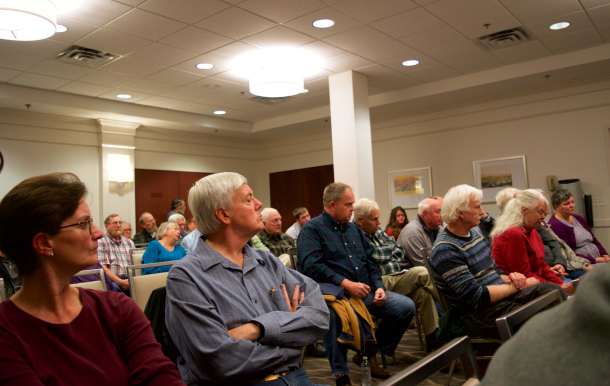
ST. JOHNSBURY — Candidates for the soon-to-be vacant Caledonia County state’s attorney position homed in on the intersection of addiction and crime during a local GOP meeting.
“In our community, a lot of our crimes are driven by addiction,” said Maria Byford, a Caledonia deputy state’s attorney. “It’s really hard to try to balance the need for rehabilitation with the need for a punitive sanction.”
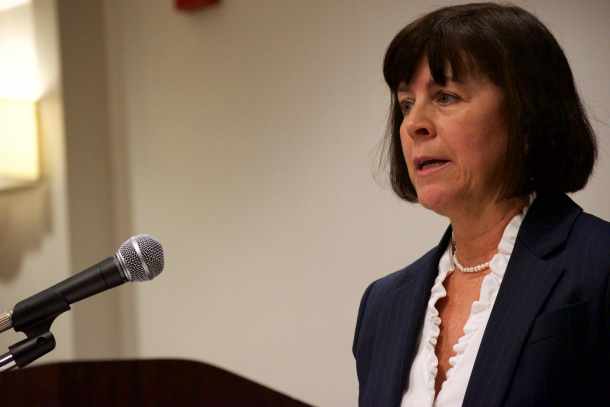
Byford and five other lawyers made their cases to the Caledonia County Republican Committee last Thursday that they’d be the best choice to replace outgoing State’s Attorney Lisa Warren.
Gov. Phil Scott tapped Warren in September to join the state’s trial court bench, and she is set to leave her role as prosecutor on Friday.
In turn, the governor’s office asked the local committee for a list of three candidates to replace Warren, county chair Rick Cochran said. The committee plans to vote on its choices Oct. 28.

Candidates speaking last week included Byford; Windsor deputy state’s attorney Glenn Barnes; St. Johnsbury private attorney Thomas Paul; former state legislator Janssen Willhoit; and Caledonia deputy state’s attorneys Kirk Williams and Jessica Zaleski.
During their speeches, several contenders focused on how drug abuse intertwines with crime.
“We have a problem in Vermont; we have a problem in Caledonia County,” said Zaleski, who the Caledonian Record reported has been appointed interim prosecutor.

“We have multigenerational criminal behavior and substance abuse,” Zaleski said. “We have an uphill battle keeping the people of this community feeling safe.”
Barnes said he’s built a reputation for exercising judgment in deciding how to address cases involving drug abuse.
“Understanding when an individual is perhaps an addict, in need of some support, some supervision, some treatment — knowing the difference is an important part of being a prosecutor,” Barnes said.
The tone appeared in line with Scott’s positions on addiction and crime.
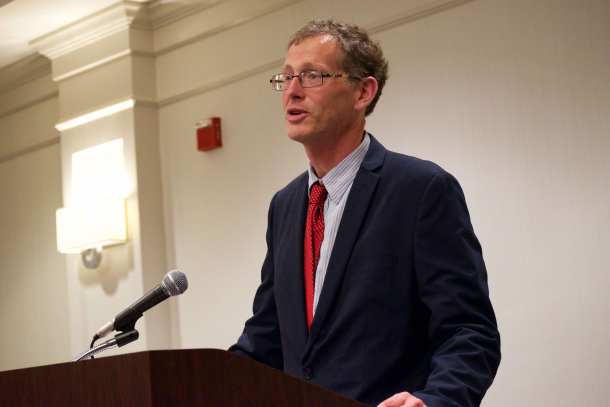
In answering a survey last fall from the American Civil Liberties Union of Vermont, Scott said that “in cases involving mental health and addiction, appropriate consideration should be given to diversion and treatment.”
At the same time, when answering a survey question about reducing incarceration for drug crimes, Scott said he supports crackdowns on drug dealers as a way to combat addiction.
Others in the Republican administration have taken more hardline positions on drug-related crime and moves to adopt a less-punitive approach to drug offenders. Tom Anderson, who left his job as Department of Public Safety commissioner over the summer, often clashed with Democratic legislators on drug reform.

State data on how many people are treated for substance-abuse disorders at state-funded treatment facilities is broken down by county — except for the Northeast Kingdom, whose three counties are grouped together.
The combined data shows the number of people treated for opiates in the region skyrocketed starting in 2011, going from 330 people that year to 975 in 2017, the most recent year available.
More than one candidate also prioritized crime prevention among youth.
Willhoit, who ran unsuccessfully for Vermont attorney general last year, said he would seek “ways to help those battling addiction and troubled backgrounds from entering a life of crime” if named.

He highlighted how he is the foster and adoptive father of children who came into state custody.
Zaleski, a former public defender, described juvenile cases as a way to stem crime.
“It’s in the venue of juvenile law that we can institute change early on, instead of seeing those kids later on as adults in criminal court,” she said.
Candidates praised Warren’s tenure a state’s attorney, and at the start of the meeting, Cochran handed her a plaque.

The meeting also saw elections for committee positions. Cochran survived a challenge to his seat by former county chair John Kascenska, winning 30-19 in a vote.
In some ways, the vote shored up support for President Donald Trump at the county level.
Last December, Cochran sent an email to party members warning of a revolt against party leaders who back Trump. He said moderates wanted Republicans in Vermont to distance themselves from the president.
Kascenska, meanwhile, offered criticisms of Trump’s rhetoric around the time of the 2016 election.
“Trump needs to keep himself in check,” he said at the time.
