

Gov. Phil Scott has appointed two prosecutors, one from the northern part of the state, the other from the southern section, to the state’s trial court bench.
Caledonia County State’s Attorney Lisa Warren of Waterford and Windham County Deputy State’s Attorney Kerry Ann McDonald-Cady of Dover, will fill two Superior Court vacancies in Vermont.
McDonald-Cady will fill a spot left open after Judge David Howard stepped down. Her assignment will be in the west region of the Superior Court system, mainly in Bennington and Rutland counties.
Warren takes a post in the Superior Court’s northern region, formerly held by Judge Dennis Pearson. That region primarily consists of the Northeast Kingdom and Washington County.
“Both of them have demonstrated integrity, commitment to justice, and bring valuable experience to the bench,” Scott said in a statement Monday announcing the appointments of Warren and McDonald-Cady.
“Public safety is a top responsibility of any government, and the judicial branch has an important role,” the governor added in the statement, “Lisa and Kerry both have a record of sound legal judgement to ensure justice, which protects the vulnerable and upholds public safety.”
Warren, a prosecutor since 2005, has been the Caledonia County state’s attorney since March 2009 following her appointment to the post by Gov. James Douglas. As the county’s top prosecutor, Warren oversees a wide range of cases, from homicides to appeals.
She has a bachelor’s degree from Boston College and clerked for the bar exam, becoming an attorney in 1995.
McDonald-Cady has been as a deputy state’s attorney in Windham County since 2010, where a primary focus has been the juvenile court docket, including representing the state in abuse and neglect of children cases.
McDonald-Cady has a bachelor’s degree from Binghamton University and a law degree from Vermont Law School.
Both Warren and McDonald-Cady worked in private practice prior to becoming prosecutors.
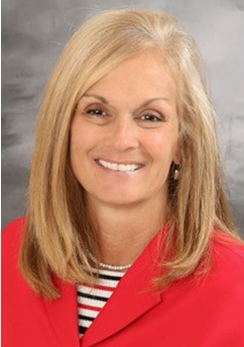
McDonald-Cady said Monday that while she has experience in both criminal and civil court matters, she also has several years of handling juvenile court cases.
“There are a lot of important decisions being made in difficult cases and that’s an area of expertise I have that I felt I could bring to the judiciary,” she said.
McDonald-Cady said that while all the cases she has litigated are unique, she has seen some general themes. “I think what stands out is just the great need for kids to be in safe communities and families really struggling to be able to do that,” she said.
Warren said Monday that she will miss her job as state’s attorney, but looked forward to her new post. “It seemed like a very interesting career path to try to become part of and to try and challenge myself,” she said of her decision to apply for a judicial post.
Vermont has a rotating bench, with Superior Court judges serving in criminal, civil and family courts. It has not yet been determined which specific court Warren or McDonald-Cady will preside in.
The appointments by the governor come after Seven Days reported earlier in the selection process his complaining about the small number and lack of diversity among five candidates forwarded to him for the two posts.
That prompted a reopening of the selection process by the nominating panel.
Under the state’s constitution, the Vermont Judicial Nominating Board, which is comprised of lawmakers, governor appointees, and legal professionals, screens applicants and submits a list of qualified people seeking the post. The names presented to the governor are kept confidential.
Scott then selectis from that list.
The initial list had five names, including one woman, and the second list forwarded to Scott by that board had six more names, four of whom were women, according to Rebecca Kelley, the governor’s spokesperson.
“The governor is always going to make a selection of who are the most well-qualified candidates, in this case that was two women,” Kelley said Monday, adding, “These two stood out as the top candidates.”
The salary for a state trial court judge position, which is set by statute, is $158,635.
