


[O]RLEANS — Chet Greenwood, the chief financial officer at the Ethan Allen furniture factory, thinks that it’s about time a Republican businessman run the country, and many of his neighbors agree with him.
“What Donald Trump means by ‘Make America Great Again’ is ‘Let’s Put Everybody Back to Work,’” Greenwood recently said in his Ethan Allen office, which sits adjacent to the rowdy factory floor.
“There’s 90 million people that stopped working in the last eight years, 90 million,” Greenwood continued. “Because they don’t have to work, there’s the gravy train. They get entitlements so they don’t have to work. And part of it is, there’s no work, so they just stop looking and they get used to not working. But people here want good jobs again.”
Greenwood’s 90 million figure, which includes retirees, high school students and people who have stopped looking for work, is exaggerated — the total number of unemployed workers is closer to 20 million. But his sentiments ring true for people in the Northeast Kingdom.
The Kingdom — a conservative, rural area on the Canadian border — is the poorest area of the state. It’s also got the highest unemployment rate — roughly 4.6 percent.
While Hillary Clinton won more total votes on Election Day in the three counties that comprise the Northeast Kingdom, Trump did significantly better here than he did statewide. He defeated Clinton handily in Essex County, 1,506 to 1,019, lost narrowly in Orleans, 5,185 to 5,159, and lost Caledonia County to Clinton by a margin of 6,445 to 5,534.
While Trump did not win a majority of votes in the Kingdom, he finished with 49.1 percent of the vote in the three counties, compared with 29.8 percent statewide, and in many towns he beat Clinton by double-digit margins.
VTDigger conducted interviews with more than a dozen Vermont Trump supporters around the Kingdom in the past week, who offered their own interpretations of what would “Make America Great Again.”
What emerged out of these conversation was a yearning for radical political change.
Kingdom voters overwhelmingly supported Obama in 2008 and 2012. Residents backed the president because he said he would renounce special interests and listen to the people. Many people in the Kingdom believe he didn’t make good on those promises.
Sanders — who campaigned for president promising a “political revolution” — has also been able to garner strong support up north. During the Vermont presidential primary, Sanders easily won Vermont, notching nearly 90 percent in many parts of the Kingdom.
Both Trump and Sanders supporters cast Democratic presidential candidate Hillary Clinton as an entrenched insider who spent too much time at fancy fundraisers in Manhattan.
While President Obama has ushered in economic improvements and more than 9.7 million jobs have been added since the 2008 recession, Trump supporters said economic improvements have not reached them.
Greenwood, who chairs the Orleans County Republican Committee, said local party meetings were galvanized by Trump. Twice as many people participated this year over 2012, when Mitt Romney was at the top of the ticket.
Trump promised to bring back jobs to rural white America and recruited supporters in Rust Belt states that have lost jobs as a result of globalization and automated manufacturing.
The Kingdom has not been immune to this trend.
Twelve years ago, Ethan Allen had more than 1,200 Vermont employees making the company’s high-quality tables, desks and chairs. But over the years, one of the Northeast Kingdom’s largest employers has shrunk.
Layoffs and furloughs have been frequent, and today the number of workers in Vermont at the two Ethan Allen plants in Orleans and Beecher Falls is roughly 400.
Some of the company’s jobs have moved overseas, and Greenwood said the reddish wooden Ethan Allen chairs we were sitting in were built abroad. (The long table we sat at was domestically produced.)
Greenwood is frustrated with government programs and regulations that he says stifle job growth.
More stringent environmental regulations set by the Environmental Protection Agency in 2012 are making it hard to do business, he said. The company, for example, this year was forced to purchase a new $250,000 monitoring system for the plant’s smokestacks.
“We have to spend more and more money every year just for regulations to upgrade this and upgrade that,” Greenwood said. “And I don’t see where it makes any difference to the environment. It’s like they are forcing you out of business by requiring all this.”
Greenwood, 72, said the cost of living was too high and that he keeps working partly because his Social Security paychecks are too small.
But he said Ethan Allen would struggle financially if the plant unionized and more comprehensive retirement and payment plans were instituted. A minimum wage hike would shut down the plant, he says. Greenwood argues more manufacturing jobs in the Kingdom would lift wages.
Greenwood said he was optimistic Trump would bring good jobs back to America by renegotiating the North American Free Trade Agreement. Asked if he felt frustrated by Trump’s own businesses tactics of manufacturing goods in foreign countries like China, Greenwood sighed. He said that’s how every company operates in today’s global marketplace and he doesn’t blame the businessman for following the trend.
“If you have an advantage to … make it overseas you are going to do that,” he said.

Ezra Townsend lives in a white house in Orleans overlooking the Ethan Allen plant. A “Trump-Pence” sign sits in his lawn.
Townsend, a gunsmith, ticked off a number of area businesses that have closed in recent years, including his former employer, Barton Motors. Townsend said while Ethan Allen is the economic heart of the town, it’s not operating at full capacity.
“Ethan Allen is slowly dying,” Townsend said. “Back in the the day, when the mill was really running, it was noisy and there was no parking anywhere. It was full. Full. Now there’s noise, but it’s tolerable.”
Townsend, 36, said his parents had faced less economic hardship than he does. He said his mother was a florist and his father taught high school.
“We used to go on a vacation each year, go to the ocean or down to another state to visit relatives,” Townsend said. “It never seemed that my parents were in the financial situation that I have now.”
“The money I make now, I get by,” Townsend said. “But as far as doing anything special — things that people take for granted like going out to eat or to movies or vacation — I can’t afford to do that. I can afford to take care of my family. But as far as a savings account, I have one, but there’s 2 cents available in it. I live paycheck to paycheck.”
Townsend earned an associate degree in automotive technology at Vermont Technical College, and he says he will make sure his two boys have access to college if they want to pursue higher education. He said that if he hadn’t earned his degree, he doesn’t know how he’d get by financially.
While he works six days a week, Townsend lives just above the poverty line.
“You get to a certain point where it makes no sense to work,” he said. “It’s either you work your butt off and barely scrape by or you can kind of manipulate the system and do nothing and be better off than the guy who works 40 or 50 hours a week. And that makes no sense to me.”
Townsend said that some of Trump’s rhetoric was troubling, and he says if U.S. Sen. Bernie Sanders had been the Democrat’s pick he may well have voted for him over Trump. Asked why Hillary Clinton was unacceptable, Townsend said that few politicians — including Clinton — had ever reached out to rural people.
“I feel that most everybody in the Kingdom – people who live here year-round – are on the lower income and we get forgotten about,” Townsend said. “It’s like, ‘We will deal with them later.’”
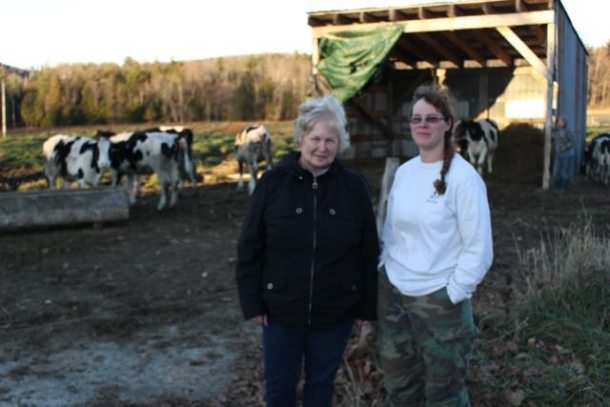
Another Trump stronghold in the Kingdom for Trump was Groton, a town with just one big dairy producer left — the Rusty Crown Farm.
Martha Crown, 70, said her family has worked the land for generations, but that today the farm is barely surviving.
She described a series of pressing financial problems, including two hay balers and three tractors in need of repair. She said that environmental regulations for spreading manure are costly to follow, and rule violations can result in thousands of dollars in fines. Grain is going up in price, and so are freight costs, Crown added.
Because of those costs and volatile milk prices, the Rusty Crown Farm is often unable to pay all the bills. Crown was recently forced to take a second mortgage on the farmhouse.
“And that really hurts when you are used to meeting all of your bills every month,” Crown said with a glint in her eyes. “Now we have to log, we have to do extra stuff in order to meet our monthly [costs].”
While she repeatedly said she supported environmental regulations, she said small businesses can’t easily comply.
Crown’s 39-year-old daughter, Christy Dickey, said she’s never seen her parents struggle more than today. Dickey helps milk, and wants to take over the farm. But the debt associated with the enterprise is prohibitive.
“I have a daughter here that wants to take over a farm – or do farming,” Dickey said, referring to her 13-year-old daughter Jessiemay. “I don’t think she’s going to be able to because of how the world is rolling.”
The world is changing too quickly for Vermont families like the Crowns’, whose lives are steeped in history and tradition going back generations. And what they want is a seat at the table as the world changes, so that certain important traditions — like hunting — can be preserved.
“I would love for [politicians] to come to the smaller communities, not just Montpelier, Burlington and Rutland,” Dickey said. “Come into these little communities and find out from those people there ‘What would you like us to do? What would you like to see?’”

Besides jobs, Vermont Trump supporters also supported the idea of becoming a more isolationist country — at least temporarily — in order to focus on domestic problems. A number of supporters called for a pause on immigration and foreign entanglements until America is back on its feet.
“We want to tell everybody in this world what to do, rather than taking care of our own,” said Townsend, who spent four years in the military. “It’s hypocritical, and it sucks. We will send billions of dollars abroad, and yes, there are are people having a hard time who need help. But at the same time we won’t spend any of that to fix the same problems we have here.”
Many Trump supporters condemned the president-elect’s reactionary language about religious and ethnic minorities, and said his bigotry is an unfortunate aspect of a campaign in which other important issues were discussed.
John Kascenska, the chair of the Caledonia County Republican Party, originally supported John Kasich’s presidential bid before he shifted to Trump.
“Trump needs to keep himself in check,” Kascenska said. “There were things said by him that I do not agree with, and I would never speak that way. But is is important not to take what one person says and apply that to every one of his supporters.”
In conversations, however, some Trump supporters embraced “Make America Great Again” as a rallying cry for a cultural — not economic — shift to the past.
Vermont is 95 percent white, and many working class workers in the Kingdom rarely leave the state.
Many people interviewed for this story harbored nostalgia for the old Vermont where workers were close to the land and communities thrived. Other statements, however, seemed more mean-spirited.
In a large, immaculate home on Lake Memphremagog in Newport, retired Navy Capt. Bill Round said it’s dangerous to bring Syrian refugees to the state.
“We were not established under sharia or any of these religious laws,” Round warned, saying that the refugee resettlement program in Rutland raised questions.
Round also said that he had residual concerns over whether President Obama was an American citizen, claiming he had spent “all his life in madrassas,” which are schools for Islamic instruction.
Trump’s political rise was based in part on the fallacious allegation that President Obama was not born in America. (The president was born in Hawaii.) An NBC poll from August showed that 72 percent of registered Republican still doubt whether Obama is an American citizen.
Asked if he thought the Kingdom would benefit from a more diverse population, Round said, “I don’t think so.”
Carol Dupont, who chairs the Bennington County Republican Party, said she shared Trump’s concerns about illegal immigration from Mexico.
“The Mexicans don’t like the Mexican rapists and those who are bringing in drugs,” she said.
Trump has also taken controversial positions on women’s issues. For example, he has said he wants to ban abortion, punish women who obtain abortions and make doctors who perform abortions legally responsible.
While Trump also has a history of physically demeaning women, Dupont, 82, saw no issue.
“I worked for the advertising world in the 1960s,” she said.“Back then men let you know if you were attractive or not attractive. It wasn’t in a crude way. They opened the door, they bought dinner, they treated women quite nicely.”
Barbara Thurston, a St. Johnsbury Republican, said she voted for Trump because she thought no woman could handle the job of president.
“I don’t want a woman president because I believe a man belongs in the presidential office and not a woman,” Thurston said. “My mother was Republican. She lived to be 102. If she knew that Hillary was in there I think she’d roll over in her grave.”
While critics have accused Trump of being sexist and xenophobic, he won more votes from white women than Clinton did. He garnered 54 percent of votes from white women (Clinton got 42 percent), and he performed better than Romney with African-Americans and Hispanics, according to exit polling.
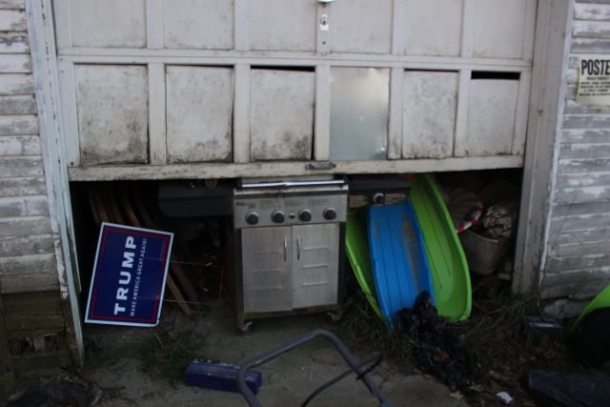
Republican politicians in the area are decidedly less enamored of Trump than many of their constituents.
Republican Senate Minority Leader Joe Benning didn’t vote for Trump or Clinton, even though his town, Lyndon, went for Trump.
Benning said Trump supporters are disenchanted with state and national politics. People from rural areas are participating less in politics, and Benning expected “the political animosity to grow.”
Benning said the concentration of power in Chittenden County’s six Senate seats is a source of frustration for people here. After the next census, he said the Burlington area district should be broken up.
Benning also predicted that in the process of reapportionment, the Kingdom’s political clout would be reduced even more with the likely loss of one Senate seat.
Democratic Sen. John Rodgers, who represents rural Orleans and Essex counties, said his constituents feel that many programs and rules passed in Montpelier — like industrial wind projects — aren’t right for their communities.
He said that Act 46 is forcing too many rural schools to consolidate, and said that the state needs to offer more education resources to the area.
“The Chittenden County area has the population and the representation,” Rodgers said. “A lot of policies that work fine in Burlington don’t work in the rural communities, so we continuously get screwed.”
Rodgers said that while his constituents were justifiably angry about politics, he was dismayed that Trump is their chosen messenger.
“I don’t, for one minute, believe he is going to help the rural core who have supported him,” Rodgers said. “Based on his tax policy he will only help the working core continue to get poorer.”
Indeed, while a majority of Trump supporters say they want tax cuts for the poor and tax hikes for the rich, his proposal does the opposite, according to an NPR analysis.
“If you look at the most wealthy, the top 1 percent would get about half of the benefits of [Trump’s] tax cuts,” Lily Batchelder, a law professor at New York University, told NPR. “And a millionaire, for example, would get an average tax cut of $317,000.”
Clarification: This story was updated with vote tallies for the three Northeast Kingdom counties.
