


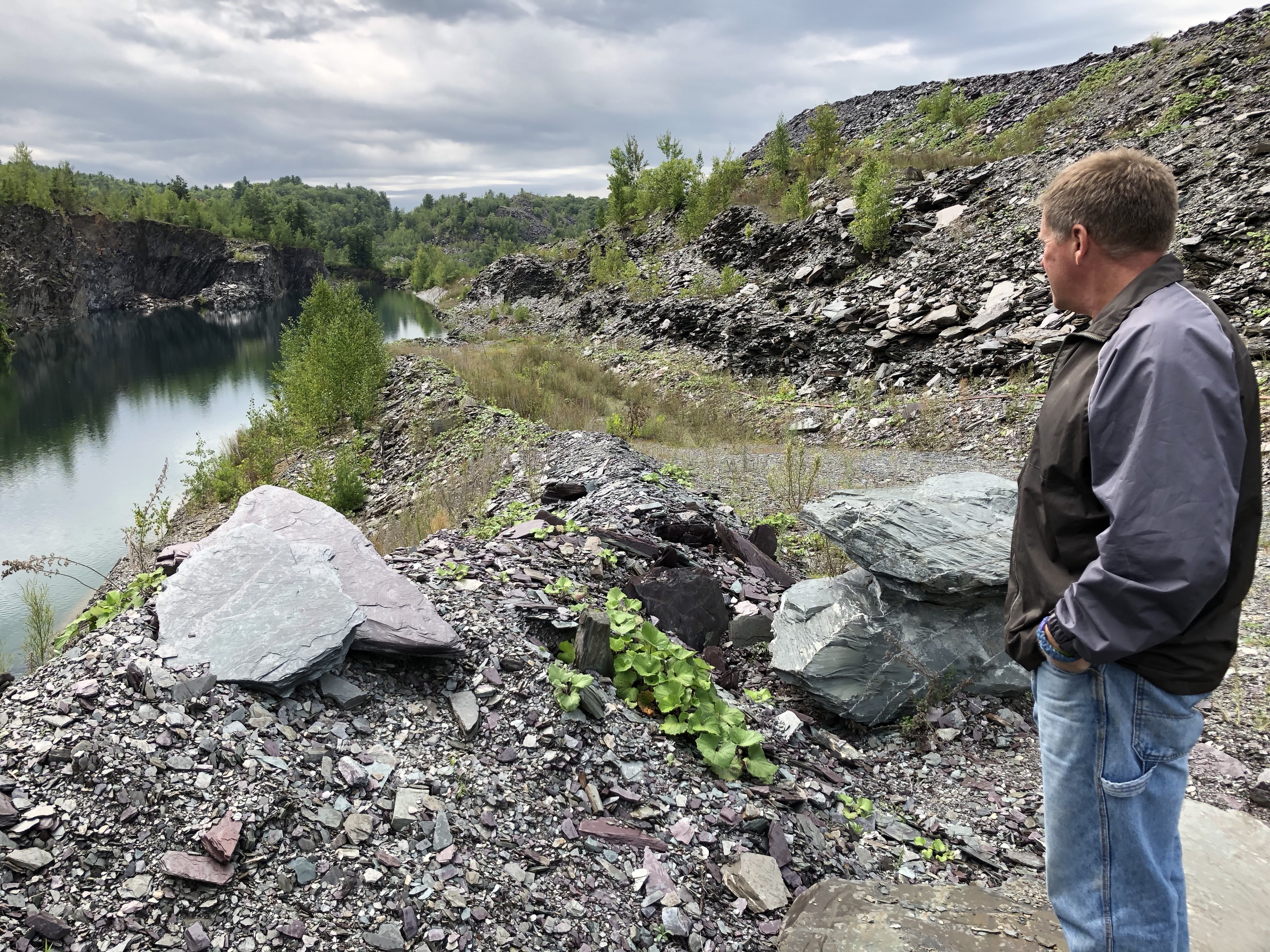
FAIR HAVEN — Vermont’s slate industry is so small that most of its business owners can fit around a modest conference room table together. And when they do, their talk these days almost immediately turns to Act 250 reform.
The owners see proposed changes to the controversial land use law as the single largest threat to an industry that has shrunk to a fraction of its former size over the years.
“One of our concerns as an industry is trying to keep this whole valley alive,” said Charlie Brown, who owns Brown’s Quarried Slate in Castleton. Brown said slate companies have nearly died out altogether in Pennsylvania and Maine, casualties of increasing regulation and competition from less expensive asphalt roofing shingles. Vermont’s industry is limited to a narrow belt of land in and near Poultney.
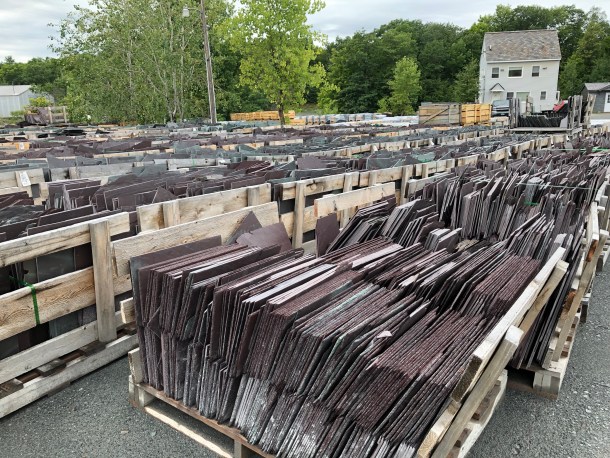
“Western Rutland County has very little going for it; we’re hanging on by our fingernails,” said Brown, who estimated about 400 people work in the $40 million Vermont slate industry, down from 1,200 in the 1990s. Most shops employ up to 60 people. “We look at Maine and Pennsylvania, and see that landscape of abandoned shops. It’s not too big a stretch to think that could happen to Poultney and Granville and Fair Haven.”
At the 50th anniversary of Act 250’s creation, Vermont lawmakers are determined to review the law and bring it up to date with existing environmental priorities, such as climate change. Last year, attempts to change the Act 250 law faltered, but the matter is certain to come up again in the 2020 legislative session.
Last year, as part of Act 250 reform, an exemption for slate pits came up for re-examination. The House Natural Resources Committee took testimony from people who said they had suffered from noise, unexpected truck traffic, and rude and even threatening behavior from slate quarry operators.
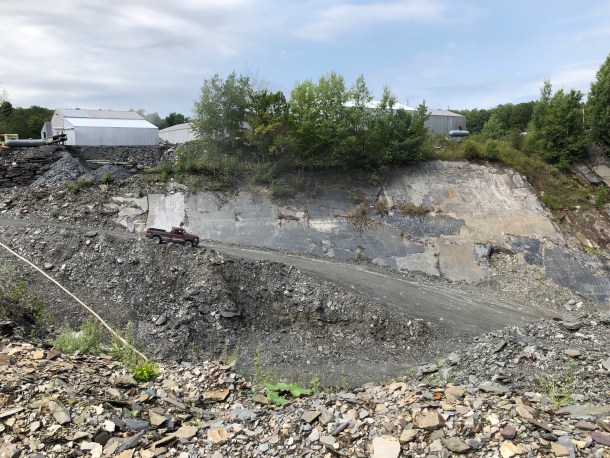
An unusual feature of the slate industry – compared to more common industrial operations – is that operators tend to move from one pit to another on their property, leaving pits unattended – sometimes for years at a time — until someone orders slate from that particular source. Richard Hill said his business, Greenstone Slate Inc. in Poultney, is about to restart work in a pit that has been largely undisturbed since the 1950s.
That means homeowners are sometimes surprised to learn that they’re living next door to an industrial site.
Work on such long-dormant pits is now grandfathered under Act 250, with no permit required. Last year, lawmakers proposed requiring quarry owners to obtain an Act 250 permit to restart work in a long-unused pit.
Slate quarry owners said the cost of obtaining that permit would put them out of business.
“The process will be so time-consuming and arduous that they will nickel and dime you to death,” said Steve Taran, of Taran Brothers Slate in Poultney. “If you have anyone in the area opposed to the activity, they start asking questions, and this becomes a five-year process that costs thousands of dollars.
“And if you get a permit, they’re so restrictive you can’t make it work,” he added.
Act 250
Act 250, Vermont’s 1970 land use and development control law, is administered by the state Natural Resources Board, which considers the impact of a commercial development on a long list of criteria, including soil, air and water quality, aesthetics, and endangered species.
Environmental groups such as Vermont Natural Resources Council credit Act 250 with protecting Vermont’s farms and forests from sprawl, guarding its natural resources, and helping towns balance growth with community health.
But many business owners say the cost and time involved in the Act 250 process suppresses economic growth. The Environmental Board said in its 2018 annual report that 404 Act 250 applications were submitted last year. Processing for all permit applications took an average of 70 days from the date the application was deemed complete, the board said. That doesn’t include two applications that were abandoned. Two of the 32 applications for major permits were denied, the board said — a 6.3% rate denial rate. Sixteen percent were appealed.
When Act 250 originally passed, operations that already existed — including farms and slate quarries — were grandfathered in. Vermont’s slate quarries, most of which were dug between the early 1800s and the 1950s, therefore were exempt from review. In 1996, the Legislature re-examined the exemption and kept it mostly in place, though it required the registration of all operating slate quarries and also the reserves where they might operate in the future, said Diane Snelling, chair of the Natural Resources Board. But that registration didn’t really happen.
“Unfortunately, the registration process that followed the 1996 legislation lacked consistency and appropriate mapping to specifically locate the registered slate quarries and reserves,” said Snelling.
However, slate owners who participated in that multi-year 1996 process think the matter was settled then.
“This was really only 25 years ago, not a long time,” said Craig Markcrow, president of Vermont Structural Slate Co. in Fair Haven, which owns 61 quarries and three mills in Vermont, New York and Virginia. “Personally I don’t see the need to change what we deeply investigated a short while ago.”
Proponents of removing the exemption don’t agree, saying that under the current system, slate quarry operators operate with virtually no governance.
“The fundamental problem with the status quo is that it dooms the slate belt and the citizens who reside in or near it to a nearly lawless environment,” said William Burke, who testified before the Vermont House Natural Resources, Fish and Wildlife Committee in April. Burke has been the Act 250 district coordinator in Rutland for 26 years.
“The problem rests not with the responsible operators – whom you have heard from – but the potential for the next 50 years and beyond that literally anyone else – including rogue operators or “cowboys” will be free to reopen any of those 400 holes at any time in the future,” Burke said. “With effectively no state regulation. That leaves the land and its inhabitants at undue risk.”

A collision between residents and the industry
At the heart of the slate discussion are complaints from homeowners about noise and other problems from slate operations. There’s blame on both sides, said Jon Hill, who owns Greenstone Slate Inc. with his father. He added that only a few small quarry owners are behaving badly.
“They are just rotten,” he said of some small quarry operators. “On Saturdays, driving into a quarry at 7 a.m. and being loud is not a way to get people to like you.”
For Jon Hill, cultural differences also play a role. People who move to Vermont don’t expect a loud industrial operation with trucks to be part of rural life, he said.
“They’re like, ‘It’s quaint, it’s quiet. I moved to Vermont to get away from the city, so no one’s dog should bark, no one should have a gun,’” he said. “I’m not saying you should be allowed to be a jerk. But it tends to be most of the problems are because people who move here have a vision of what Vermont is” and slate quarries don’t fit into that, he said.
Williams noted that quarries fall under noise and environmental regulation without Act 250; agencies such as the federal Bureau of Tobacco, Firearms and Explosives and Mine Safety and Health Administration examine those issues when they inspect the operations.
Explaining all this to key lawmakers is almost impossible in the short time allotted for testimony, said Chris Smid, who owns New England Slate in Poultney.
“Seeing how the Legislature works and the limited amount of information that our legislators are acting on — we had an hour to talk — I felt like they it was tough to get them engaged,” said Smid. “People are trying to make a living, and we’re trying to get them to pay attention to that.”
“It’s like you are starting from scratch every year,” said Jon Hill of the legislative process.
The slate industry will probably have another chance to get the attention of policymakers. The slate business owners plan to testify next year in the Act 250 reform process. They will be joined by many other business groups pressing for looser standards.
“What I would like to see happen is for the quarry owners and neighbors to come to some amicable resolution that doesn’t leave the neighbors — we have heard from multiple neighbors over the years — vulnerable to the whims of a few bad actors,” said Rep. Amy Sheldon, chair of the House Natural Resources Committee. Sheldon, D-Middlebury, said most of the quarry businesses are abiding by best practices and being considerate.
But some aren’t, “and it’s causing conflict,” she said. “If they weren’t having these local conflicts, we wouldn’t be hearing about it. There’s an opportunity for them to address their issues locally, and when they can’t, that’s when it comes to Montpelier.”
New maps and meetings with stakeholders
Sheldon asked the Environmental Board to look into the issue more deeply this summer, something it still plans to do, said Snelling, who is getting more detailed maps made so that all the stakeholders can see where the state’s estimated 400 slate pits — active or not — are located.
After the maps are ready, “I would like to get some conversations going so that when the session opens we have some ideas of what people want,” Snelling said. “We’re just one part of this. We’re working collaboratively with the committee.”
Act 250 and other regulation have united an industry that used to be fractured, said Markcrow, who views some of the initiatives in Montpelier as a threat to his company’s continued existence.
“We don’t want to put anyone out of business,” said Sheldon. The governor’s office also supports the slate owners, saying in a statement Monday that “while there is an opportunity to improve on the 1996 legislation exempting slate quarries, the Governor believes the best approach is to do so through the mapping process currently underway, which will provide greater transparency for those looking to purchase real estate.”
Smid noted that after Green Mountain College announced in January that it was closing, putting 40 full-time faculty members out of work and removing about 500 students from Poultney, the state Agency of Commerce and Community Development rallied other groups to help the town survive the blow.
“I just think it’s horribly ironic that the state is offering $10,000 to telecommuters to come to the state, and yet is threatening to squash one of the few industries we have down here,” he said. “There’s all this talk about economic development, and how we’re going to help you, and the other arm of the octopus is coming around and strangling us around the neck.”

