


University of Vermont Health needs to cut its expenses by $300 million over the next three years and help clinicians in the 1,000-doctor outpatient Medical Group see more patients, said an independent liaison in a May 1 report to the hospital network and the Green Mountain Care Board.
The report specifically set out to address productivity problems in UVM Health’s outpatient clinics and to project the five-year financial future of the health network.
UVM Health leaders said they are on board with these changes, even while recognizing the formidable challenges of taking them on.
“At the highest level, we support the key findings of the report,” UVM Health President and CEO Steve Leffler said in an interview. “It’s good for the patients that we serve and will help with access and affordability.”
The hospital network’s agreement with the liaison team’s recommendations is a marked shift from past disagreements. Leffler took over as the hospital network’s new CEO and president of the network in October and has merged the role with his previous one as the president of UVM Medical Center.
The report is the fourth such memo from the three-person liaison team, mandated by an agreement between the UVM Health network and the Green Mountain Care Board, after the hospital network exceeded the budgets set by the care board in fiscal years 2023 and 2024.
The liaison team, helmed by Mike Smith, has worked since spring 2025 to oversee the network’s 2025 budget proposal, contract negotiations with BlueCross BlueShield of Vermont and other ongoing work surrounding affordability, access and quality of care. Though the liaison team does not have regulatory authority or the power to compel the hospital to act, its memos hold sway with the hospital group’s board and the public.

Smith, the former commissioner of the Vermont Agency of Human Services, said in an interview he was heartened by how much UVM Health has embraced the team’s recommendations.
“I have been fairly critical of the leadership in the past. I will say this leadership has done a 180 and is really looking at how they can improve,” Smith said.
Outpatient efficiency
One part of the memo addresses long appointment wait times and lagging productivity in what’s known as the Medical Group, a group of 154 outpatient clinics and 1,000 physicians in the UVM Health network. This group operated at a $279.9 million deficit last fiscal year, the consultants found, which they said was offset by the hospital network charging higher prices in other areas.
The network could shrink that loss by $55 million, the report claims, with changes to how the Medical Group schedules physicians’ time.
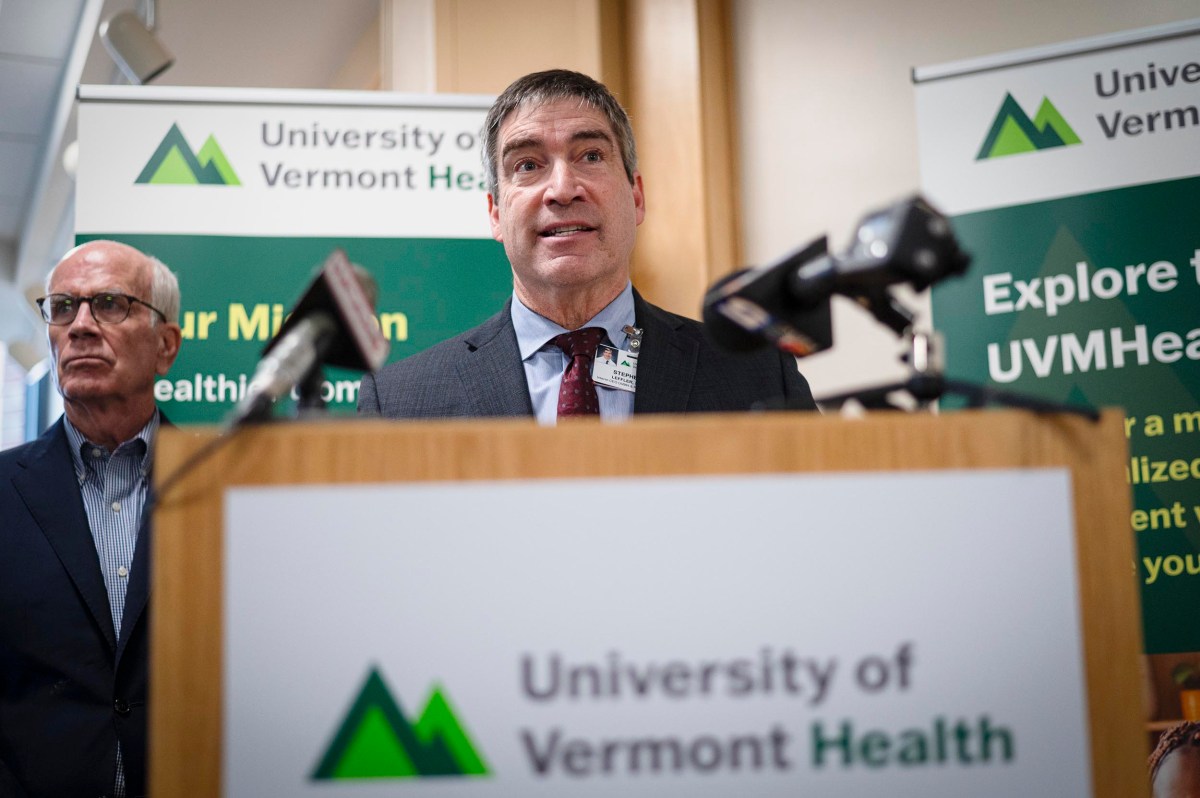
Leffler said in an interview that the hospital knows it needs to improve in this area, and the consultants have given a sharper resolution to where the clinic group can be more efficient.
The consultants found high rates of doctor-driven cancellations and schedules that don’t maximize doctors’ time. They described “labor-intensive” and outdated scheduling processes that could be improved by more modern technology.
The result, they wrote, besides high cost, are long wait times lagging far behind the 50th percentile of benchmarks at peer organizations.
The report notes that on average, patients at UVM Medical Center wait 96 days for an appointment; for a new patient with a referral, that can be 104 days. A report from the American Academy of Family Physicians found that in 2025 on average patients across the country waited 23 days for a family medicine appointment, though it varied by region — in Boston, patients waited an average of 69 days to see a family medicine doctor.
The liaison team recommended that clinicians dedicate more time to patient-facing hours and that the clinics could better align their appointments with the skills and relative cost of the right type of provider. Nurse practitioners or physician assistants, for instance, could see patients when appropriate.
“Physicians will have to give up some autonomy over their work hours, see more patients, possibly reduce their administrative commitments, and reduce their flexibility to make last minute scheduling changes,” the authors wrote.
Already, two clinics — orthopedics and psychiatry — in the UVM Health network are beginning to figure out how to incorporate better scheduling into their practices, according to Leffler.
“There’s a balance, right?” Leffler said in the interview. “We need our clinicians to take care of as many people as we can, but they’re a finite resource.”
“Our plans are not to have them not be able to have lunch or a breath of fresh air,” he added.
The network’s job will be to make everything surrounding the practice of medicine — the non-human, paperwork parts — easier for the doctor, Leffler said. He hopes that improvement is what makes their schedules more efficient.
$300 million in expenses
The liaison team also built a financial model for what the hospital network can expect in the next five fiscal years.
The authors expected reductions in revenue from Medicaid changes that begin in 2027 and from commercial insurers (such as BlueCross BlueShield of Vermont), as pressure to keep the plans’ premiums low is likely to also keep their payment rates low. Other revenue sources — Medicare and other direct payments — are expected to remain about the same. And a federal drug program that allows hospitals to buy steeply discounted drugs, and some changes to retail drug purchasing, should yield some savings.
The report’s authors predict that this “stagnant” revenue with rising costs will yield significant financial losses to the network if it does not cut some expenses. The most likely scenario projects about a $414 million operating deficit for fiscal year 2030.
The authors recommended the network reduce its expenses by at least $300 million over the next three years, phasing changes in by $100 million each year to try to mediate the inevitable disruption this could bring to the system.
“That’s a big number,” Leffler said. “It’s hard to imagine how we’re going to do that, but we have to do it one step at a time.”
The number aligns with the bigger picture of healthcare financials across the state. A landmark 2024 report by another consulting firm, Oliver Wyman, found that Vermont’s hospitals would operate at a loss somewhere between $700 million to $2.4 billion by 2029. The liaison report’s findings fit squarely within that, said Owen Foster, the chair of the Green Mountain Care Board.
“That number does not surprise me from our budget hearings. It seemed pretty consistent with what we’ve been seeing,” Foster said.
The liaison report suggests UVM Health first target administrative expenses and other nonclinical costs for these reductions, though it acknowledges that to reach savings of this scale undoubtedly will impact services. The authors suggest that the network work closely with other hospitals and the Vermont Agency of Human Services when making these reductions to prevent gaps in care and to preserve services at lower cost locations.
“All of this has to be coordinated with that (statewide) effort because we don’t want any gaps in coverage,” Smith said.
Though daunted, Leffler said he was firm on the hospital’s intention to meet these goals. He said that this target is “fully integrated” into the network’s expected budget for the coming fiscal year.
There will, of course, be an impact on staffing levels at some point, he said, but he is prioritizing cost savings from administrative efficiencies, like those at the Medical Group.
Foster said UVM Health’s leaders in the past haven’t been able to make aggressive enough cuts to administrative expenses while preserving healthcare services. But he said he has more confidence in UVM Health’s new CEO.
“Dr. Leffler is a doctor first and foremost,” Foster said. “I believe in my heart of hearts that if he has the option between reducing care and reducing administrative costs, I think he’s going to pick administrative costs to the extent it’s possible and the right thing to do.”
