

he state’s utility regulator issued an order last week aimed at improving the transparency of the complex budget and services review process for Vermont efficiency utilities.
But the Public Utility Commission declined an earlier proposal from the Department of Public Service to change how Efficiency Vermont, the state’s largest efficiency utility, is governed.
The decisions come as policymakers and regulators are seeking to adjust the two-decade-old utility, dedicated to maximizing energy efficiency in Vermont, to the energy use patterns of today.
Last year, the Public Utility Commission opened a proceeding to make sure that the way it regulates the state’s three energy efficiency utilities results in optimal energy savings for Vermonters.
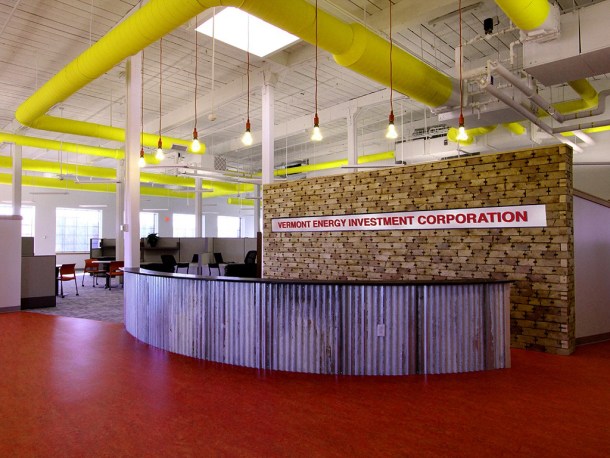
Vermont Energy Investment Corp., or VEIC, a Burlington-based nonprofit, has been appointed by the state to run Efficiency Vermont since 2000. Efficiency Vermont provides a wide range of services to homeowners and businesses, from energy audits to rebates for efficient appliances to low-interest financing for building upgrades.
In a filing last December, the department suggested that regulators split off Efficiency Vermont as an independent nonprofit run by VEIC, electric utilities and public appointees. VEIC would then receive contracts from Efficiency Vermont to do efficiency work.
The department also raised concerns at that time that the oversight of Efficiency Vermont allows the entity “to recover all costs with virtually no downside risk.” DPS said that there needs to be a “greater balance” between rewards for exceeding targets and risk for poor investments.
Efficiency Vermont opposed the proposal to change its governance, saying that it actually would grant the Public Utility Commission less oversight and left management to “a board whose majority would have no accountability for the outcome of (Efficiency Vermont’s) delivery of energy and cost savings to Vermonters.” The utility also contended that the current structure has been successful so far.
Tom Knauer, policy director for the regulatory board, recommended in a May filing that the commission not take up the department’s proposal — a recommendation regulators ultimately followed.
“This case is not a review of Efficiency Vermont,” he wrote. “Nor is it a review of VEIC’s operation of the Efficiency Vermont franchise.”
However, even though regulators aren’t changing the structure of the state’s largest efficiency utility at this time, consideration of how Efficiency Vermont and the state’s other efficiency-focused utilities should best be deployed continues — and the commission adopted a new policy for reviewing their budgets last week.
Vermont electric utilities historically were required to provide energy efficiency measures to their members. In 1999, Gov. Howard Dean signed a bill granting the Public Service Board, as the regulatory board was then called, the authority to create a separate statewide energy efficiency utility funded through a ratepayer charge.

VEIC won the contract to operate Efficiency Vermont as that utility. Burlington Electric Department and Vermont Gas are designated as separate energy efficiency utilities for their customers.
Efficiency Vermont, and the state as a whole, has consistently received national accolades for efficiency programs, which have helped curb Vermont’s electricity use.
In 2018, Efficiency Vermont reported that 109,202 Vermonters used their services, which should result in $220 million in savings over the lifespan of projects. And the utility actually bids energy savings on grid operator ISO-New England’s forward capacity market, using that revenue for heating efficiency projects.
As most of Efficiency Vermont’s funding comes from the efficiency charge on electric bills, the bulk of the utility’s work historically has been to reduce electricity use. But in recent years, as utility loads have flattened and greenhouse gas emissions from transportation and heating have gone up, regulators, lawmakers and the utility itself have started to question whether Efficiency Vermont’s focus on electric efficiency still makes sense.
This year, the Legislature passed a law, Act 62, directing the Public Utility Commission to look into expanding efficiency services, including creating an “all-fuels efficiency program.” Act 62 also directed Efficiency Vermont, for the first time, to use $2.25 million in savings from the efficiency charge for weatherization incentives.
TJ Poor, director of DPS’ efficiency and energy services division, said that the investigation directed by lawmakers will provide the opportunity to “think outside the specific budget vetting process to how we can evolve efficiency … within the context of how the whole energy industry is changing.”
Meanwhile, regulators and Efficiency Vermont are optimistic that the new process, adopted last week, to oversee efficiency utilities’ budgets will bring more transparency. The previous process, regulators and utilities said, was too lengthy and opaque.
The commission ruled to make the budget review process a more formal, “contested case” proceeding, said Poor — more closely paralleling the rate review process for other types of utilities.
The new process will feature testimony and opportunity for discovery, replacing a less formal procedure. “We expect everything to be more easily accessible,” he said.
Poor said that the change to the budgeting review process, as well as the investigation directed by the Legislature, should address some of the department’s concerns about Efficiency Vermont’s structure.

David Westman, director of regulatory affairs for Efficiency Vermont, said the change should allow for more public input earlier on and shave the length of the budget review from 18 months down to nine.
“I think the biggest improvement is that it’s going to improve transparency,” he said. “So if the feedback that we’re getting from stakeholders is that they want us to do more of something else, then we will put it in the proposal so we can talk about that up front.”
He added that the new process should provide clearer answers about how effectively Efficiency Vermont creates savings through efficiency work, and on whether it’s being properly regulated.
“And when you answer those questions in an effective way, so that everybody’s satisfied with the answers, some of those overlying questions of governance are addressed,” he said.

