

[V]ermont’s Senate will adjourn on Wednesday, according to Senate Leader Tim Ashe, D/P-Chittenden, bringing this year’s legislative session to an official end.
That means Democrats will walk away with no deal on paid leave and minimum wage, the party’s top priorities during a year when they held large majorities in both the House and Senate.
Ashe said last week that he hoped House leadership would rethink its decision to adjourn and return to the Statehouse this week to pass the bills. But after a call Tuesday at 1 p.m. with Speaker of the House Mitzi Johnson, D-South Hero, the Senate leader conceded that the session was finished.
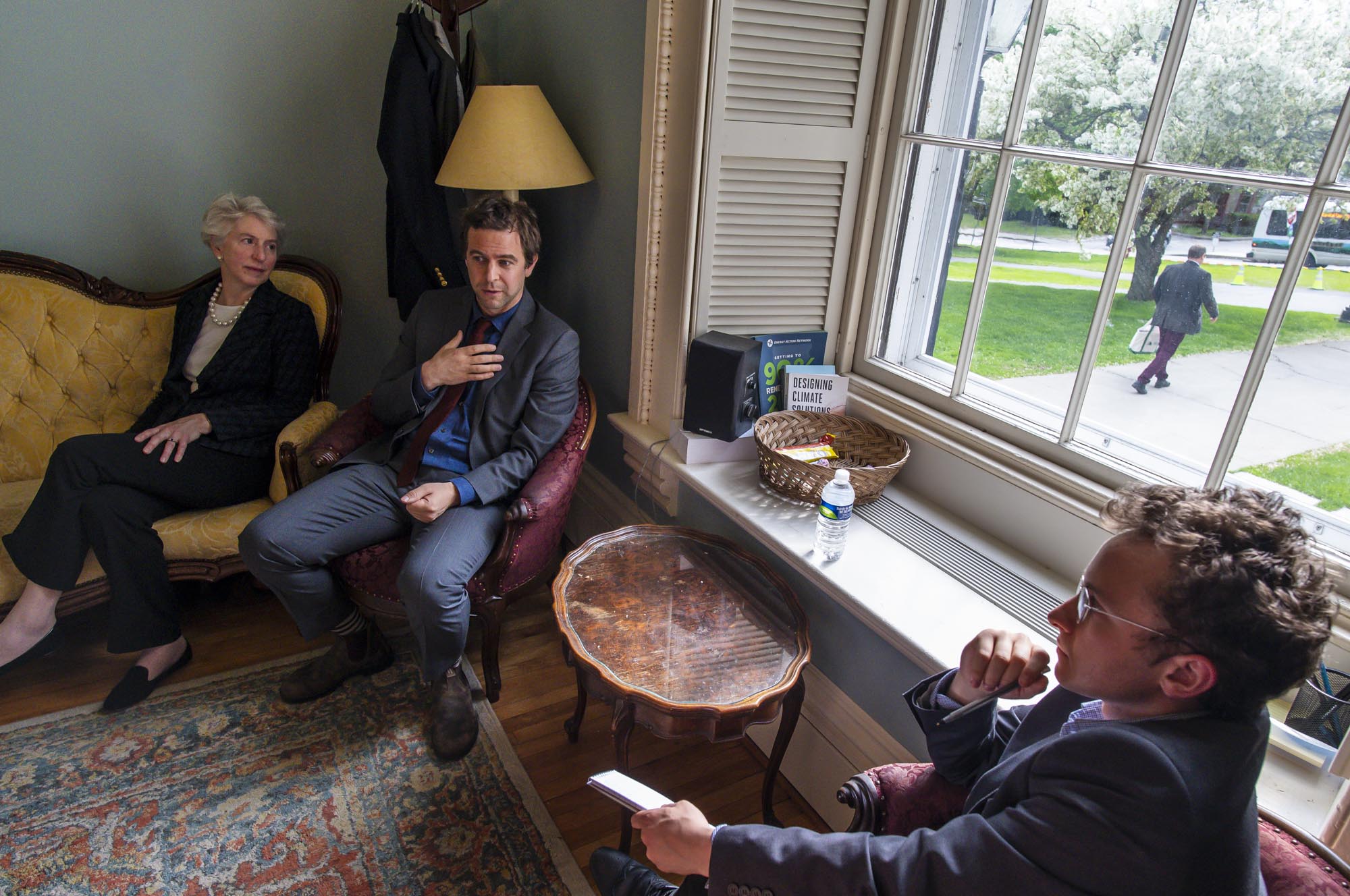
“She said they’re not coming back,” Ashe said during an interview in his Statehouse office.
House representatives packed up last Friday after they passed a joint resolution to adjourn Friday and sent it to the Senate.
Afterward, Johnson told reporters in no uncertain terms that the House wouldn’t be back.
It was the first time in living memory that the two bodies did not adjourn on the same day.
Ashe had maintained that Johnson would change her mind and entertain the idea of negotiating further. On Tuesday, when that hope was dashed, he said the Senate would pass the joint resolution on Wednesday. “There’s no reason not to, if we’re not coming back,” Ashe said.
Both Ashe and Johnson said Tuesday that the two sides were very close to a deal on paid leave and minimum wage, before things fell apart.
Negotiating teams for the House and Senate walked away from a meeting around midday Thursday believing they had a deal to pass compromise paid family leave and minimum wage bills in both chambers.
When the agreement was put to paper, however, it became clear that the two sides were not on the same page.
Ashe accused Johnson of backing out of a deal struck with House Majority Leader Jill Krowinski, D-Burlington. “I go off to lunch thinking this is great,” Ashe said. “We’re tidying up for the night. Everyone’s getting ready. So we were a little bit surprised when they backed out of that.”
Johnson said there had been a misunderstanding about what was agreed upon.
“We walked away [Thursday] thinking there would be a deal and then when we got the language we said wait a minute that’s not quite what we said,” Johnson said in a telephone interview Tuesday. “That was a genuine misunderstanding in trying to wrap things up quickly.”
The difference came down to one section of the paid family leave legislation. The original House version of the bill included a mandatory payroll tax to fund time off for personal injury or illness. The Senate took out that section altogether, cutting the annual cost of the program from about $80 million to $29 million.
The two sides agreed to make the employee section — called temporary disability insurance, or TDI — voluntary, at least at first. But the House wanted it to become mandatory after three years. The Senate didn’t want to commit to a mandatory TDI tax in the future.

Johnson approached Senate leadership in the chamber’s cloakroom Thursday evening and said there was still work to be done on the bills, asking them to keep their members in the Statehouse as leaders hammered out a final deal. Ashe declined to keep senators in the building and adjourned before dinnertime.
“They didn’t have a particular reason,” Johnson said of the Senate’s refusal to stick around Thursday night. “They said it’s late and mistakes get made, except it was only 5:30 or 6 o’clock.”
Johnson said she was worried that failure to move on minimum wage and paid leave by Thursday night would make it difficult to pass the bills before Memorial Day weekend, especially with Republicans pledging to hold up the process.
The Speaker said she wasn’t inclined to call the House back for another week when the bills appeared to be destined for a veto when they reached Gov. Phil Scott’s desk. Each day of Statehouse overtime costs taxpayers $50,000 to $60,000.
“Even if we had passed them, and stayed another week for another quarter million dollars for Vermonters, they still wouldn’t have a path to becoming law until we are back in January,” Johnson said. The fact that the House was missing a Democratic member (Rep. Robert Forguites, D-Springfield, died in April) made the potential for a successful override vote even less likely, she added.
Given those dynamics, and the fact that the Senate had not moved in its negotiating position for a week and a half, Johnson said she believed time was up.
“Paid leave had been held by the Senate for a week and a half, it had been clear for a little while that if we couldn’t come to an agreement [on minimum wage] we might need to walk away,” she said. Johnson said Senate leaders had also reneged on an agreement to move the minimum wage talks to conference committee.

Ashe insists that the Senate was not holding paid leave hostage for the minimum wage discussion, even though that was the widely held assumption in the Statehouse. Ashe and Sen. Michael Sirotkin, D-Burlington, chair of the committee handling the bill, got their stories on the paid leave bill crossed at one point last week.
House leadership met Friday morning at 8:30 a.m. to discuss their options, Johnson said. During the meeting, Krowinski, the majority leader, stepped out to take a call from Sen. Alison Clarkson, D-Windsor, a member of the Senate’s negotiating team.
“She came back with no new offer and no new information,” Johnson said of Clarkson. “We said enough already, this isn’t getting anywhere so we need to summarize options available and make it really clear: Here’s what they are, at this point pick one.”
At 10:30 a.m., Johnson sent a letter to Ashe giving him a noon deadline to make a deal or agree to adjourn without paid leave or minimum wage.
“We didn’t hear back for a few hours, until well after the deadline,” Johnson said.
Ashe and Johnson met in the speaker’s office at about 1:30 p.m. “My team had said this is the time for you to go and not leave without a deal,” Ashe said. “So I was prepared to do that.”
But Johnson was not inclined to cut a deal, even if Ashe agreed to one of the five compromises laid out in her letter.
“She said she’d have to talk to a few people. But probably yes, they would adjourn. So when I left the room, for me, it wasn’t 100% closed, although it was not looking good,” Ashe said. “I was still hopeful up until the moment they got on the floor and started doing the adjournment motion.”
The Senate was still holding the must-pass budget bill, seemingly making it impossible for the House to adjourn. But the House removed that problem by putting a version of the conference committee budget report into an unrelated bill and sending it to the Senate.
The Senate ended up passing the original budget bill, which is now awaiting Scott’s signature.
Ashe said he wasn’t sure he would have done anything differently, after having a weekend to think it over.
“On Thursday, at around lunchtime, we were told we had an agreement, and so what now look like mistakes — we might have done things differently — would have been the sort of clumsy and, you know, messy steps towards an agreement under almost any other circumstance,” Ashe said.
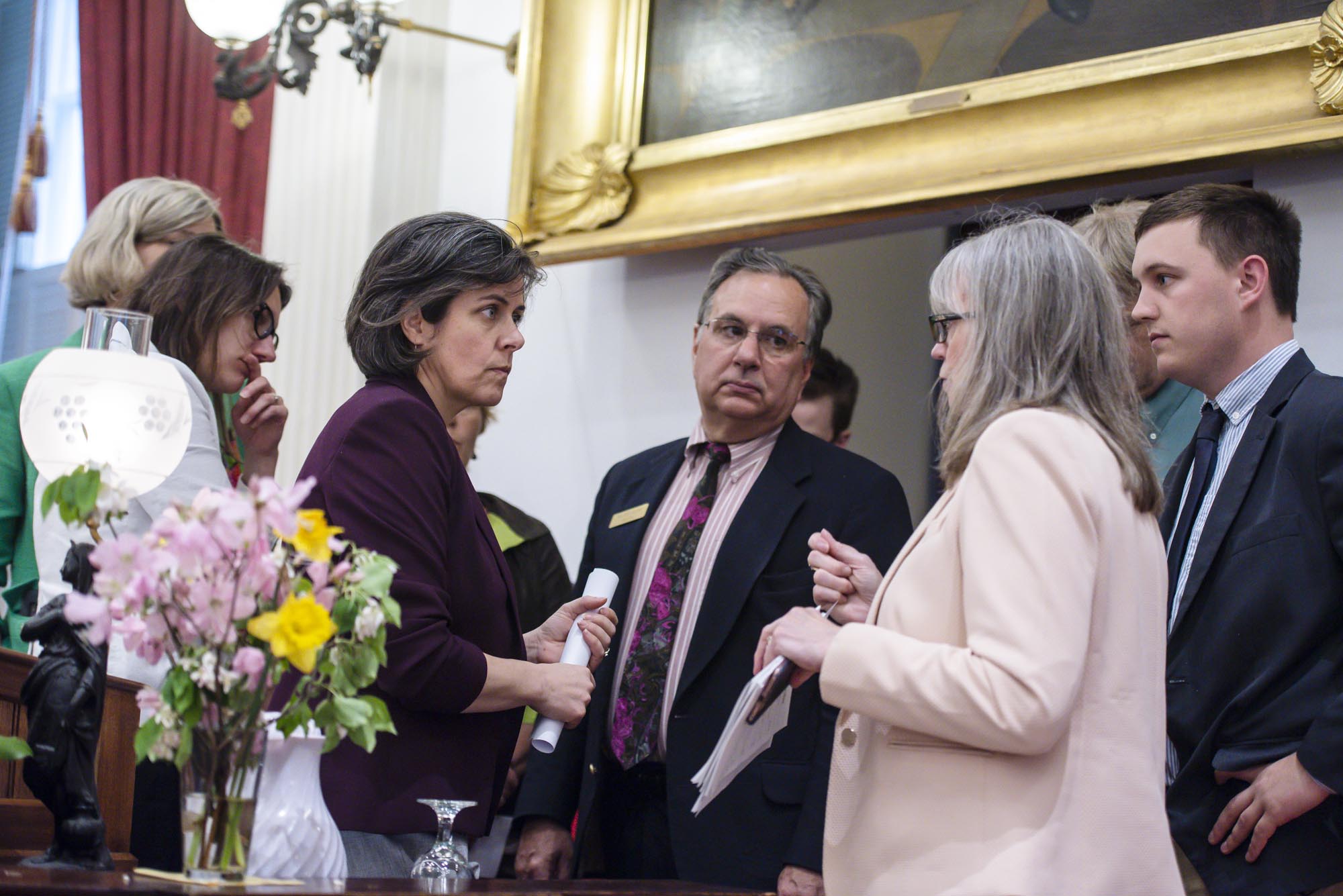
Johnson said the dysfunction was not due to relations between leaders, but about what could pass in their chambers.
“This wasn’t about me and Tim butting heads,” she said. “This is about each of our chambers having priorities and concerns.”
Both legislative leaders said they were confident next year would be different.
“We’re so close on the last piece, that there’s no reason that we wouldn’t show up in early January and immediately take action,” Ashe said.
“We are so much closer than we were in January,” said Johnson, “and I don’t have any concerns that we won’t get these passed.”

