


Editor’s note: Mark Bushnell is a Vermont journalist and historian. He is the author of “Hidden History of Vermont” and “It Happened in Vermont.”
[J]onathan Miller could be forgiven if at that moment, the one just before he was apparently going to die, he thought little of his Vermont home. He had other things on his mind, like: Was there any way that members of his small and vastly outnumbered band of soldiers could escape with their lives, or at least their honor? While he pondered that question, he and his troops sought shelter behind the walls of a garden encircled by a force of 1,000 Turkish soldiers.
Miller was far from his childhood home in Randolph, where he had been born nearly 30 years earlier, in 1797. His childhood and youth had been difficult. The world seemingly lacked any sort of permanence for the young Miller. He probably had no memory of his father, who died when Miller was only two. Miller then went to live with his uncle, who also lived in Randolph, but his uncle died when the boy was just 8. A Capt. John Granger then took over caring for the boy. Miller lived with Granger until he turned 16, at which time he was sent to work at a tannery in Woodstock.
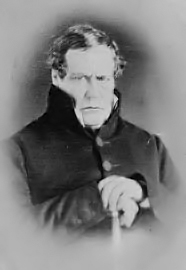
Miller’s career as a tanner was short lived. Soon he was back in Randolph and in ill health — perhaps a reaction to the toxins used at the tannery. Whatever ailed Miller didn’t stop him from volunteering to fight in the War of 1812, which was then in full swing. With the British threatening Plattsburgh, New York, he joined a Randolph company and marched off to war. The only wound he suffered at Plattsburgh was to his pride. The fighting was over before his company arrived.
But Miller evidently liked the soldiering life. He ventured to Marblehead, Massachusetts, where he enlisted with an Army unit stationed and served for two years, until again becoming ill. Perhaps he thought he wasn’t cut out for a life of action and should explore the life of the mind instead. Miller enrolled at Dartmouth, but dropped out a few weeks later. Then he enrolled at the University of Vermont in Burlington, where he studied for nearly three years.
But in 1824, with little more than a year left in his studies, a pair of fires changed Miller’s life. The first blaze struck the public library and also burned the personal books of some students, including Miller. It was no small loss. But rather than try to raise money to buy new books, Miller used the occasion to return to the action.
He set his eyes on Greece. The country had been trying for years to cast off the rule of the Turkish Ottoman Empire. The Greek struggle for independence was a cause celebre in the United States and Europe. Christian Westerners viewed Greece as the cradle of democracy and wanted to free it from its Muslim oppressors.
Artists and writers fueled popular support for Greece. Vermont sculptor Hiram Powers, living in Italy, had caused a stir when he sculpted “The Greek Slave,” which featured a nude young woman in shackles. He only got away with fashioning a nude image in those prudish times because the piece was allegorical, the nude young woman wasn’t simply a nude young woman; she represented the enslaved nation of Greece.
The English poet Lord Byron also took up the Greek cause. Byron was one of the leading literary figures of the era, though he was as well known for ignoring moral strictures as for his verse. Byron donated generously to the cause and even raised a group of volunteers and fought at their side.
Byron was perhaps Miller’s role model. Miller wanted to follow the hero to Greece. But if he couldn’t afford new school books, how was he going to pay for a soldier’s gear and passage to Greece? That’s where the second fire comes in.
At about the time of the library blaze, Miller had seen the Burlington home of Gov. Cornelius Van Ness on fire. Rushing to help, Miller had rescued valuables from the house. Some time later, Miller approached Van Ness for help. The governor remembered him and provided Miller a letter of introduction to leading supporters of the Greek cause in Boston. The letter opened doors for Miller, who was soon outfitted as a proper soldier and on a ship bound for Greece, along with other American volunteers.
Once in Greece, Miller traveled to the town of Missolonghi and sought out the house that Byron had used as his headquarters. It was now something of a shrine. Byron had recently died at the house, the victim not of wounds but of a fever.

Miller befriended the general of Byron’s brigade and was made a colonel. For the next two years, Miller saw the kind of battle he thought he would see at Plattsburgh. He proved himself adept at military matters and was fearless in battle to the point of recklessness. Greeks took to calling him “the American Daredevil.”
Miller earned the nickname for tactics like the ones he resorted to that day in the walled garden. Certain that his men would be massacred as soon as the Turks recognized their great numerical advantage, Miller decided to take the offensive. He and his men ran toward the Turks. As he went, he fired off the numerous pistols he carried in his belt and swung his sword wildly about him. Assuming that Miller and his troops would not have charged so brazenly without numerous reinforcements in the garden, the Turks fled.
While serving in Greece, Miller witnessed the darkest side of war. He survived the yearlong siege of Missolonghi, which many others did not. Miller described in a letter to Edward Everett, one of the leading Greek supporters in Boston, how many of the women in Missolonghi chose to kill themselves and their children rather than face the abuses they were sure would follow when the town fell.
Rather than await attack, he wrote, “The men then prepared themselves for cutting their way through the Turkish camp sword in hand. And out of the three thousand (men), only one thousand are said to have escaped.”
When the town fell, the feared massacre occurred. Afterwards, he wrote, Greek women would approach him to ask “if all the Christian world has forsaken them.” He concluded the letter by writing, “I must close this hasty scrawl for my heart is too full to write more.”
Miller returned from Greece accompanied by a young Greek boy, whom he adopted. He also carried a memento, the sword of his hero, Lord Byron.
He eventually settled in the Montpelier area, where he became a lawyer and state legislator. Miller may have taken up the Greek cause partly as an adventure, but he returned devoted to the cause of freedom. He continued to raise support for Greek independence, which was finally attained in 1832. But he also took up a new cause, fighting to end what he saw as the greatest injustice at home by helping create the state’s anti-slavery movement.

