


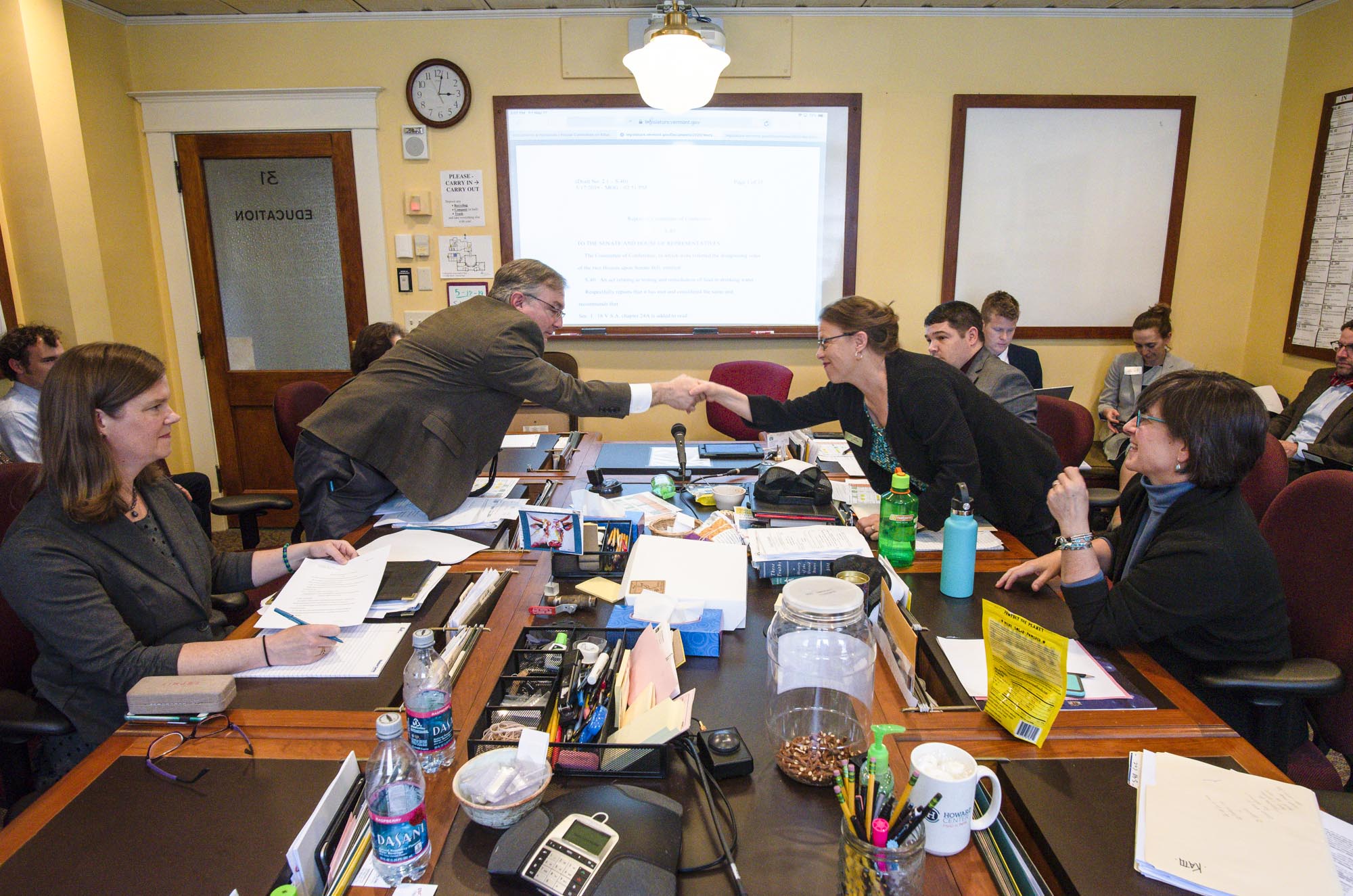
[L]egislators in the House and Senate have finally hammered out a deal on mandated lead testing for schools and child care centers and are now poised to pass the strongest such law in the country.
Going into the session, testing drinking water for lead was a key priority for both Gov. Phil Scott and Democratic leadership in the Legislature. But a fractious relationship between the House and Senate looked earlier this week like it could actually endanger a deal on what many observers had assumed would be one of session’s least contentious matters.
A Senate-passed version of S.40 set the action level for remediation at 3 parts per billion and was projected to cost $2.5 million. The House wanted to set the action level at 5 ppb in order to free up more money to reimburse schools and child care centers more generously for the cost of remediation. Their proposal was estimated to cost $3.2 million.
A conference committee was established to hash out differences between both chambers. But while lawmakers came ever-closer together over the course of several meetings this week, talks were tense, and legislators last left the negotiating table on Wednesday fighting about which side was responsible for bringing the next offer forward.
As Rep. Kate Webb, D-Shelburne, was explaining the House’s latest proposal on Friday, Sen. Phil Baruth, D/P-Chittenden, cut in.
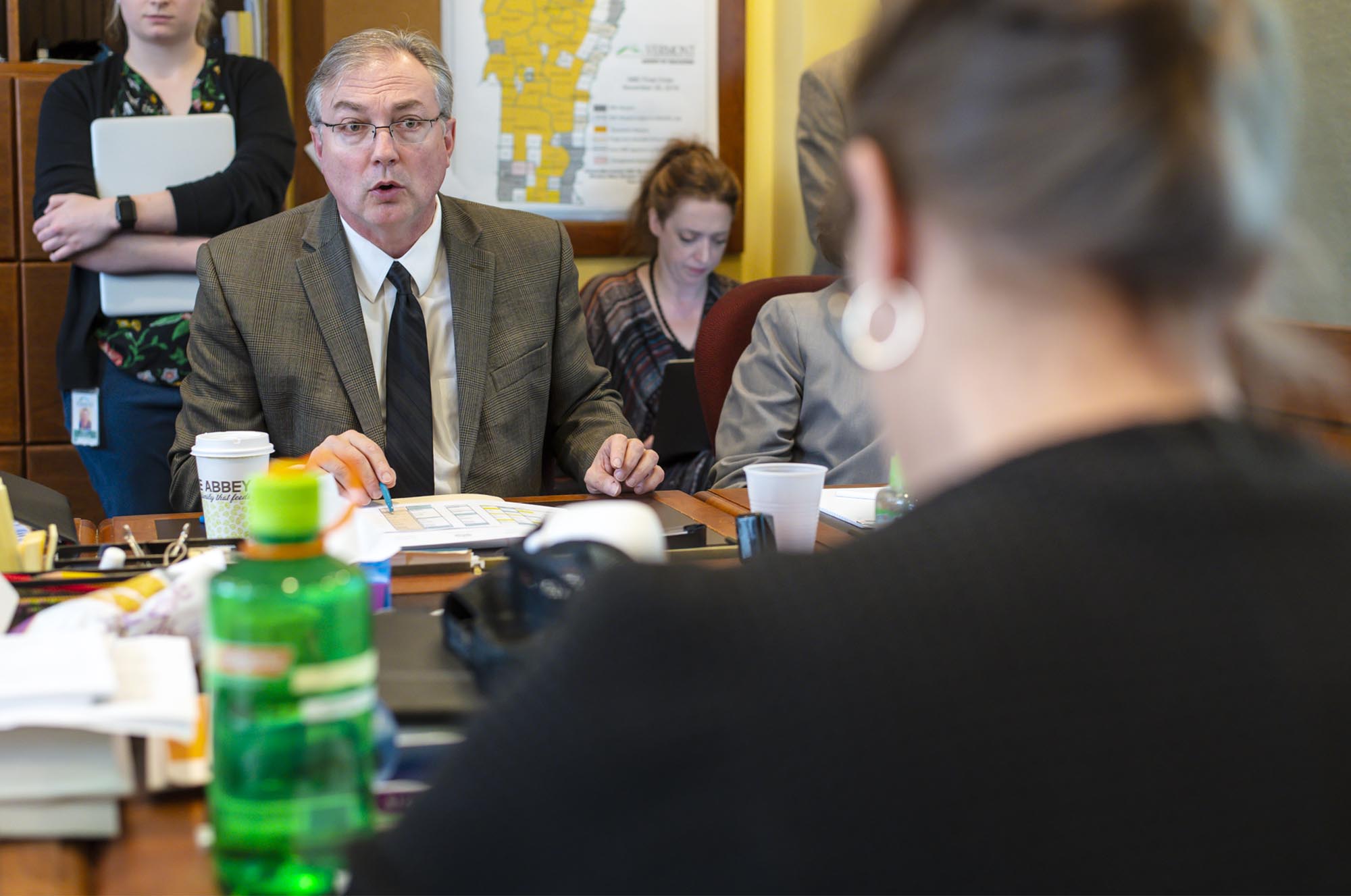
“I think that sounds great,” he said.
“Wait a minute, I need a moment of silence here,” Webb replied, to relieved laughs from the room.
The compromise legislation conferees agreed to on Friday would set the action level for remediation at 4 parts per billion and sets aside $3 million to cover the costs of testing and help schools and child care centers remediate. The bill gives the state until Dec. 31, 2020, to complete testing statewide.
According to earlier estimates generated by legislative analysts, testing could cost about $100,000 more than is being appropriated. But lawmakers on Friday agreed the Health Department could come back for extra money come January, when the Legislature will reconvene.
The conference committee’s proposal must still go back to the House and Senate for a vote, but it is universally expected to pass.
Environmental advocates had sought to convince lawmakers to set the action level at 1 ppb, which is what the American Academy of Pediatrics recommends. But Jen Duggan, the vice president and director at the Conservation Law Foundation in Vermont, on Friday said the deal reached by legislators was “a huge step in the right direction,” and would be, in their view, “the strongest law in the nation in terms of protection for kids from lead in drinking water.”
“It covers all schools and child care centers – public and private – and requires testing at all outlets. The action level is the lowest action level. And they’re using the proper testing methodology,” she said.
No state in the country has a lower threshold for remediation in schools, she said, although Illinois does have regulations – not a law – that set the action level at 2 ppb for child care centers.
Lawmakers introduced legislation to mandate testing statewide after a pilot program in 16 schools found elevated levels of lead in several buildings. Five of the 16 schools tested had at least one tap that tested above 15 parts per billion, the action level set by the Environmental Protection Agency for public drinking water systems. All schools had at least three taps that tested above 1 ppb.
