

[A]s an unprecedented, accelerated decommissioning project gets underway at Vermont Yankee, federal and state officials are boosting their scrutiny of the Vernon site.
The first Nuclear Regulatory Commission inspection report since the plant changed hands gives new owner NorthStar a thumbs-up for its work thus far. And a spokesperson said the NRC “will have an increased presence” as the project gains steam.
Also, Vermont officials have retained a consultant to help them oversee nonradiological waste issues as NorthStar dismantles Vermont Yankee over the next several years.
“We’re definitely ramping up to be much more active,” said Chuck Schwer, director of the Department’s of Environmental Conservation’s Waste Management and Prevention Division.
The original plan for Vermont Yankee, which stopped producing power at the end of 2014, called for several decades of dormancy before cleanup work began in earnest. But former owner Entergy last year received the NRC’s permission and state Public Utility Commission approval to transfer the plant’s nuclear license and ownership to New York-based NorthStar.
That deal, which was completed in January, set the stage for NorthStar to begin a cleanup project that is scheduled to be finished by 2030 and possibly as early as 2026.
Late last year, NorthStar Chief Executive Officer Scott State said he wanted to “get moving quickly” on decommissioning. In an interview Wednesday, State said the company is “making a lot of good headway” so far.
“We took over the site on Jan. 11, and we were working the next day,” State said.
State noted that the company also got a head start via a separate contract for about $30 million worth of pre-closing work at Vermont Yankee before the Entergy deal was finished.
With all of Vermont Yankee’s spent fuel now in sealed casks, crews have removed racks that held that fuel in a cooling pool, State said. NorthStar also has taken down an ancillary structure called the contractor office building.
Removal of the plant’s cooling towers was not scheduled for completion in 2019, “but we are going to do some work – we may actually get those down in the next year as well,” State said. “There’s a lot of asbestos abatement and that type of work to do.”
A major, early component of the decommissioning project is cutting up and removing the plant’s reactor. Contractor Orano USA is handling that, and preliminary reactor work “is proceeding – it’s on schedule,” State said. “Orano mobilized at (sale) closing, essentially.”
Reactor work, which involves disposal of higher-radioactivity material, “will go into at least the middle of next year,” State said.
The NRC reviewed NorthStar’s activities during site inspections in January, March and April. An inspector examined decommissioning work, radiation exposure and radioactive waste management, new documents show.
Overall, “our observations have been that decommissioning activities at Vermont Yankee have been conducted safely and in accordance with NRC regulations,” commission spokesperson Neil Sheehan said.
The NRC’s inspection report says reactor vessel work has been “performed safely and in accordance with plant procedures”; demolition of the contractor building was done “in a safe manner”; and efforts to limit workers’ radiation exposure were “acceptable for the scope of the radiological activities performed.”
Also, radioactive waste shipped away from the plant was “properly classified, described, packaged, marked and labeled, and was in proper condition for transportation,” the report says.
Although the NRC removed its residential inspector from Vermont Yankee after shutdown, the agency has continued quarterly inspections of the property. That oversight will intensify now that the plant is in active decommissioning.
“In the first four months of 2019, we were there for three weeks,” Sheehan said. “We would expect to be at the plant on a close to monthly basis going forward.”
Sheehan also noted that “our lead inspector for Vermont Yankee has frequent status calls with the plant owner … to ensure we stay apprised of the company’s schedule and any emergent issues.”
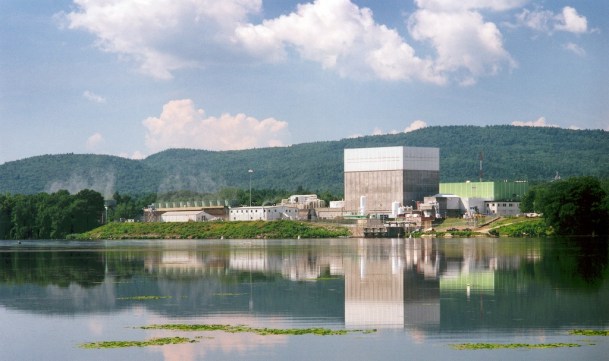
While the NRC has jurisdiction over radiological issues, Vermont’s oversight is focused on non-radiological contaminants. “That has been an industrial site for a long time, and there are areas that we’re concerned about,” Schwer said.
Both Schwer and State said NorthStar has undertaken a site characterization project that should provide a clearer picture of what contaminants are where. And both said there’s been a good working relationship between the company and the state.
“We’re really pleased to be working with NorthStar,” Schwer said.
The state’s consulting firm, ATC, will provide help monitoring the project. “They’ve already been on site,” Schwer said. “They’ve been able to identify some areas in the cooling towers for lead and asbestos.”
In addition to working with the state government, NorthStar also has committed to public transparency in connection with the Vermont Yankee project. That includes providing project updates via the Vermont Nuclear Decommissioning Citizens Advisory Panel, which next meets at 6 p.m. May 20 at Vernon Elementary School.
