


This story has been updated.
[S]tate regulators have OK’d the sale of Vermont Yankee to a New York-based cleanup company, clearing the final regulatory hurdle for an unprecedented, accelerated decommissioning project at the dormant nuclear plant.
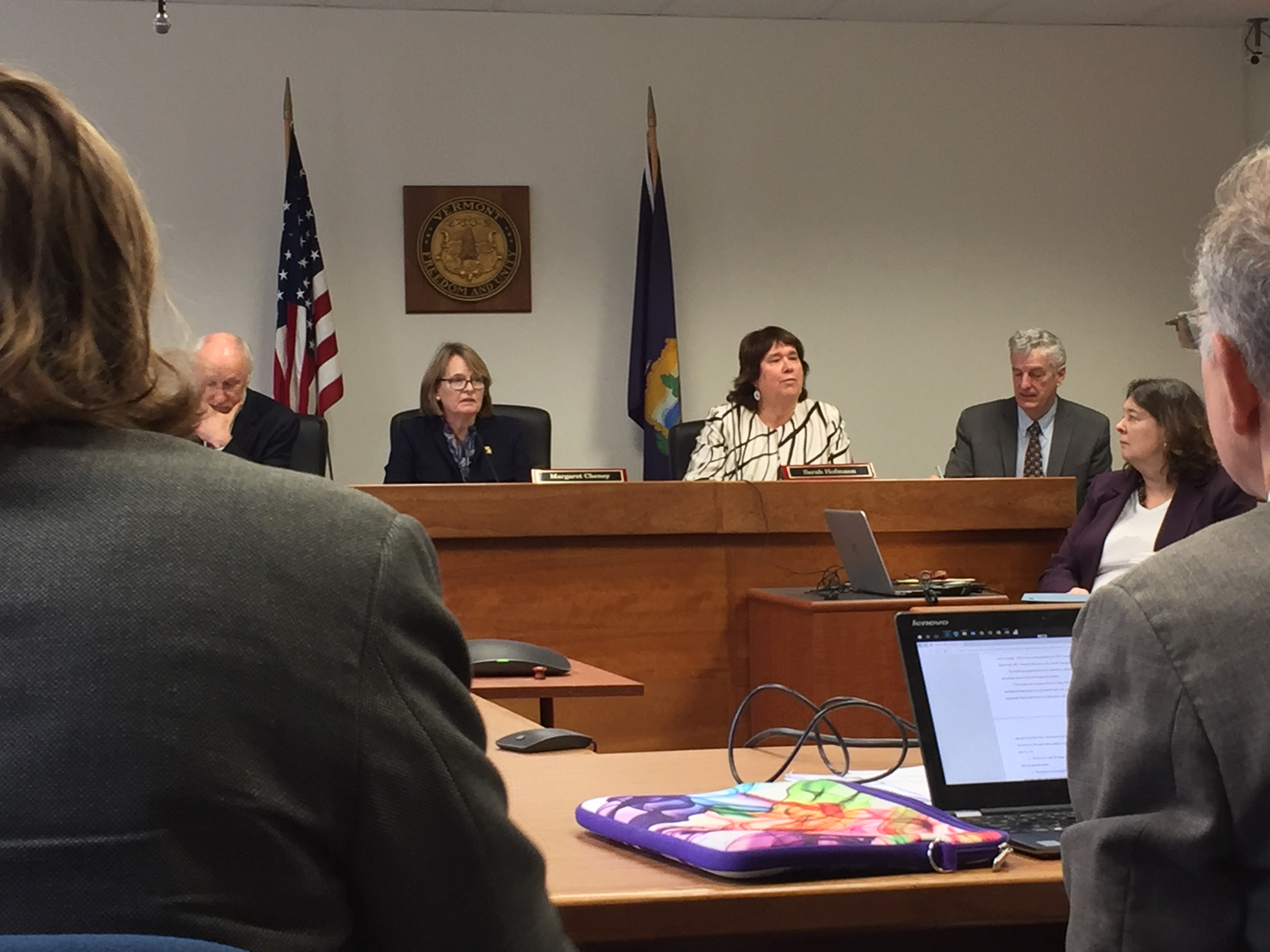
Thursday’s ruling from the state Public Utility Commission allows Entergy, which has owned Vermont Yankee since 2002, to sell the Vernon plant and its decommissioning trust fund to NorthStar. The decision comes a few months after federal regulators approved the transfer.
“The primary benefit of the proposal for Vermont is NorthStar’s commitment to accelerate by more than 30 years the schedule for decommissioning and restoring most of the VY Station site and releasing it for other uses,” members of the utility commission wrote.
In a statement, Entergy said it was “pleased” with the utility commission’s decision. “With this approval in hand, we expect to close the transaction in early 2019,” said Mike Twomey, external affairs vice president for Entergy Wholesale Commodities.
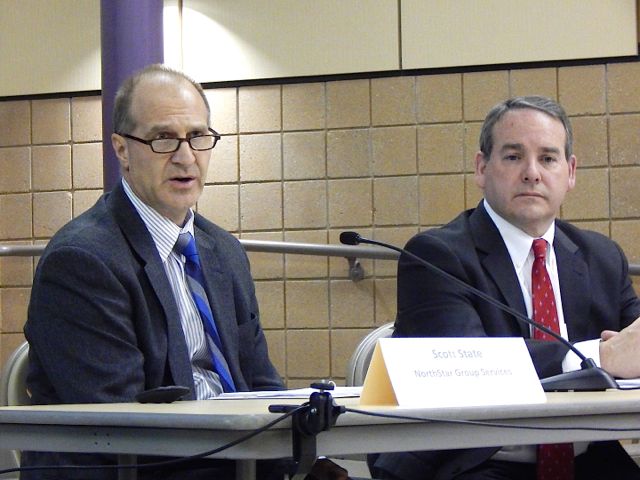
NorthStar Chief Executive Officer Scott State said he appreciated the utility commission’s “thorough review” of its purchase plan.
The commission’s decision “recognizes the hard work NorthStar, Entergy, Vermont state regulatory agencies and numerous other community stakeholders put into reaching a comprehensive agreement that will enable NorthStar to safely return the Vermont Yankee site to conditions suitable for productive economic use decades sooner than originally planned,” State said.
Entergy stopped power production at Vermont Yankee at the end of 2014 after the plant had operated for more than 42 years. The company has been preparing the site for an extended period of dormancy called SAFSTOR, under which decommissioning could take up to six decades.
In contrast, NorthStar has proposed an accelerated decommissioning project that would lead to most of the site being cleaned up as soon as 2026 – or 2030 at the latest.
Entergy has said there’s only a “nominal cash consideration” involved in the sale. There’s also a shifting of liability for debt related to a recently completed $143 million spent fuel storage project at the plant, though the companies expect that the U.S. Department of Energy will cover that cost due to the government’s failure to create a storage facility for the nation’s spent nuclear fuel.
The Vermont Yankee sale’s real currency comes in the benefits expected by both companies: Entergy rids itself of a big environmental liability and massive cleanup job, and NorthStar has an opportunity to make money by not spending all of the plant’s trust fund and retaining the fund’s “contingency” money as profit.
The transaction represents the first time in the United States that a company is taking ownership both of a federal nuclear license and a plant property solely for the purposes of decommissioning.
Entergy first proposed the sale to NorthStar in November 2016. It’s been a long regulatory road since then, as environmental activists and state officials initially expressed skepticism about NorthStar’s ability to deliver on its promises at Vermont Yankee.
The company has handled large-scale cleanup projects and smaller reactor projects but never has taken the lead on a nuclear project of this size.
In March of this year, however, Entergy and NorthStar signed a memorandum of understanding that included new financial and environmental provisions for the Vermont Yankee project. The settlement included several state agencies as well as former critics including the Brattleboro-based New England Coalition.
The utility commission’s approval of the Vermont Yankee sale is subject to the conditions of the March memorandum. The provisions of that agreement include:
• Financial commitments including NorthStar creating a $55 million escrow fund, buying $30 million in pollution liability insurance and obtaining $400 million in performance bonds. Also, NorthStar Group Services will maintain a $140 million “parent support agreement” meant as backup funding for decommissioning and site restoration.
• Restoration commitments including NorthStar conducting a comprehensive site investigation; removing all above-ground structures, with some exceptions; removing all underground structures to a depth of 4 feet; and lowering radioactive contamination to a level of 15 millirems at the most – though lower levels might be possible.
• Oversight commitments including NorthStar providing monthly expense reports to state agencies and allowing those agencies to inspect its books. The company also will notify the state of any event that could have an “adverse financial consequence” of more than $2 million.
In spite of such provisions, not everyone got on board with the Entergy/NorthStar sale. The Conservation Law Foundation refused to sign the memorandum of understanding and continued to express financial, liability and transparency concerns about the deal.
In the wake of Thursday’s decision, the foundation issued a statement saying “we are disappointed that Vermont communities will be saddled with a risky transfer of the contaminated Vermont Yankee site.”
“The transfer of the site fails to provide common-sense protections for local families and businesses, and it will leave Vermonters on the hook if something goes wrong,” said Sandra Levine, a senior attorney with the foundation.
The Public Utility Commission disagrees, concluding that “the benefits of the current proposals outweigh the remaining potential risks for the state.” The commission also made clear that it did not favor Entergy’s longer-term decommissioning plan.
“We note that the risks associated with delayed decommissioning are likely to be equally or even more substantial and would likely be borne by those who did not benefit from the VY Station’s electrical output,” commissioners wrote. “The additional financial assurances and other valuable risk-mitigation measures provided for in the (memorandum of understanding) were of critical importance to us in reaching our decision, as was the broad support for the MOU among state agencies, other parties and the public.”

Additionally, the commission gave a nod to the Nuclear Regulatory Commission’s previous approval of NorthStar’s assumption of Vermont Yankee’s federal license. The NRC has “specialized knowledge, experience and expertise” and “found NorthStar to be both technically and financially qualified to hold the licenses,” state commissioners wrote.
The commission also noted that, in public comments submitted to the state, “very few members of the public stated a preference for the longer decommissioning process that would result under Entergy’s proposed SAFSTOR alternative.” Rather, “most commenters voiced cautious support for the accelerated decommissioning plan proposed by NorthStar.”
Vermont Yankee’s host town has been an enthusiastic supporter of the plant sale, though Vernon officials also retained their own consultant to study the transaction.
“Throughout this long process, dedicated volunteers along with expert consultants worked hard to ensure the safety and long-term well-being of our residents,” Vernon Selectboard Chair Josh Unruh said Thursday. “We are confident that NorthStar will be a valuable community partner during the decommissioning process, and we are encouraged by the decision of the PUC.”
Unruh added that the town is “looking forward to new ways to improve the stability of our local and regional economy through the responsible reuse of the Vermont Yankee site.”
Members of the New England Coalition are “rolling up our sleeves to work on decommissioning issues,” Ray Shadis, a technical adviser to the coalition, said in a statement issued Thursday.
Shadis said the coalition is “particularly interested in encouraging NorthStar to abide by the environmental conditions of the (memorandum of understanding), including those things for which (the coalition) advocated from the beginning of the Public Utility Commission process.”
The watchdog group also said it is “engaged with NorthStar in forming a stakeholders’ advisory group with direct input to the decommissioning.”
