


VTDigger welcomes Bill Schubart this week as a regular columnist. He is a retired businessman and active fiction writer, and was a former chair of the Vermont Journalism Trust, the parent organization for VTDigger.
[I]n a conversation recently, a freshman legislator expressed surprise at the steady assault he encounters at the hands of Vermonters suffering from what the French call idées fixes, psychologists call confirmation bias, or what I call, cementia, where proponents and opponents are firmly committed to their opinion or worldview with a passion that precludes conversation, compromise or mutual learning.

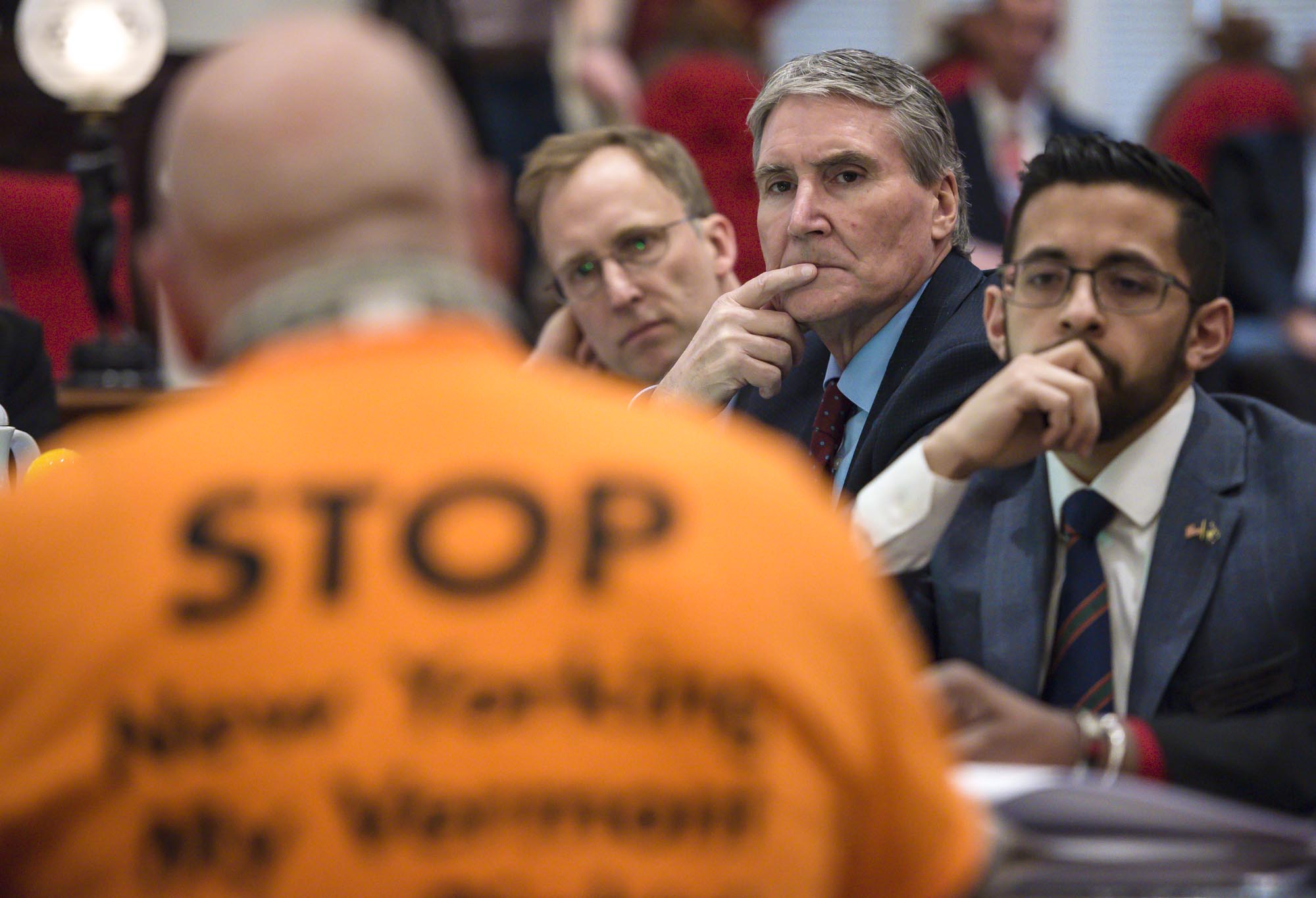
More often than not, the legislator continued, public hearings are a clash of opposing ideologies rather than a dialogue sparked by curiosity, comity and a desire to better understand the challenge at hand and forge solutions.
As Van Wishard points out in his “Major Trends Shaping the World,” this may be a frustration response to the increasing complexity of our challenges. He writes, “We have moved from a relatively slow pace of change to an exponential rate. The rate of technological change is estimated to double every decade. Thus, so much is happening so fast in every part of the world, we no longer have any frame of reference within which to understand contemporary events.”
The sheer complexities of many of our challenges in Vermont cause the overwrought mind to flee to simple binary solutions – the he said/she said firestorms played out on the internet and in hearing rooms that yield little beyond mutual enmity. Ideological Don Quixotes compete to be the facile spokes-hero for or against an issue like wind power, gun restriction, development, immigration and so on. Their dais is built on the seductive nature of their simplistic solution to the problem they’ve chosen and their success precludes any concession to complexity, as their argument is measured in decibels and clicks rather than logic.
With our small tax base, we face myriad problems of scale: school and hospital consolidation, a shrinking higher ed landscape, a self-defeating criminal justice architecture, a complex tax code, water quality, worker benefits and pensions … the list goes on.
Simple solutions offer temporary mental relief but do little or nothing to address our complex issues. Most durable solutions lie in the nuanced center of discord where an amalgam of rigorous analysis and courageous decision-making can lead us to solutions.
One result is that our Legislature is developing a reputation for being reactive rather than prospective. The partisan din and surfeit of industry lobbyists dissuade vision and reinvention. My colleague Jon Margolis recently noted that “when the Legislature can wait another year, it usually does” which flies in the face of the Wishard projection about the relentless acceleration of change.
Legislators need to rise above ambient partisan noise, delve into the challenges Vermont faces and be willing to reinvent rather than tweak. Our evasive legislative summer studies and statutory tweaks, acid washed in the bath of special interests, only add to the complexity and cost of our lives.
A former legislator, frustrated by his four-term experience, recently told me that, in his experience, “politics does not reward vision or change.”
Leadership is defined by curiosity, honest listening, deriving consensus, followed by action. It’s never perfect. If we’re to make real progress, our legislators will need the courage and curiosity to step back, stop legislating, seek common ground on values and beneficial outcomes, and then undertake the difficult work of reinvention to accommodate change and improve our lives, economy, culture, and environment.
