



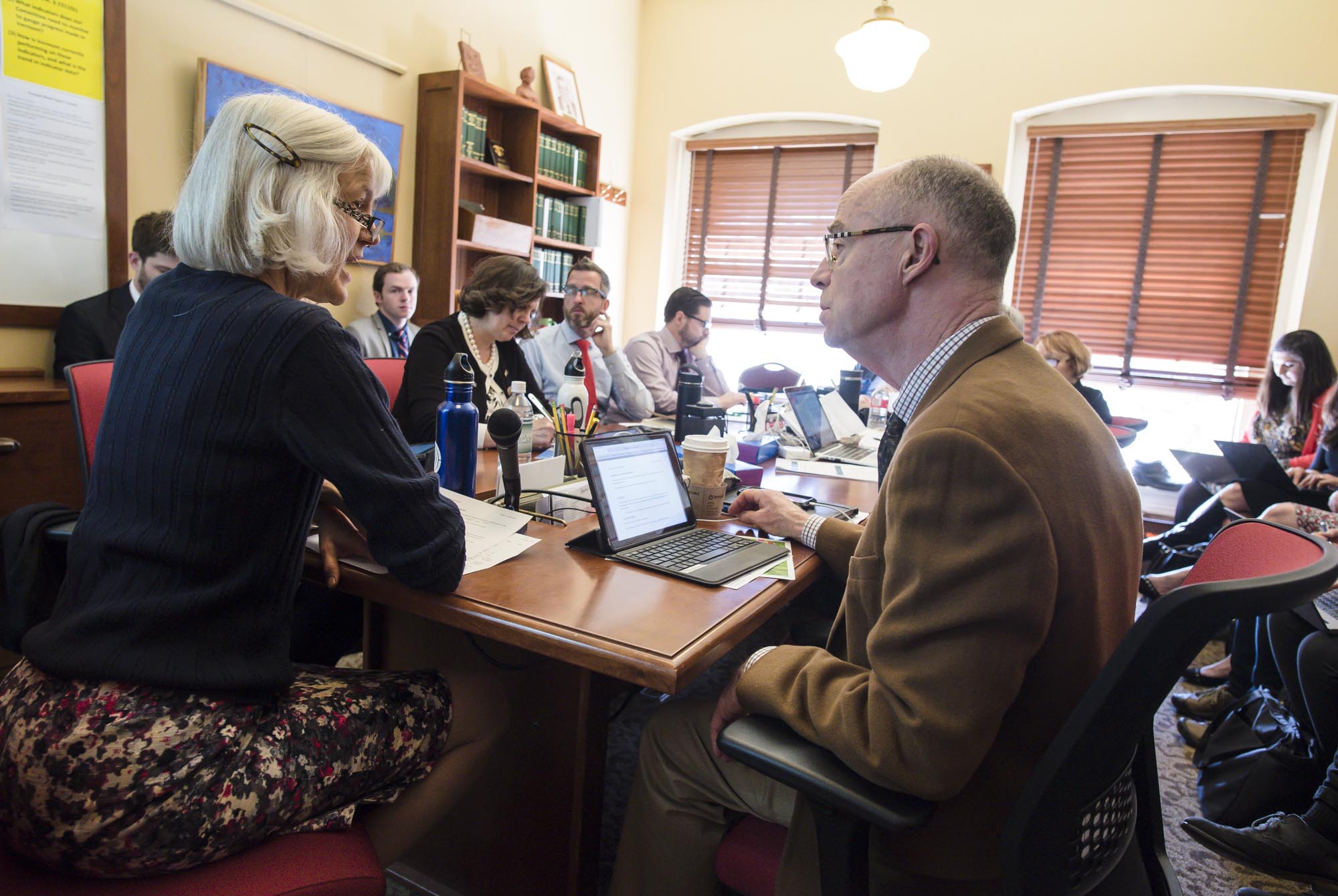
[A] House committee advanced legislation that would increase the minimum wage to $15 an hour by 2024, after members struck down a proposal that, in an effort to help small businesses, would have phased the wage increase in over a longer period of time.
On Friday, the House General and Military Affairs Committee voted 7-3 to pass the bill, S.23, which would raise the current minimum wage of $10.78 an hour by 7% for five years.
The $15 minimum wage bill, which has been a priority for Democrats in the Legislature this year, now heads to the House Appropriations Committee. There, lawmakers will decide whether to fund about $875,000 to increase pay for some Medicaid workers, as recommended by the general affairs committee.
Whether and how to raise pay for employees of Medicaid-funded programs in the wake of a minimum wage increase, has been a major question for lawmakers in recent days.
Before lawmakers passed the minimum wage increase, Rep. Matt Birong, D-Vergennes, pitched a longer rollout for the increase. If lawmakers had backed his proposal, the wage wouldn’t have exceeded $15 an hour until at least 2026.
Under his plan, the wage increase would be equal to 2.5 times the consumer price index, but would not be able to exceed 5% each year.
Birong said his plan was meant to protect small businesses from being forced to raise wages at a high rate if the country saw an economic downtown, which many fiscal analysts predict could be in the offing in the coming years.
He called the proposal a compromise and said it “addressed concerns” that many in the House have about the $15 minimum wage and how it could burden Vermont’s business community.
But the lawmakers ultimately voted down his proposal, and said they wanted low-income Vermonters to see higher wages on a faster timeline.
“The question is for some of our people is, well, five years is pretty slow, and is pretty respectful to business across the board,” committee chair Rep. Tom Stevens, D-Waterbury, said. “So telling someone who doesn’t have very much money that they have to wait three more years for their raise to have a liveable wage was not what our committee chose to do.”

The minimum wage bill had been idling in committee since last week, when legislative economists pointed out that in order for some Medicaid-funded health care workers to see the increase in the wage, the state would need to spend about $1.6 million each year for that over the next five years.
The panel had also been considering giving raises to a broader swath of Medicaid workers who provide care to the elderly and the disabled — even if they already make more than $15 an hour — in accordance with the rate of the minimum wage hike.
Lawmakers had been mulling pay increases for workers at facilities including home health agencies, nursing homes, residential care homes, assisted living residences, and adult day agencies — as long as their professions starting pay fell within a dollar of the minimum wage.
The proposal to give more Medicaid employees raises sought to prevent the lowest paid workers from starting to earn as much as more experienced employees when the minimum wage increase took effect — a problem known as wage compression.
The Joint Fiscal Office predicted earlier this week that accounting for wage compression among the Medicaid workers would cost the state about $28 million.
The committee decided for raise pay for some low wage Medicaid workers the first six months of 2020, when the first increase in the minimum wage — from $10.78 an hour to $11.50 an hour — takes place.
The Medicaid workers who currently earn less than, or within a dollar of the $10.78 rate, will see increased wages, which will cost the state $875,000. The House Appropriations Committee still has to approve the spending.
The bill also includes a study to look into Medicaid reimbursement rates, and the impact increase in the minimum wage will have on wage compression in the health care industry.
