

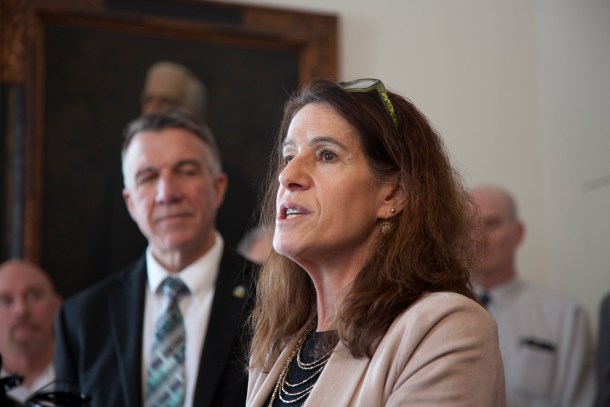
BARRE — A new report put housing into the spotlight of the opioid epidemic conversation in Vermont, with statistics showing 75 percent of the 11,000 Vermonters in treatment face housing insecurities.
Gov. Phil Scott returned to his hometown Thursday to talk about the difficulty people in recovery from substance use disorder face when trying to find stable housing. Today, substance use disorder affects 52,000 residents, or one in 10 people over the age of 12 in Vermont.
“Understanding the need is so important,” Scott said. “Efforts are already underway to create a statewide rapid response model to help those with pressing housing needs. Additionally, the council is working to bring together partners to explore the feasibility of establishing a statewide revolving loan fund.”
The report, prepared for Downstreet Housing and Community Development by Development Cycles, found about 1,200 Vermonters (14 percent of those leaving recovery) would benefit from access to recovery residences. Currently, the state’s 212 beds only meet the needs of 2 percent of people leaving treatment.
Gender disparity was also a major theme of the report — 73 percent of recovery residence beds are reserved for men. Only one facility allows mothers with their children, though 42 percent of those leaving treatment are women, many of whom have children.
Burlington and Brattleboro house a disproportionate amount of these beds, while other areas of the state are lacking, according to the report. Though Chittenden County has gotten attention for its 50 percent decrease in opioid-related deaths in 2018, advocates were quick to point out that one year is not a trend, and that everywhere in Vermont — including Chittenden County — has a lot of work to do.
Vermont has the highest rate of substance use disorder in the country after Washington, D.C., the report noted.
“We’re all in this together. There’s no competition,” Scott said. “It’s a coordinated effort. We’ve worked with Chittenden County and Burlington, and they’ve worked with us.”
By the end of 2020, 12 recovery residences are planned to open across the state, with an average of five to six beds in each. The effort to increase housing for those in recovery is a collaborative push, with organizations like Barre’s Downstreet Housing and Community Development leading the charge.
“Vermont can become a leader in providing a system of recovery support, just as we have become a leader in providing a system of treatment across the state of Vermont that works,” said Jolinda LaClair, Scott’s director of drug prevention policy. “Early stages of treatment are also times of high risk for returning to substance use and overdose. When those at highest risk have a supportive and sober living situation for their first stop, their chances of success grow significantly.”

