


The Vermont State Ethics Commission mishandled a case involving Gov. Phil Scott, according to key lawmakers who plan to “clarify” one of the commission’s few tools this week.
Chairs of the House and Senate committees that created the commission two years ago said the five-member panel went beyond its legal authority and also improperly injected politics into its “advisory opinion” last year that Scott had violated state ethics. The commission ruled Scott’s ongoing financial relationship with a construction company he owned that still does business with the state was improper.
The ruling came after a request by the Vermont Public Interest Research Group. The governor disputed the finding; his supporters said the commission had politically “weaponized” a process intended to be unbiased.
A draft bill set to be voted on Friday in the House Government Operations Committee would make clear what lawmakers said they intended all along — that “advisory opinions” be general and not involve a specific person or case. They also reiterated advisory opinions should only be issued by the commission’s executive director and not at the request of an outside individual or advocacy group.
Allegations involving a specific person, the lawmakers said, should be filed as a formal complaint, a process they noted requires due process, including interviewing the target. Scott was not questioned by the commission in connection with his case. The commission chair said that was in part because the commission lacked investigatory powers.
A dispute over the advisory opinion led the commission’s first executive director, Brian Leven, to resign in protest. He said the commission went beyond the power granted by the Legislature. The commission chair at the time, Madeline Motta, said Leven was let go for poor job performance.
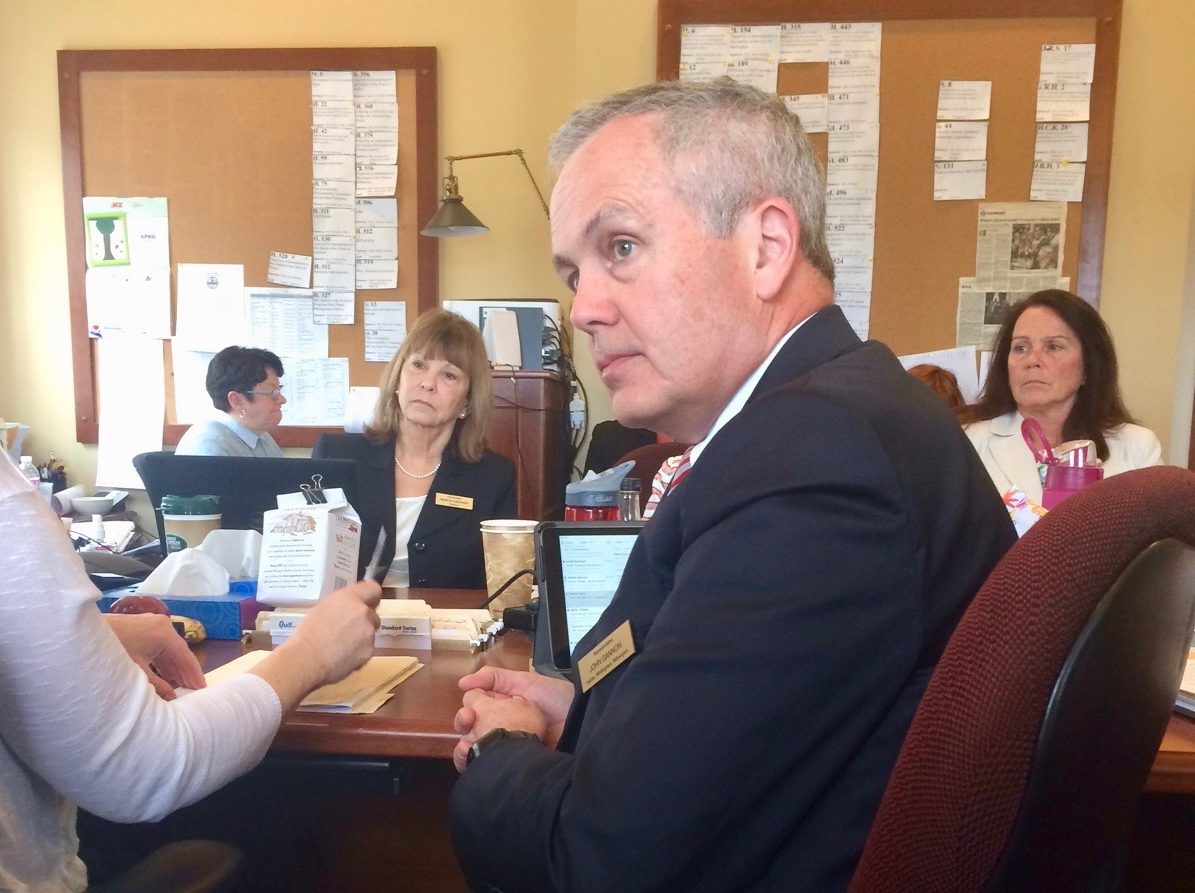
Rep. John Gannon, vice chair of House Government Operations, said Wednesday the advisory opinion had been mishandled. He said that the commission’s credibility rested on being non-political and strictly following the statutes.
“It’s critical that the ethics commission be politically neutral and it cannot be above the law. If there’s any commission or agency of the state that needs to follow the law it’s this commission,” said Gannon, D-Wilmington. “Ethics violations are very serious, so following the processes laid out in the statute is critically important.”
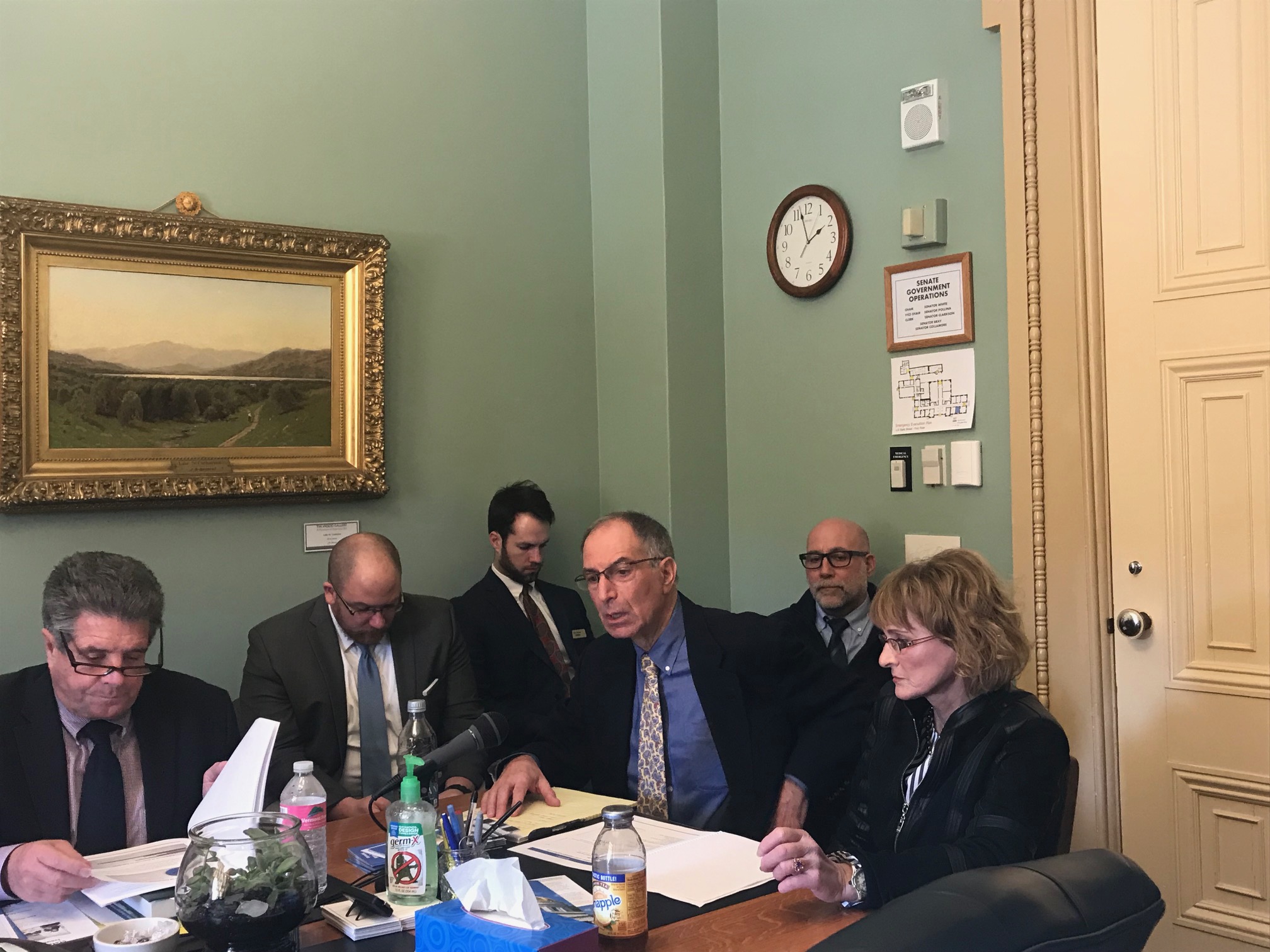
The chair of Government Operations, Rep. Sarah Copeland-Hanzas, said it was clear a clarifying bill was needed after commission officials, including Motta, testified before the committee this year.

“Not only did they not acknowledge their advisory opinion had been outside the law, but they really pushed back against any suggestion they should not have issued an advisory opinion of that nature,” said Copeland-Hanzas, D-Bradford.
She added: “We could have ignored it, but I think it’s too important we have an independent ethics commission elected officials can trust and the public can trust to be the gatekeeper and the go-to place when you have a concern.”
Sen. Jeanette White, D-Windham, chair of Senate Government Operations Committee, also said the commission mishandled the Scott advisory opinion. She agreed advisory opinions should be for giving advice to elected officials and building a body of generic case studies to help guide others, not to settle political scores.
“Clarification is good,” White said.
The commission, she said, mishandled the Scott case because “advisory opinions” were meant to help state officials and politicians “in a quandary” to figure out if an action was okay.
“I think they went outside the scope” of the law, White said.
Gannon and Copeland-Hanzas insisted the bill was a “belts and suspenders” addition that would clarify but not diminish the commission’s powers.
Advocacy groups, including VPIRG and Campaign for Vermont, said the most recent bill would weaken the commission by making the review process less open to the public by limiting who could request advisory opinions.
Instead of curtailing their purview, the Legislature should be giving the commission more powers to investigate cases and develop ways to sanction officials who violate “and thumb their nose” at the rules, said VPIRG executive director Paul Burns.
“They are considering a change that would reduce transparency and reduce the ability of average Vermonters to participate in the process. And I think that’s a great disappointment,” said Burns.
Commission representatives requested more powers this year, including conducting investigations. As established, the commission essentially refers complaints to another agency and collects data.
“Our strong preference would be that the committee look for opportunities to strengthen the commission, give it more authority and increase transparency,” Burns said Wednesday, “and they seem to be doing none of these things.”
VPIRG initially filed a complaint against Scott before requesting an advisory opinion. The complaint process is more confidential, Burns said, while the advisory opinions are made public.

Motta said Wednesday the commission acted appropriately when it issued the advisory opinion. She said the commission’s report only referenced “governor” once and that the opinion has been modified on the commission web page, replacing the word governor with politician and removing the reference to VPIRG as the source of the complaint.
Motta stepped down as chair several weeks ago, in part because of her election as an assistant judge in Lamoille County created time restraints and possible conflicts,
She denied the ruling was political and contained important information for public officials to know about conflicts of interest. At the time of the decision, Scott called it politically motivated, coming a month before the election.
Copeland-Hanzas appeared to agree with Scott in an interview Wednesday.
“In the event that an advisory opinion had swayed voters and we had had a change in administration, the governor would have had a petty good case he wasn’t allowed due process in terms of being able to sit down and open up his books and explain his arrangement and say look this is the reason why I made this arrangement when they (the construction company) bought him out, “Copeland Hanzas said.
Under pressure, Scott agreed to sell his half of Dubois Construction of Middlesex for $2.5 million but received no money at the transfer and is being paid by the company over time.
Copeland-Hanzas praised the work of the commission, which she said had a “steep workload” in its first year with little funding and a need for significant volunteer time by the commissioners.
“I have no doubt they will grow into having a robust set of guides for public officials and we may, as we see that organization mature and see greater trust and confidence from the public and from elected officials about how this commission can operate as a resource that they will settle into an important part of our landscape,” Copeland Hanzas.
As far as expanding the commission’s powers to include doing investigations, Copeland-Hanzas said that “will come as we see how they gel into an entity.”
She added, referring to the advisory opinion: “Right now, I’m feeling a little nervous about their first trip out of the gate, but with these clarifications and with another year under their belt, we may be able to come back and consider that in the future.”
Deputy Secretary of State Chris Winters said the commission acted within its authority to issue the advisory opinion but said his office was uncomfortable with the timing of the decision, a month before the election, giving it a political taint.
“They were asked for an opinion and they gave it,” Winters said.
Winters reiterated the Secretary of State’s Office hopes to see the commission gain more investigatory power, a view Secretary of State Jim Condos has advocated since the idea was first raised.
At the commission’s last meeting, Julie Hulburd of Colchester, a Human Resources expert already on the commission, was selected as chair to replace Motta.
Paul Erlbaum was appointed to fill the vacant seat left by Motta’s departure. Erlbaum worked for more than 15 years as an investigator for the Vermont Human Rights Commission and an assistant attorney general.
