


[S]tate corrections officials are going “back to the drawing board” in an effort to provide more mental health services behind bars.
The Legislature last year allocated up to $700,000 for the Department of Corrections to build 13 new “therapeutic beds” for inmates who need additional mental health services but don’t require hospitalization.
But logistical and financial issues have delayed the project, and there’s no more money earmarked at this point. Department officials are discussing the issue with legislators in an attempt to meet the needs of Vermont inmates while dealing with financial realities.
“We’re looking to create contingency plans,” said Annie Ramniceanu, the department’s addiction and mental health systems director. “If $700,000 is all we end up getting, what can we do … how can we make the most out of this money to serve the overall purpose.”
The therapeutic bed effort has its roots in Act 78, which set July 1, 2019, as a deadline for the Corrections Department to develop a “forensic mental health center” that would “provide comprehensive assessment, evaluation and treatment for detainees and inmates with mental illness, while preventing inappropriate segregation.”
After some deliberation, officials decided that Act 78 didn’t require the department to provide psychiatric hospital services in prisons. Instead, the plan was for corrections to develop “mental health units only, for people who were at the point of needing that residential level of care or acute mental health care, but who do not meet the criteria for hospital level of care,” Ramniceanu said.
Lawmakers followed up in the fiscal 2019 capital bill by allocating $600,000 to “construct a therapeutic environment in the Chittenden Regional Correctional Facility and in the Northwest State Correctional Facility.” The bill also made another $100,000 available for the project if needed.
Under that plan, there were supposed to be 10 therapeutic beds available at Northwest, a men’s prison in Swanton, and three beds at Chittenden, a women’s facility in South Burlington.
But that approach is no longer viable, corrections officials say.
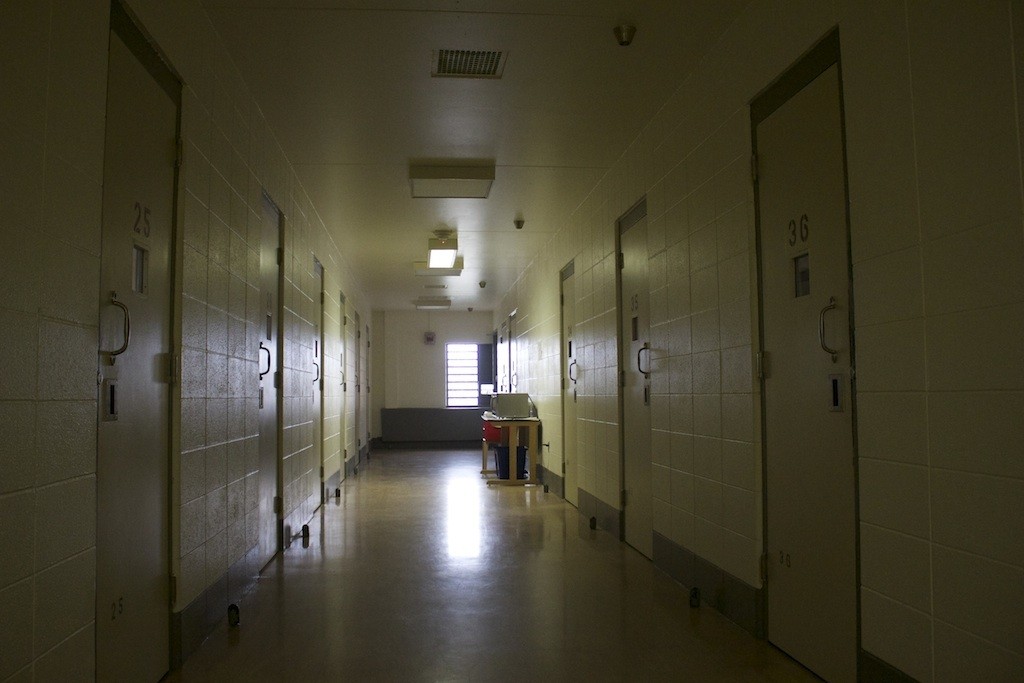
One reason is that officials have decided that Southern State Correctional Facility in Springfield would be a much better place for the men’s therapeutic beds. That’s largely because there are already are mental health services at the Springfield prison, Ramniceanu said.
“We really felt that we had developed a very good culture, training and continuum of care at Southern State,” she said.
Costs are a bigger barrier. Officials say that, after they’d made last year’s request for capital funds, they found that the actual price for placing 13 beds at Chittenden and Northwest was about $1.2 million – twice the base allocation lawmakers had approved.
There’s no official price estimate for the revised plan involving Southern State, but it’s still expected to be well beyond the available $700,000.
During testimony last week before the Senate Institutions Committee, Ramniceanu said she wanted to “raise awareness that … what we presented and testified to in this body is not going to be sufficient.”
State documents show that the department requested an additional $634,860 for therapeutic beds in the fiscal 2020 capital budget. Gov. Phil Scott, however, did not recommend that expenditure in his capital plan.
The Scott administration instead is proposing a new, 850-bed prison in Franklin County that would lead to the closure of the Chittenden facility. For that reason, some lawmakers have questioned the wisdom of making significant investments in the South Burlington prison.
All of those complications mean that, for the time being, corrections officials are not pursuing the original therapeutic bed plan. “We are going to go back and create some alternative plans, and attach dollar amounts to those variations,” Ramniceanu said.
During testimony earlier this month before the House Corrections and Institutions Committee, Rep. Alice Emmons, D-Springfield and the committee’s chair, said officials should determine how much it would cost to build three “soft cells” – one at Chittenden and two in Springfield.
Emmons said soft cells, which are padded holding areas, “at least might take some pressure off” the demand for specialized mental health areas in prisons.
Ramniceanu said soft cells “would enhance our ability to maintain the least restrictive environment for somebody who was potentially a danger to themselves or others.”
No matter what type of mental health project corrections officials end up pursuing, officials say it’s clear they won’t meet the July 1 deadline in Act 78 – at least in terms of construction.
But Ramniceanu said the department has been working with its health care contractor on the “practice and policy” of providing enhanced mental health services behind bars. That care will be available by the deadline, and officials “will do the best we can” within the current facilities, she said.
“The care is going to be provided, but without the modifications, obviously it doesn’t reach its full potential,” Ramniceanu told lawmakers.

