


[W]hen large Northeast Kingdom companies hire new workers, they often suggest they look for housing near Burke Mountain, 15 miles away, says St. Johnsbury’s town manager, Chad Whitehead.
“It’s a challenge if you talk to some of our major employers: The hospital or the school in Lyndonville will send people up towards Burke, where there are condos,” said Whitehead. “There is nothing available in town.”
That’s a common problem in Vermont, where business owners and managers say housing is often the greatest impediment they face in hiring staff. A recent study carried out for the Scott administration found a 1 percent vacancy rate for apartments in many areas of Vermont.
On Tuesday, housing advocates making their annual visit to the Vermont Statehouse said that they think policymakers have realized there’s a housing shortage. Lawmakers in several committees {have heard testimony this session from business groups, housing groups and others that housing for workers is the most serious impediment they see to the growth of the economy.
“It feels much different this year,” said Chris Donnelly, the director of community relations for Champlain Housing Trust. “I don’t know anybody that thinks we don’t have a housing problem.”
About 200 people traveled to the Statehouse Tuesday for the Vermont Housing Conservation Coalition’s annual visit. Staff from the 60 nonprofit housing and conservation organizations in the coalition spread out to testify in nearly a dozen committees on topics including agriculture, clean water, health care, homelessness, the economy, energy efficiency and natural resources.

They spoke to lawmakers who are increasingly aware of the impact that Vermont’s housing shortage is having on employment and the economy.
The Legislature in 2017 passed a $37 million bond that has been used to pay for affordable housing projects around the state. Earlier this month, Sen. Michael Sirotkin, chairman of the Senate Economic Development, Housing, and General Affairs Committee, said he’d like to include another such bond in this year’s omnibus housing bill. Vermont Housing Conservation Board’s goal is to use the existing bond to build 550 to 650 homes.
Housing advocates are also planning to take another run this year at steering more money toward VHCB, a 32-year-old organization with affordable housing and land conservation as its goals. The Vermont Housing and Conservation Trust Fund, made up of revenues from the property transfer tax, was set up to support the VHCB with half of its annual revenues. But the VHCB’s share has long been raided for other uses, leaving the VHCB with a shortfall. This year, $12 million was withheld from the VHCB’s share, according to Donnelly.
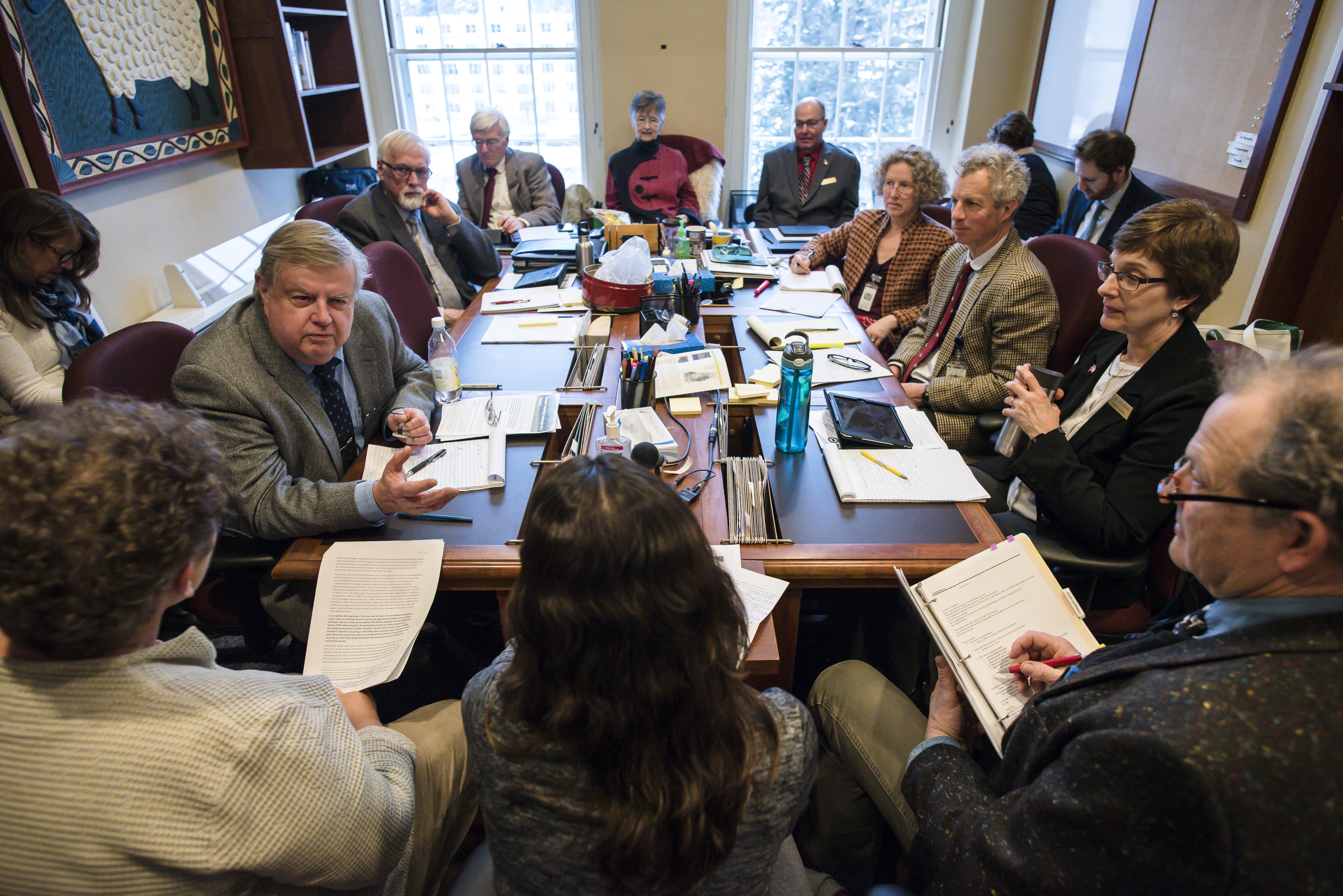
Rep. Tom Stevens, D-Waterbury, has introduced a bill, H.86, that would prohibit the use of the VHCB’s share for any other governmental purpose. The bill has been assigned to the House Ways and Means Committee.
“It’s really getting to the point where first of all, as a taxpayer it’s like when I get taxed, I want the money to be used for the particular reason I am told,” said Stevens. The property transfer tax is a 1.5 percent assessment on all property sales.
“I’m not focusing any of my disappointment solely on the Scott administration; the Shumlin administration was certainly guilty as well of taking money from the fund for other unknown uses,” Stevens said. “That’s bad policy.”
The topic of VHCB and its share of the property transfer tax has come up repeatedly in recent years, but “this is the most traction I think I’ve seen this have,” said Donnelly. “It’s been 10 years since it was close to funded.”
Donnelly hopes to see both Stevens’ bill and another $37 million bond pass the Legislature this year.
“We need capital to build more housing, and the state can provide that capital, and the state has failed,” he said. “The fact that more and more people are talking about it is a step in the right direction.”
Whitehead, who visited the Statehouse to testify about VHCB funding on Tuesday, said the problem in St. Johnsbury isn’t limited to a lack of traditional affordable housing. Seniors and young professionals also need somewhere to live, he said. Last year, the nonprofit Burlington developer Housing Vermont purchased Depot Square, a partly vacant centerpiece of downtown St. Johnsbury that is going to be turned into affordable apartments and retail. It’s a good start, said Whitehead.
“For the market-rate, entry-level professional, there are not downtown apartments that are fairly decent,” he said.

