


At 59, Rep. Christopher Bates, D-Bennington, is hardly a kid and may not even qualify as young any more.
But he’s new at this business of being in politics and helping to govern the state, and he doesn’t deny that he sometimes gets confused.
For instance, he said, when state officials, outside experts, and lobbyists give testimony in committees, “they automatically assume you know what they’re talking about.”
Sometimes, he is not afraid to say, he does not. But he’s trying to learn, and as he haltingly posed some questions in a committee hearing last week the political education of Chris Bates provided a useful political lesson for everyone.
This classroom was a meeting of the House Committee on Natural Resource considering possible changes to Act 250. The committee was hearing from Annette Smith, who heads Vermonters for a Clean Environment. Smith and her allies are environmentalists who oppose large-scale, “industrial,” wind and solar energy projects in Vermont, not because they deny the reality of global warming (they don’t) but because they think the small amount of power these projects produce is not worth the extensive (in their view) damage they cause to rivers, wetlands, and mountaintops.
Her goal at the hearing was to convince the committee to change the law, not only so that future renewable energy projects would have to go through the Act 250 approval process, but also that the process not be determined by political appointees.
“Please use the judicial nominating board process” for appointing Act 250 Board members, she said. “Act 250 has become the place where governors appoint their political supporters. It is imperative that the new Board is distanced from political influence.”
That piqued Bates’ interest. What exactly did she mean by “political influence”? The rookie legislator, a fishing guide and film producer with a rumpled suit-coat and a quizzical look on his face, said he wasn’t even certain “what political influence means to me.”
Smith explained that in 2010, when Republican Jim Douglas was governor, an Agency of Natural Resource scientist testified that “the (Lowell Mountain Wind power) project as currently proposed will have an undue adverse effect on the natural environment.”
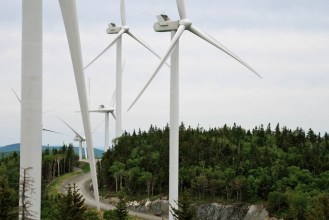
But as soon as the pro-wind power administration of Democrat Peter Shumlin took over, Smith said, ANR officials became less finicky about the project’s potential damage to wetlands, streams, and bear habitat. The project, with 21 450-foot-high wind turbines, was approved in 2011 and began producing power a year later.
Like so many advocates, Smith is not known for under-stating her case. But she did seem to want to make sure that Bates didn’t think she was accusing anyone of bribery.
“I am trying not to use the word ‘corruption,’” she said. As she explained later, she didn’t think anyone was being paid off to go easy on the environmental harm from the wind projects. She just thought political appointees have to do what their boss wants them to do or they’ll lose their jobs.
Bates wasn’t so sure.
“I don’t believe they would be that influenced,” he said after the committee meeting, hoping that they would be more resolute “if they know what they’re talking about.”
And also, he said, have the courage to do what they think is right even if they do get fired.
Is Bates too trusting? Is Smith too cynical? Or both. Or neither.
As advocates tend to do, Smith left out a few complications. Before the Lowell project was approved, its developer (Green Mountain Power) agreed to some changes, so what was approved was not exactly “the project as currently proposed” when the ANR scientist condemned it.
Still, it does appear that the political change far exceeded any modifications in how the project would disturb the natural world. A February 12, 2011, Associated Press story noted that Shumlin’s approval of the Lowell project “marked a 180-degree change in policy from the previous administration,” and the before-and-after photos that Smith showed the House committee certainly suggested that the alterations made in late 2010 did not prevent significant environmental degradation.
The pictures showed wetlands turned dry, chemical pollution, eroded hillsides, and the introduction of invasive species which in turn requires heavy application of herbicides.
Altogether the pictures seem to support the foresight of the ANR scientist who predicted that the project would result in “complete conversion from mature montane forest to industrial wind farm.”
Another complication Smith didn’t mention was that when the Shumlin administration supported wind energy, it was doing what it said it would do, what most legislators wanted it to do, and by all indications what most Vermonters wanted it to do.
Isn’t that how democracy is supposed to work? Vermonters support wind power – or so says all the polling on the subject – because they believe it means generating less electricity from the fossil fuels which create greenhouse gas emissions. Considering that wind produces some 15 percent of the power the state uses, perhaps it’s accomplishing that goal.
Or perhaps not. All the power created by all Vermont wind projects amounts to far less than one percent of the megawatts available in New England. How much fossil fuel didn’t get burned because of those wind towers – even whether any at all didn’t get burned – remains something of a mystery.
Not many Vermonters are likely to change their minds here. Most Vermonters think of themselves as environmentalists, but there’s little evidence that the average person cares much about pollution of tiny feeder streams too high to go fish in, spoiled wetlands few will ever see, degraded habitat for a few bears who live in a sparsely inhabited corner of the state. There have been no demonstrations protesting the degradation of “mature montane forests” or any sign that people know what that is (it’s just a fancy name for a forest in the mountains).
But Chris Bates might care. He’s already accomplished one great feat: getting elected to office after living in the state for only six years, thereby challenging the myth that Vermonters accept no one who hasn’t been around for decades, if not generations. He’s committed to Act 250. As fly anglers tend to do, he does care about feeder streams, maybe even the ones way up near the ridge lines.
And he’s really determined to master this new (for him) business of being in politics and helping to govern the state. The political education of Christopher Bates might be interesting to watch.

