


Citing a recent rash of regulatory problems, Vermont officials say the state should stop paying for sheriff’s deputies to “supervise” psychiatric patients in hospital emergency rooms.
The change wouldn’t save the state a large amount of money – less than $300,000 per year in the general fund, according to budget documents. But officials say it’s an important move because hospitals are running afoul of the federal Centers for Medicare and Medicaid Services due to improper use of law enforcement when dealing with mental health patients.
“Sheriffs are not allowed to physically intervene with (patients) in emergency rooms, and that is something that CMS is paying attention to,” state Mental Health Commissioner Sarah Squirrell said. “We have had findings in our state related to that, and it puts hospital certification at risk.”
However, the Vermont Association of Hospitals and Health Systems says the change could exacerbate problems for hospital emergency staff who are “already under significant stress” due to an influx of psychiatric patients.
“Elimination of this funding will increase costs for hospitals who rely on the support of local sheriffs to ensure the safety of those in our care,” said Devon Green, the association’s vice president of government relations.
The plight of Vermont’s emergency departments has been the highest-profile symptom of the state’s overburdened mental health system. Due to a lack of available inpatient psychiatric beds, mental health patients have been stranded in emergency rooms that are ill-equipped to care for them – sometimes for weeks at a time.
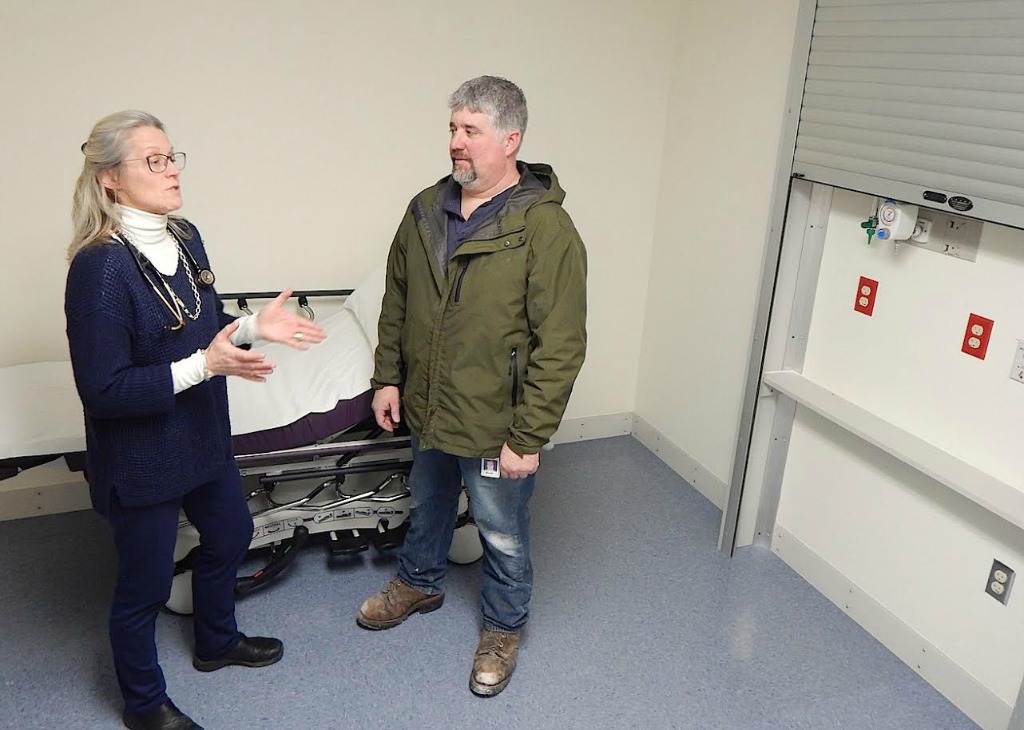
That has led to regulatory problems for hospitals. Inspectors have found instances of physical altercations, escapes, unsafe conditions and improper use of restraints.
The state is working with medical providers to expand inpatient psychiatric capacity. But that will take years, and it won’t be the only answer.
“When we see backlogs in emergency rooms, we know that’s symptomatic of a larger problem, which is our ability to move people through stages of treatment and care, and also to intervene earlier to provide the right kind of community based support,” Squirrell said during recent testimony before the House Health Care Committee.
In the shorter term, state officials are taking different approach to the problem by attempting to cut funding that supports law enforcement presence in hospitals.
In a proposed budget adjustment for the current fiscal year and in a budget plan for fiscal 2020, the Agency of Human Services has advocated eliminating “supervision” payments in contracts between the state and sheriff’s departments.
Those payments started after Tropical Storm Irene’s flooding closed the state’s psychiatric hospital in 2011, creating a shortage of psychiatric beds. Sheriffs were called on to assist in sometimes-volatile situations by providing supervision of mental health patients in medical hospitals.
Squirrell said that’s been “an ongoing and increasing cost” for the Department of Mental Health, and she said the state is not legally obligated to provide such funds. She also said most psychiatric patients in hospital emergency rooms are not there on an involuntary basis, meaning they are not in custody of the Department of Mental Health.
A cut to sheriff supervision funding proposed in the fiscal 2019 budget adjustment would save $145,508, including $67,239 in general fund money, according to a memo Squirrell sent to the House Appropriations Committee.
The Agency of Human Services also has proposed eliminating the payments in fiscal 2020, saving $268,490 in the general fund.
Savings aside, Squirrell said sheriff supervision is “of concern to the department.” She noted that “at least two hospitals have had (regulatory) findings against them” due to improper use of law enforcement related to mental health patients.
Squirrell did not mention those hospitals by name. But state documents have shown that Northeastern Vermont Regional Hospital in St. Johnsbury was cited for an incident in which a sheriff’s deputy used a stun gun on a patient during a physical struggle, and Northwestern Medical Center in St. Albans has been cited because police used a stun gun and handcuffs to subdue a patient.

“Using sheriffs in emergency departments continues to expose the hospitals to increased risk of further CMS violations,” Squirrell told legislators.
Hospital administrators may not see it that way, given that conflicts between staff and mental health patients sometimes have turned violent. Vermont hospitals have undertaken physical renovations and have hired new staffers in an attempt to alleviate the problem, but issues have continued.
“Our focus is ensuring we are able to provide compassionate, therapeutic mental health care to patients in need while keeping our providers and all patients safe,” Green said.
She added that, if the sheriff supervision funding is cut, “we would like to see some alternatives to replace this help in emergency departments in the form of mental health techs or further training.”
State officials say that effort already has begun. Staff from one hospital emergency department has visited the state-run Vermont Psychiatric Care Hospital for training, and “that’s something, I think, we want to continue to do and expand,” Squirrell said.
In an interview on Monday, Squirrell said she envisions hospitals and state officials working together “to provide more therapeutic approaches in emergency rooms to patients who are experiencing a psychiatric crisis.”
“We certainly understand that (the proposed funding cut) will be a perceived as a resource loss to hospitals who are grappling with longer lengths of stay in emergency departments, and we certainly see our hospitals as essential partners in our mental health system of care,” Squirrell said.
The state funding change also would impact county sheriffs who contract individually with the Agency of Human Services for hospital-supervision services.
But one sheriff said that change would not be a bad thing. Windham County Sheriff Keith Clark, whose department at one time had contracted frequently for patient supervision, said he believes the psychiatric patient backlog is a problem best addressed by the state and the medical community – not law enforcement.
“I think it’s a question of the hospitals properly staffing,” Clark said. “I think it should put pressure on the state to create more beds.”
The state needs a better solution “than having us basically turn hospitals into jail cells,” Clark said. He added that having sheriff’s deputies in medical settings “has created conflicts as to what is the deputy’s purpose, and what should they be doing or not doing.”
“I’m not surprised this has come up,” Clark said of the state’s proposed funding cut. “I would’ve thought it would have come up sooner.”
Mike Faher discusses his reporting on Vermont’s mental health care system in our Deeper Dig podcast:
