


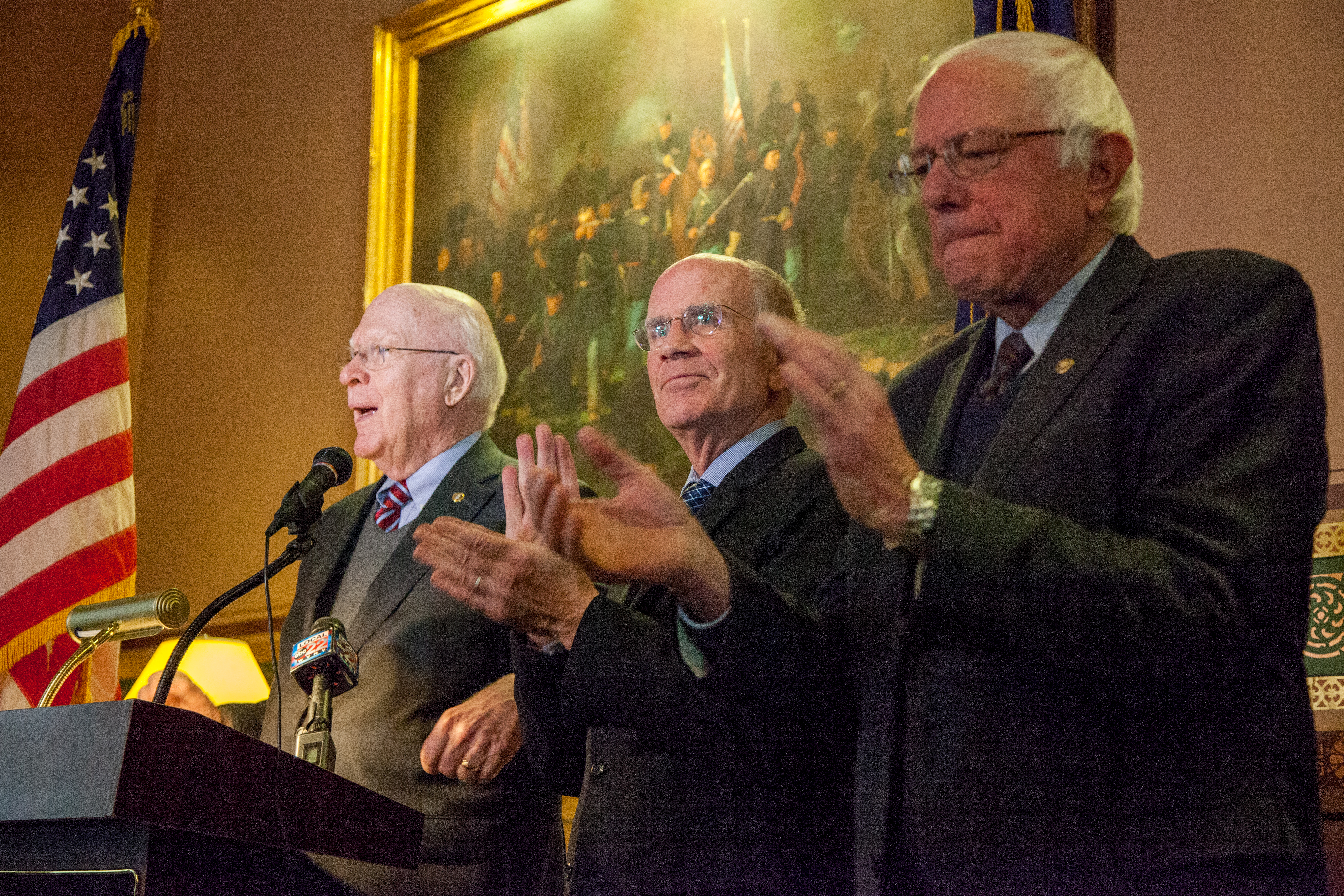
[C]ongress passed a measure to reopen the government for three weeks after President Donald Trump announced Friday he would sign a stopgap spending bill to fund the government through Feb. 15. Still, Vermont’s congressional delegation called the government shutdown “pathetic” and a pointless exercise that caused the country nothing but harm.
“All of this pain and suffering is going to end now right where it began. On Dec. 19 of last year the Senate passed a bill by voice vote to fund the the government until Feb. 8,” Sen. Patrick Leahy said on the Senate floor. “It is nearly what the president has proposed today.”
The measure passed unanimously in the House and with a floor vote in the Senate. It is expected to be signed by Trump Friday evening.
On day 35 of the longest shutdown in history, Trump told media at the White House that he is now ready to sign a bill to reopen the government for three weeks until Feb. 15. However, the president again doubled down on his belief that a border wall is the only way to deal with what he has repeated called a “national crisis” on the southern border.
The shutdown had continued since Dec. 22 because Democrats refused to give in to the president’s demand that any bill to fund the government include $5.7 billion for a border wall.
“No border security can happen without a wall — it just doesn’t happen,” Trump said. “They are not medieval walls. They are smart walls and operationally effective.”
By saying he will support a stopgap funding measure, that will continue debate over border security while reopening the government, the president is in essence supporting what Democratic leadership has repeatedly called for him to do.
Trump also said that he would be willing to shut the government down again when this funding runs out if he does not receive the money for border security.
Sen. Bernie Sanders, I-Vt., said the shutdown had caused suffering, uncertainty, and pain for federal workers and disadvantaged people.
“I think the time is long overdue for the American people to tell this president that he is not a dictator, he is not a king,” Sanders said. “He is the president of the United States and he cannot and must not continue to threaten to shutdown this government.”
Rep. Peter Welch, D-Vt., said he welcomes real debate between the political parties on how to fix border security and immigration systems in the U.S. and that these discussions must happen during the coming weeks, but that the president’s behavior has been unhelpful and has damaged the country.
“America needs commonsense cost-effective border and port security and comprehensive immigration reform,” Welch said. “Those important goals will never be met if this impetuous and willful president does not abandon the now thoroughly discredited tactic of closing the federal government.”
The effects of the government shutdown on Vermont was mostly limited to the state’s 686 federal workers who are going without pay during the shutdown, and over 1,500 who work for agencies that have not had funds appropriated to them.
However Friday morning, before the president announced the shutdown would be ending, Vermont lawmakers said they were worried about the long-term impacts of the government shutdown on state programs that get federal aid.
Members of the House Appropriations Committee were discussing a draft letter that would be sent to Gov. Phil Scott on Monday to understand how the state and the committee should respond in a lengthy shutdown.
Friday afternoon, more lawmakers expressed hopes the government remain open.
Sen. Randy Brock, R-Franklin, said if Vermont does find itself facing the impact of another shutdown in the coming weeks, officials should consider setting up a hotline for Vermonters to get the legal or financial help they need,
“There’s so many things touched by this, you know, and the notion of putting up like a two-person call center someplace to be able to direct people to sources of information and help would be something that might have been worth doing,” Brock said.
“And if this comes back again in three weeks I’m not going to give up on it, I’m going to raise the issue again,” he added.
Sen. Ann Cummings, D-Washington, chair of Senate Finance, said preparing for a shutdown wasn’t like normal economic issues where lawmakers could look to historical trends to know what’s coming, but that with some luck this will be the end of it.
“Hopefully everything will get back to normal and sanity will reign and we won’t have to do this again,” Cummings said.
Colin Meyn contributed reporting

