


[A]s it gears up to regulate hemp, the Vermont Agency of Agriculture is considering dividing the crop into two grades: A and B, giving the top grade to companies with a certified local process.
The agency has drafted rules for establishing an industrial hemp and hemp product pilot program and distributed the draft to some industry members.
According to the draft, Vermont grade A hemp would be a certified hemp crop or product that is grown and processed in Vermont and is grown, processed and stored in facilities with documented practices and conditions for reducing the risk of contaminants.
Vermont grade B hemp would also be grown and processed entirely in Vermont, but would be reported, not certified, as being grown and processed in facilities that document their practices for reducing risk for contaminants.
Hemp or hemp-infused products not entirely grown or processed in Vermont would not be able to claim Vermont hemp grades even if they were made in Vermont or contained Vermont ingredients, according to the proposed rules. The rules are expected to be presented to House and Senate legislative committees the week of Jan. 14.
The rules would prohibit the sale of CBD products with claims of other third-party certification or accreditation on their labels.
Hemp growers would also be able to obtain organic certification through the United States Department of Agriculture’s agricultural marketing service.
Hemp growers and CBD producers have been pushing the state to come up with rules for the production and sale of their products as hemp growth rises and products flood the market.
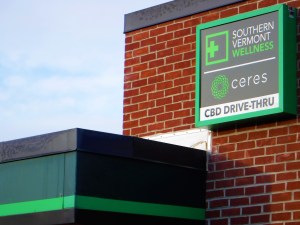
In November, the Agency of Agriculture reported that the number of farmers who registered with the state of Vermont to grow hemp rose more than 400 percent from 2017 to 2018.
The need for regulation is clear, said Scot Waring, a biologist who is working as a consultant for Vermont growers and processors.
“If you put CBD on the package, people will pay a premium, and there may not be CBD in there,” he said. “That has happened before.”
Companies like Champlain Valley Dispensary, which performs testing on its own CBD products, also want the state to establish a testing facility.
“We‘ve been advocating for those kinds of regulations to be put in place, and from the conversations that are happening, I know it it’s their intent to do so,” said Bridget Conry, director of sales and product development for the Burlington company.
Conry said there are two independent labs in Vermont that test CBD products for contaminants and THC, or tetrahydrocannabinol, content. THC is the psychoactive chemical in the cannabis plant. But for the best quality control, the state needs an independent tester that isn’t tied to any company, she said.
“There is nobody (objective) certifying products in the state of Vermont right now, and that’s an issue that we advocate for, because it’s important to protect the consumer, and as businesses we want that protection as well,” Conry said.
The state now requires hemp growers to register with the Agency of Agriculture.
The proposed rules would have such registrants submit an annual report with information about number of employees, expenses, income and other information so that the state can study the growing industry. The rules specify that crops cannot have a THC content of not more than 0.39 percent, a standard apparently set on draft hemp rules in Kentucky, Waring said.
“The .39 does give farmers a bit more of a shot to have compliant material,” said Carl Christiansen, co-founder of the Northeast Processing plant in Brattleboro. He said he didn’t know why the Agency of Agriculture set that as a target, but “it seems that it is probably the highest they could go without having to pass a new law through the Legislature.”

Hemp processors, which are also required to register with the state, would also need to turn in an annual report with information about growers within and outside of Vermont, and a lab report showing cannabinoid content, pesticides, solvents, heavy metals, mycotoxins and bacterial and fungal contaminants for each harvest lot.
The Vermont Agency of Agriculture is not yet set up to test hemp for THC content, but the rules propose the creation such testing capabilities. The Agency of Agriculture has discussed creating a niche Vermont hemp and CBD industry that would emphasize quality.
According to the draft rules, the Agency of Agriculture will be able to make unannounced inspections of growers and processors during normal business hours. The draft would also require consumable hemp products to be labeled with the name and principal mailing address of the manufacturer and accurate claims about the tetrahydrocannabinol content.
“We need to have oversight for consumer protection, one, for potency, and two, for safety,” Waring said. “Not that those have any sort of priority order.”
Christiansen said he hopes the state will also allow third party certification on labels.
“I do not think the state should be the lone arbiter of quality in the hemp game,” he said.
CORRECTION: A previous version of this story misspelled the name of Scot Waring.

