

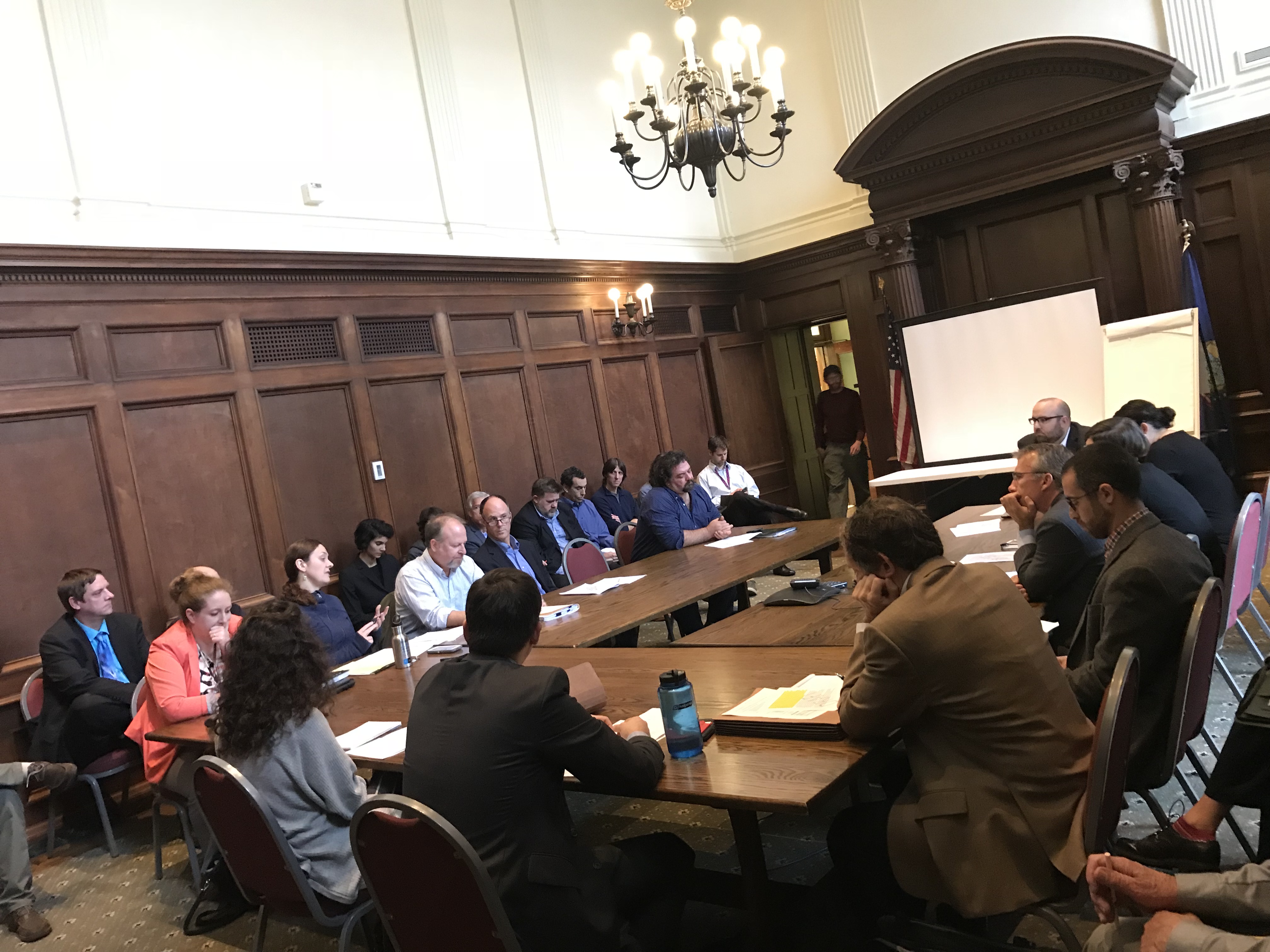
[T]he governor’s Marijuana Advisory Commission is recommending that before Vermont moves to legalize a commercial cannabis market, the state needs to find a consistent way to test drivers for cannabis impairment.
The panel also urges policymakers in its report to pave the way for law enforcement to use roadside saliva tests to determine the presence of cannabis in drivers ahead of legalizing a cannabis market.
While the commission had previously been split on whether to suggest the state allow law enforcement to use saliva testing—which has been criticized because it can not currently determine impairment behind the wheel— the recommendation was included in its final report to the governor.
The commission had been working for more than a year to determine how the state should design a market for marijuana sales. Along with recommendations about roadside testing, the panel is suggesting the state levy a 26 percent tax on cannabis purchases.
The report calls for the state to create a Cannabis Board of Control, embedded within the Department of Liquor and Lottery, to oversee the private cannabis industry and establish standards for product cultivation, testing and sales.
The commission’s final report comes as lawmakers are poised to introduce tax and regulate legislation in the coming months to pave the way for a legal marijuana market. The Senate has already passed similar legislation on three occasions, but it has not made it through the House.
There is still uncertainty about whether a tax and regulate proposal would have the support to pass the House, where lawmakers on both sides of the aisle, including House Speaker Mitzi Johnson, D-South Hero, have reservations about the impact further marijuana legalization could have on road safety and youth usage.

Senate President Pro Tem Tim Ashe, D-Chittenden, said in an interview Wednesday that he is in favor of passing a tax and regulate bill, even though roadside tests for cannabis impairment haven’t been perfected.
“My own view is that I’m ready to advance a full legal tax and regulate system even while we wait for the technology to improve,” he said. “The question is do we wait possibly for a decade until the technology is superior to have a more rational system? I would say no way.”
Both Maine and Massachusetts have already established legal markets, and New York Gov. Andrew Cuomo announced his plans this week to do the same.
After some Vermont lawmakers moved to legalize limited possession and cultivation of cannabis earlier this year, they rejected a proposal to authorize the use of saliva tests to determine presence of the drug in drivers.
Saliva testing was opposed by both the Defender General’s Office and the ACLU, who argued that detecting a certain drug is in a person’s system can not prove impairment at the time the test is administered.
During a meeting of the panel last week, Tom Anderson, commissioner of the Department of Public Safety, said Vermont must have a roadside impaired-driving test before a recreational cannabis market is created. He said the state will likely see impaired driving rates and roadway deaths increase.

“If the experiences in Colorado and Washington are the experiences we have here, roadway deaths are going to go up, impaired driving is likely to go up,” Anderson said. “So to me, it’s critical that we have that tool if we’re going down that path.”
Anderson recommended that law enforcement be given the ability to collect and test saliva both as a roadside and evidentiary test — similar to the current protocol for driving under the influence of alcohol — through legislative action.
Sen. Joe Benning, R-Caledonia, was among those who argued there is little consensus in the scientific community regarding the relationship between impairment and THC levels in the bloodstream, which can be detected for weeks after consumption of marijuana.
Laura Subin, the Director of the Vermont Coalition to Regulate Marijuana, said she was disappointed to see the saliva test end up as a recommendation in the report. Using the test would raise civil liberty and due process concerns, according to Subin, who also sat on the commission’s subcommittee on taxation and regulation.
“As much as everyone would like to wave a magic wand and test for impairment, the science is just not there,” she said.
In its report, the commission also recommends that Vermont work with Canada and other New England states to come up with a “scientifically defensible regional impairment standard” for cannabis. Canada has also legalized marijuana sales.
If lawmakers moved forward with a 26 percent combined tax on cannabis sales, the state’s tax rate would fall somewhere in the middle of the spectrum, compared to rates in other legal markets.
Washington State has the highest cannabis tax rate at 37 percent, and Colorado has a combined tax rate of 30 percent. California’s rate is 27 percent, but in Massachusetts, the combined tax rate on marijuana sales is 20 percent. In Oregon, it’s only 17 percent.
Lawmakers will be reexamining the proposed tax rate in the upcoming session.
In its first three years, state agencies estimate that the total cost for Vermont to implement a legal market is between $16 million and 20 million annually.
The Agency of Agriculture says it needs $1.1 million and the Department of Taxes budget would just over $2 million. The Department of Public Safety requested about $4.6 million. The largest estimate was for education and prevention programs in public schools at a cost of $8 million to $12 million a year, according to a draft report by the subcommittee on taxation and regulation released last month.
Ashe said that the commission has assumed establishing a legal market will require a series of new expenses that may not be necessary.
“We have to think about what the appropriations actually need to be on public health and public safety pieces,” Ashe said. “If you’re operating under the assumption that this is a massive new expense, well then the tax rate logically moves to a much higher rate.”
The commission had also been split on whether to legalize the sale of edible cannabis products, with the Vermont Department of Health arguing edibles, which have high potency, could be attractive to children.
The report does not make an explicit recommendation on edibles or products infused with marijuana, but instead says that if Vermont decides to legalize them, “no products that would be appealing to children should be permitted.”


