


[D]uring debates in Montpelier over whether to hike the minimum wage, people living along the New Hampshire border are often invoked as the residents who would be hit the hardest, with opponents warning that businesses would quickly move across the Connecticut River, where the federal minimum wage of $7.25 is in effect.
But for voters along the border — just like their representatives in the Statehouse, who are expected to take up a minimum wage bill again this coming session — opinions were mixed Tuesday on whether the minimum wage would boost livelihoods or bankrupt businesses.
A minimum wage increase “is long overdue,” said Willa Nohl, who with her husband owns the Charleston House B&B in Woodstock. She added that she doesn’t believe raising the wage would hurt businesses and by extension their workers.
“I think it’s important to show workers respect by paying them a living wage,” Nohl said.
But others are saying not so fast.
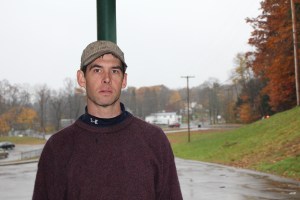
Dan Foley, the owner of a construction business in Springfield, said he voted Republican in part because of issues like the minimum wage. He said any increase would need to be staggered over several years, as proposed last year.
“As an employer to hire someone at $15/hour, it’s most likely not profitable and the job wouldn’t last very long,” he said.
Vermont lawmakers voted last winter to raise the state’s minimum wage, now $10.50 an hour, to $15 an hour by 2024. The measure was vetoed last spring by Gov. Phil Scott. While lawmakers are expected to try again in the coming session, Senate Pro Tem Tim Ashe said he doesn’t think raising the wage is veto-proof in the wake of the election, and he doesn’t know what a proposal will look like.
Ashe, D-Chittenden, is the leader of the Senate and a primary proponent of raising Vermont’s minimum wage to $15 over the next few years.
“The imperative to raise the minimum wage was the same the day before the election as it was the day after the election,” Ashe said Wednesday. “It’s about improving economic wellbeing. Just because there’s an additional senator who has been elected who is a Democrat, or there are ‘x’ number of new House Democrats, that’s not the driving force in why we would move to increase the minimum wage.”

Raising the wage “will just take the normal discussion we put into any major piece of legislation,” Ashe said. “We have a bunch of new faces that have a different perspective than the same people who voted on it last year, and out of respect to the new House and Senate members we want to recognize their contributions should be weighed before we set a course.”
The National Conference of State Legislatures reported that at least 32 states including Vermont proposed increases in 2018. Opponents of raising the wage have said the increase would hurt businesses and reduce the number of jobs. An analysis by the state’s Joint Fiscal Office showed that raising the wage to $15 in 2024 would result in the loss of 950 jobs, but pay would increase for 64,000 Vermont workers.
National research on the consequences, intended and unintended, of raising the wage hasn’t definitely concluded when a mandated wage increase helps or harms workers or businesses, say economists.
“The jury is mixed on the findings,” is how David Colander, a business professor at Middlebury College, puts it.
“You’ll see lots of controversy,” said Colander. “Some research has found no impact at all; others find that there’s a small disemployment effect, but a larger effect of firms that just don’t hire new workers, so it’s harder for inexperienced workers to get their foot in the door.”
Studies, including those based on the recent tiered Seattle minimum wage increases, have come up with contradictory findings, according to the online business publication Quartz at Work.
“Some 60 years and hundreds of research papers from prestigious universities, government agencies and private organizations have created little consensus on the subject, academic or otherwise,” said Quartz. “Just last year, separate Seattle minimum wage studies by researchers at the University of Washington and the University of California Berkeley suggested polar opposite effects.”

Colander, who has watched the debate over the wage in Vermont, said it’s important to distinguish between a sudden wage increase and one that is phased in. The latter wouldn’t be much different from what workers would be seeing anyway, he said. Yet it would have the effect of making it seem as though lawmakers had passed progressive legislation that improves working constituents’ quality of life, he said.
“It sounds wonderful but it doesn’t have any of the negative consequences,” Colander said.
One reason it’s difficult to estimate the impact of the $15 increase is because minimum wage increases are usually very small, said Art Woolf, an associate professor of economics at the University of Vermont.
“It’s really hard to make the leap from raising the minimum wage 10 percent to 20 percent to doubling it,” Woolf said. “All the studies have found if you raise the minimum wage there are modest employment effects, but that’s for a pretty small increase. There’s no way you can analyze a 50 percent increase, because it just doesn’t happen. It’s a different ballpark.”
Vermont’s one of many states debating a minimum wage increase, and its wage is set to rise slightly with the cost of living to $10.78 in January. New Hampshire, to Vermont’s east, has set its minimum wage to the federal minimum of $7.25/hour. To the west, New York will begin phasing in a $15/hour minimum wage next year, and Massachusetts will have a $15/hour minimum wage by 2023.
Opponents often warn that employers will flee a state when the minimum wage rises, but Colander said that’s unlikely to happen in Vermont, where the cost of moving the business would outweigh the cost of the additional pay. Much more likely, he said, is that businesses considering a move to Vermont would choose a different state with a lower wage, partly because of the wage and partly because the higher wage would send a signal that the state is not business-friendly.

“If you’re putting in this $15/hour minimum wage and really emphasizing it, it’s saying that you don’t want us,” said Colander. “That’s the part I worry about the most. I think Gov. Scott vetoed it not because it would make a big difference, but because really you’re trying to send information to potential firms coming in, and you want to say we are business-friendly.”
In the absence of definitive research, much of the information lawmakers receive from their constituents is anecdotal. Ashe has heard from a lot of them.
“Business owners have a variety of perspectives on raising the minimum wage,” he said. “There are many who say it should go up. The most vocal are typically the ones who are paying a wage that would be affected by raising the minimum wage. I find it a very fascinating issue when it comes to the employer community.”
Sivan Cotel, co-founder of Stonecutter Spirits distillery in Middlebury and the Highball Social restaurant in Burlington, said he supports raising the wage. His company has about 20 workers.
“There are lots of nuances that need to be considered,” said Cotel, who is director of operations for the company. “The people who are paid the minimum wage tend to be some of the more economically vulnerable populations in the state, and increasing wages for those populations has strong positive benefits for the people involved and for the rest of Vermont’s economy.”

