


[T]he Vermont Attorney General’s Office is seeking to block the questioning of three more former high-ranking officials associated with the state-run, scandal plagued EB-5 program.
Chief Assistant Attorney General William Griffin notified attorney Russell Barr late last week that it would be filing motions to quash subpoenas served on Lawrence Miller, former secretary of the Agency of Commerce and Community Development, and James Candido, former director of the Vermont EB-5 Regional Center.
The state-run EB-5 center was responsible for overseeing massive expansion projects at Jay Peak Resort in Vermont’s Northeast Kingdom over an eight-year span during which the developers misused $200 million from foreign investors, according to state and federal regulators. Ariel Quiros, Jay Peak’s owner at the time, also siphoned off another $50 million for himself to pay for personal expenses, including a high-rise luxury condo in New York City, regulators say.
“I called to inform you that the Office intended to file motions to quash both subpoenas and would do so on or before October 19,” Griffin wrote in an email Friday to Barr. “I requested that Mr. Miller and Mr. Candido be relieved of their obligation to appear at depositions pending the court’s ruling on the motions.”
Barr had been seeking to depose Miller and Candido later this month.
Griffin, in a follow-up email to Barr on Wednesday, said he also intended to file a motion to quash a subpoena for another former state official, Patricia Moulton.
Barr had been seeking to depose Miller, Candido and Moulton later this month.
The move by Griffin, who is representing former state officials in the EB-5 cases, follows a report last week in VTDigger that he is seeking to block the continued questioning of Brent Raymond, who headed the regional center after Candido left the post in 2012.
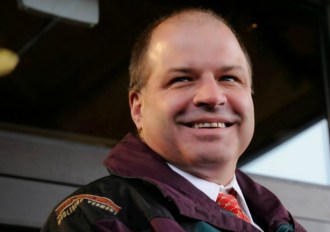
Griffin has also filed a motion to quash a subpoena of John Kessler, who has been involved with the state EB-5 regional center since its inception in 1997, serving in roles as the principal administrator and general counsel.
Barr is seeking to depose the state officials as he presses forward in a lawsuit he filed on behalf of a group of Chinese investors against Shen Jianming, an immigration attorney. The lawsuit alleged Shen took $1.25 million in kickbacks in return for bringing foreign investors to the Jay Peak projects.
Shen, as part of his defense, has blamed state officials for not properly monitoring the EB-5 projects.
Miller served as the head of ACCD from 2011 to 2014. Candido was the executive director of the Vermont EB-5 Regional Center from 2004 into 2012. Moulton followed Miller as the secretary of ACCD. She is currently the president of Vermont Technical College.
In late August, Raymond was deposed by Barr, but the agreed-upon seven hours of testimony was cut short by about an hour so Raymond could take care of a personal matter.
In that sworn deposition, Raymond testified that in May 2012 he asked Miller, then head of the commerce agency, to order an independent financial review of the EB-5 funded Jay Peak-related project.
“I recommended forensic audits. I was told no,” Raymond said, according to a transcript of his deposition. “I had asked for various documents. I was always told no.”
It wasn’t until 2014 that the state took action, two years after a whistleblower provided information to the state regarding the financial problems with the EB-5 funded projects.
Two years later, in 2016, the U.S. Securities and Exchange Commission filed an investor fraud lawsuit against the Jay Peak developers: Quiros, the resort’s former owner, and Bill Stenger, the former CEO. The lawsuit included 52-counts of securities fraud and accused the two developers of misusing $200 million in investor funds.
During the eight years leading up to that filing, state officials were responsible for managing and overseeing the Jay Peak projects under the state-run EB-5 program.
The U.S. Citizenship and Immigrations Services this summer terminated the EB-5 center. In its notice, USCIS said the state did not take steps to prevent the investor fraud. The state has since filed an appeal of that USCIS decision to terminate the center, asking instead to be allowed to “wind down” over time so that other projects don’t suffer.

Griffin, in an earlier letter to Barr, asked that the continuation of Raymond’s deposition be delayed until a decision is made by federal Judge Christina Reiss on the motion to quash Kessler’s subpoena in the Shen case.
In his filing seeking to throw out that subpoena for Kessler, Griffin argued that Barr, in seeking to depose state officials, is making an “end-run” around a previous decision to dismiss a separate lawsuit he brought against the state regarding the EB-5 regional center.
Barr filed that separate case in state court in Lamoille County on on behalf of another group of EB-5 investors, including Tony Sutton of London. In that case, Barr accuses state officials of being complicit, at worst, and negligent, at best, in overseeing the Jay Peak EB-5 projects from 2008 to 2016, allowing the developers an opportunity to bilk more than 800 investors.
Vermont Judge Thomas Carlson threw that case out before allowing any depositions to go forward. Barr is appealing that ruling to the Vermont Supreme Court.
Griffin could not immediately be reached Tuesday for comment.
Charity Clark, chief of staff for the attorney general’s office, responded to a request for comment from the office with an email Tuesday afternoon. The email said that the state is not a party to the pending lawsuit in which Barr is seeking to depose former state employees.
“The AG’s Office informed Mr. Barr that we would be filing motions to quash the subpoenas. We did not share these plans with a third party,” Clark wrote. “It appears that Mr. Barr is attempting to circumvent a state court’s ruling in a case Mr. Barr brought against the same employees he subpoenaed in this federal lawsuit.”
Barr said Tuesday he plans to challenge all the motions to quash subpoenas from Griffin.
“They are playing with the system,” Barr said Tuesday of the attorney general’s office move to block state officials from answering questions under oath. “What is the state trying to hide?”
