

The Deeper Dig is a weekly podcast from the VTDigger newsroom. Listen below, and subscribe on Apple Podcasts, Google Play, Spotify or anywhere you listen to podcasts.
As the budget standoff in Montpelier reaches into the summer, a common refrain among analysts is that it’s the closest Vermont has come to a government shutdown since 1961. That year’s legislative session lasted a record 210 days, as a governor who pledged to avoid tax increases faced off against a Senate leader with his own priorities.
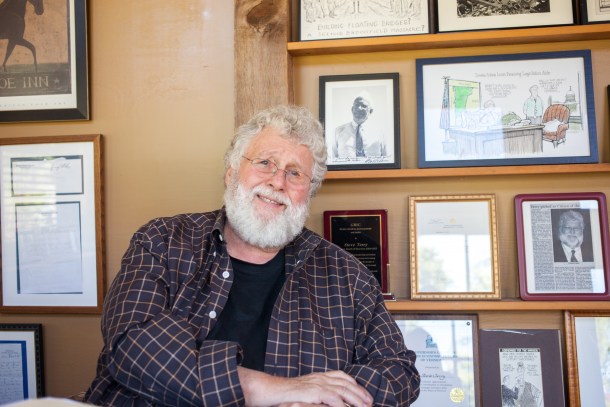
Stephen Terry, a Vermont journalist who co-wrote a book about 1960s state politics, says the dynamics that year were muted compared to today.
Terry says a shutdown was never really on the table in the summer of ‘61: Legislators voted to extend the session into August well before risking a budget-less government. And while the governor that year moved to keep tax rates level, spending issues took a backseat to “personality issues.”
F. Ray Keyser, a former speaker of the House, was the youngest person in history to occupy the governor’s office. He found a rival in Asa Bloomer, then the Senate president pro tem, who fought Keyser’s plans to privatize Lyndon State College and abandon the Rutland Railroad.
Bloomer “simply did not like Ray Keyser,” Terry says. “He used his parliamentary skills to really make life difficult for the Keyser administration.”
Delaying adjournment was just one of Bloomer’s tactics — and the public didn’t seem to mind.
“It was not the hot issue,” Terry says. “It was not as dramatic. I mean, you didn’t have Asa Bloomer holding press conferences. But you had him working very skillfully in the chamber and behind the scenes.”

Another key difference, Terry says, is that the in-fighting back then played out within one party. Republicans dominated both chambers of the Legislature in addition to the governor’s office. Bloomer belonged to a faction of liberal-moderate Republican lawmakers that saw Keyser as too aligned with the traditionalist “Proctor wing” of the party.
“I think it is much more partisan,” Terry says about the current conflict. “It is unusual to have one side, at the end of the day, just not move or negotiate.
“This kind of hard-nosed standoff is still not the usual way the Vermont Legislature has resolved its issues.”
The 1961 battle had consequences. It widened an already significant rift between the governor’s office and the Legislature. And it set the stage for the historic election of 1962, when freshman legislator Phil Hoff became the first Democrat elected governor in over a century.
Hoff would oversee reforms to state government that realigned both legislative representation and party politics. But, Terry says, he might never have squeaked out a win if it weren’t for the events of the previous year.
On this week’s podcast, Stephen Terry recounts the legislative struggles of 1961 — and the lessons learned in the years that followed.
Subscribe to the Deeper Dig on Apple Podcasts or Google Play. Music by Blue Dot Sessions and Lee Rosevere. Audio courtesy Vermont PBS.

