


[R]ichard W. Brown remembers how, shortly after he moved to Vermont 50 years ago, Audubon magazine introduced him to the world by publishing his photographs alongside a short biography.
“It said, ‘Richard Brown is working on his first book, ‘The Last of the Hill Farms,’” he recalls.
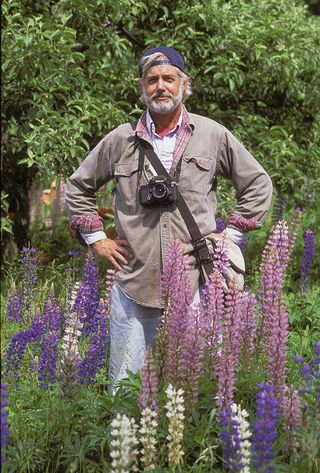
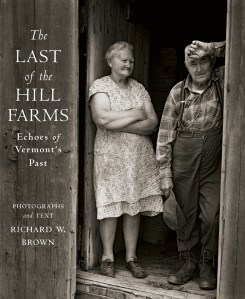
Over the past half-century, the Northeast Kingdom lensman has showcased his work in periodicals, corporate advertising campaigns and more than 25 books. But he’s had to wait until this year to see his long-promised “The Last of the Hill Farms: Echoes of Vermont’s Past” finally hit print.
“I assumed I would do this book someday,” says the man set to receive the annual Franklin Fairbanks Award “for lifelong creative and dedicated service to the residents of Vermont.”
The Massachusetts native had yet to sell a photograph when he moved to the Northeast Kingdom, where his family roots reach back to his great-grandfather teaching at Lyndon Institute.
“As soon as you got north of White River Junction,” he says, “it was a new country — or an old country.”
Time seemed to rewind a century to the era of work horses and wood-burning stoves.
“Something struck a chord,” he says. “I was drawn to the farmhouses that lost their paint and the people whose life stories were written on their faces. It’s not a postcard beauty. It’s a beauty of human endurance.”
Brown began taking black and white photographs like those of American masters Ansel Adams and Paul Strand.
“That’s what I wanted to try to emulate and perhaps add something of my own,” he says. “The connection between what people were doing and where they were living was so potent and, to me, something I wanted to capture. An honest, genuine involvement with the land.”
Editors, however, were more interested in postcard images of blue skies. Brown would make a living and name for himself shooting color before he eventually shared his black and white photos with publishers.
“They said, ‘Oh, no, we’d love you to do another color book.’”
Finally Brown’s wife, Vermont Life art director Susan McClellan, nudged him.
“She said, ‘You really have to do this — this is your legacy.’”
With the help of a kickstarter.com fundraising campaign, Brown has released his 136-page hardcover through Boston publisher David R. Godine. A corresponding photography show touring the state is on exhibit at St. Johnsbury’s Fairbanks Museum and Planetarium, where he will receive its Franklin Fairbanks Award on Saturday.
Brown says his home base of Peacham had nearly two dozen working farms when he moved there a half-century ago. Today he can count those left on one hand.
“Most of them are gone, and they haven’t been replaced,” he says. “It’s nobody’s fault that it all changed.”
Many former dairy farms have found second lives producing such specialties as alpaca wool or goat milk caramels. But Brown hasn’t aimed his camera at one for about two decades.
“I love maple syrup, but sugaring with plastic tubing?” he says. “I know it’s great, but it looks god-awful to me. It doesn’t inspire me. No way criticizing.”
The newcomer turned old-timer smiles.
“My job is to say how bad it is now — and how good it used to be.”
