

[T]he members of Vermont’s congressional delegation say the airstrikes the United States military carried out in Syria lacked congressional approval, and raised concerns about the lack of a clear national strategy in the region.
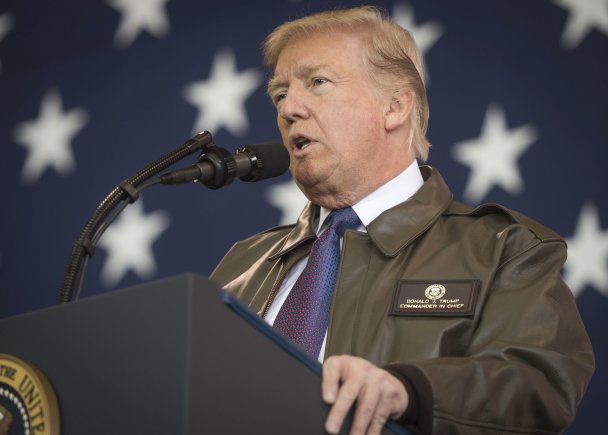
President Donald Trump announced Friday night that the U.S. had conducted a series of airstrikes in Syria in coordination with the United Kingdom and France.
The strikes were in retaliation for a suspected chemical weapon attack by Syrian government forces on a rebel stronghold that killed at least 70 people last week.
At least 76 missiles were used to target locations believed to be key to the chemical weapons program maintained by President Bashar al-Assad’s regime.
The Syrian government forces have backing from Iran and Russia. One of the central questions facing Trump and his national security team was how to respond to Syria’s alleged attacks without drawing a response from Russia that could quickly escalate conflict between the military powers.
In separate statements, all three members of Vermont’s delegation condemned the use of chemical weapons in Syria, but they decried what they say is a lack of a coherent American strategy. They each also charged that the president failed to get requisite authorization from Congress for military action in Syria.
Sen. Patrick Leahy, D-Vt., called for Trump to be “crystal clear” about American goals and strategy in Syria.
“Threatening the use of military force by tweet, and firing off missiles without a coherent policy or clear legal authority, raises obvious dangers and constitutional concerns and risks drawing us into a wider war,” Leahy said.
Late Friday night, Sen. Bernie Sanders, I-Vt., said it is “unclear” that the “illegal and unauthorized” strikes in Syria would achieve the goal of deterring use of chemical weapon.
“After 17 years of war in Afghanistan and 15 years of war in Iraq, we need a political strategy to bring peace and stability to the region, not more U.S. military intervention,” Sanders said.
Welch said the use of chemical weapons on Syrians was an “egregious violation of international law” and said the missile strike was “an appropriate response.”
“However, it occurred in a context where the United States has no clear policy in Syria or the region and at a time when there is real potential for escalation into a conflict with Russia and Iran,” Welch said.

