


Editor’s note: Mark Bushnell is a Vermont journalist and historian. He is the author of “Hidden History of Vermont” and “It Happened in Vermont.”
[E]veryone starts somewhere. Horace Greeley, the anti-slavery newspaper publisher who greatly influenced politics during the Civil War era and urged President Lincoln to emancipate the nation’s slaves, started in the unassuming community of East Poultney.
Technically, Greeley started in Amherst, New Hampshire, where he was born in 1811. But it was as a teenager in Vermont that Greeley joined the newspaper trade where he would leave his mark.
“Having loved and devoured newspapers—indeed, every form of periodical—from childhood,” he wrote in his autobiography, “I early resolved to be a printer if I could.”
Greeley started as a lowly apprentice, but would eventually rise to found the powerful New York Tribune newspaper. Greeley joined the anti-slavery faction that created the Republican Party and became one of the nation’s strongest voices for abolition.
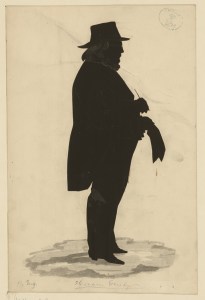
Photos and engravings of Greeley show a middle-aged man with small glasses, a bald pate and one of those strange, long, under-the-jawline beards that haven’t been stylish since the mid-19th century. It is hard to imagine Greeley as the skinny boy who, after moving with his family to West Haven, Vermont, pestered newspaper editors for jobs. An editor in Whitehall, New York, rejected his pleas, arguing quite reasonably that Greeley, then only 11 years old, was too young.
Several years later, Greeley tracked down Amos Bliss, one of the owners of the Northern Spectator in East Poultney, which was advertising for a printer’s apprentice. The story goes that Bliss was planting potatoes when he heard someone open his garden gate. Bliss, who was used to neighborhood boys stopping by the garden, didn’t look up and soon forgot he had a visitor. Several minutes passed before the nervous boy managed to croak out his question: “Are you the man who carries on the printing office?”
Startled, Bliss glanced up and saw a sorry-looking sight – a slender teenager wearing ill-fitting trousers, well-worn shoes with no socks, and a felt hat that covered his light-blonde hair. Bliss asked Greeley whether he was interested in learning the trade. “I’ve had some notion of it,” Greeley responded in understatement.
Bliss at first thought this largely unschooled boy unsuitable for the job. But over the course of a half-hour discussion, he became impressed with Greeley’s intellect and offered him the position. Greeley’s father negotiated a contract calling for his son to be paid $40 a year plus meals. Greeley agreed to remain with the paper for five years, until he turned 20.
Greeley proved serious, disarmingly serious, about learning his trade. At work, he would lean intently over his bench, focusing on where to find each letter, each punctuation mark, each space that had to be aligned by hand before the paper could be printed. He is said to have learned as much in a few days as most others learned in weeks.
As the junior apprentice, he had to endure hazing by the other young printers. They teased Greeley and threw bits of broken type at him. Intent on his work, Greeley ignored them. When one of the printers smeared ink in Greeley’s white hair, he supposedly said nothing. He quietly walked out of the office, returning an hour later with his hair clean and got back to work. Unable to faze Greeley, the other boys soon accepted him as a friend.
Greeley later recalled that he almost never took time off. When he had lived at home, he used to take a day each month in spring and summer to fish. But once an apprentice, he said, “I never fished nor hunted, nor attended a dance, nor any sort of party or fandango, in Poultney. I doubt that I even played a game of ball.”
Soon after he started at the paper, his family decided to move from their West Haven farm to western New York state in search of better opportunities. “The parting was a sore trial to me,” he recalled, “and I was almost persuaded to go off with them, my place being hard and disagreeable, but I said goodbye and went back to my cold, strange home with a dry face but a sore heart.”
Greeley’s tenure at the newspaper proved turbulent. “The organization and management of our establishment were vicious,” he said. As an apprentice, Greeley found he had to answer to several bosses. When the editor quit, the company fell into disarray. A local merchant bought the paper, but failed to bring stability. “(W)e had a succession of editors and printers,” Greeley said, and as a result, “… the office was too slackly ruled for the most part.”
One of the benefits of the tumult, however, was that Greeley managed to negotiate a higher salary and was left in “perfect liberty” to learn whatever he wanted about the business. During his time off, Greeley frequented the Poultney library and joined in debates at the local lyceum. “I doubt if in the whole term of his apprenticeship, he ever spent an hour in the common recreations of young men,” Amos Bliss, his first employer, said.
Greeley grew interested in national politics during his apprenticeship. The presidential election of 1828 pitted Andrew Jackson against John Quincy Adams. The Northern Spectator backed Adams, arguing that Jackson was usurping the power of Congress and harming the country by refusing to protect its trade with import tariffs and failing to develop its roads and canals. Jackson won the election, though with little support from the people of Poultney, who voted for Adams, 334-4.
A local runaway-slave case may have affected his politics. During Greeley’s time in East Poultney, a runaway slave made it across the nearby border from New York. Under New York law, someone born a slave could be kept as a slave until he or she turned 28. As Greeley later sarcastically related the incident, “A young negro, who must have been uninstructed in the sacredness of constitutional guaranties, the rights of property, &c., &c., &c., feloniously abstracted himself from his master …”
When the man’s former master came to Poultney to reclaim him, townspeople rose up and sent the master home empty-handed. With evident pride, Greeley wrote, “Our people hated injustice and oppression, and acted as if they couldn’t help it.”
The Northern Spectator, which had been living on borrowed time, finally expired in 1830. Now 19 and with a four-year apprenticeship under his belt, Greeley was out of work. He left town with little more than his clothes and $20, and headed west to visit his family. Then it was off to New York City, which Greeley reached, he later reckoned, “with ten dollars in my pocket, summer clothing, worth perhaps as much more, nearly all on my back, and a decent knowledge of so much of the art of printing, as a boy will usually learn in the office of a country newspaper.”
Despite the turmoil of his Vermont years, Greeley understood that they helped make him who he was. One day, after he had become a famous man, Greeley was sitting in his office at the Tribune, writing an editorial. His door opened quietly and in stepped a surprise visitor, Amos Bliss, the man who had seen promise in the boy. “Horace!” Bliss exclaimed. Greeley recognized the voice instantly. “My dear friend!” he responded. “My benefactor! How glad I am to see you!”

