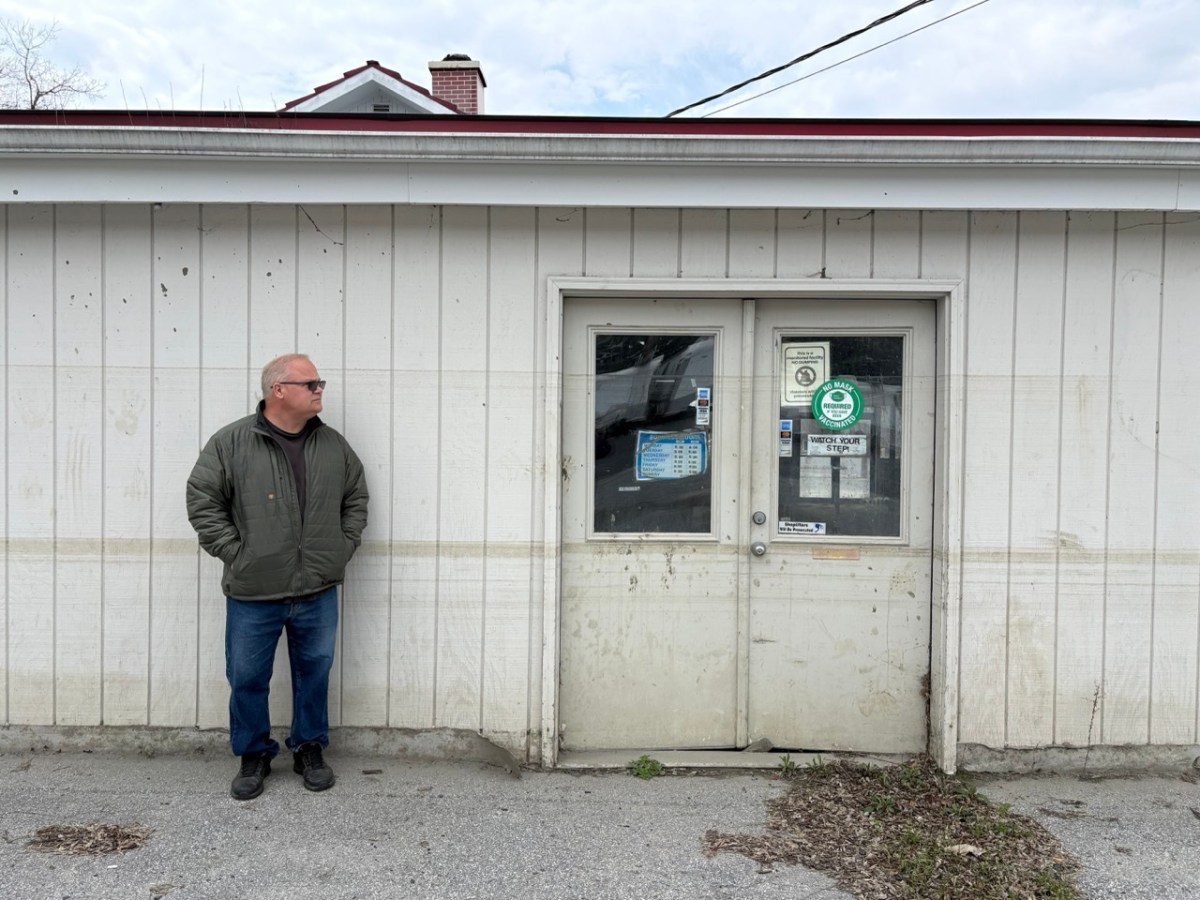
BARRE — When a flood swept through David White’s neighborhood in July 2023, the water went all the way up his front steps. It inundated the first floor of his house, where he has lived for about 15 years, leaving high-water marks that reached about two feet up the walls and a layer of putrid mud in its wake.
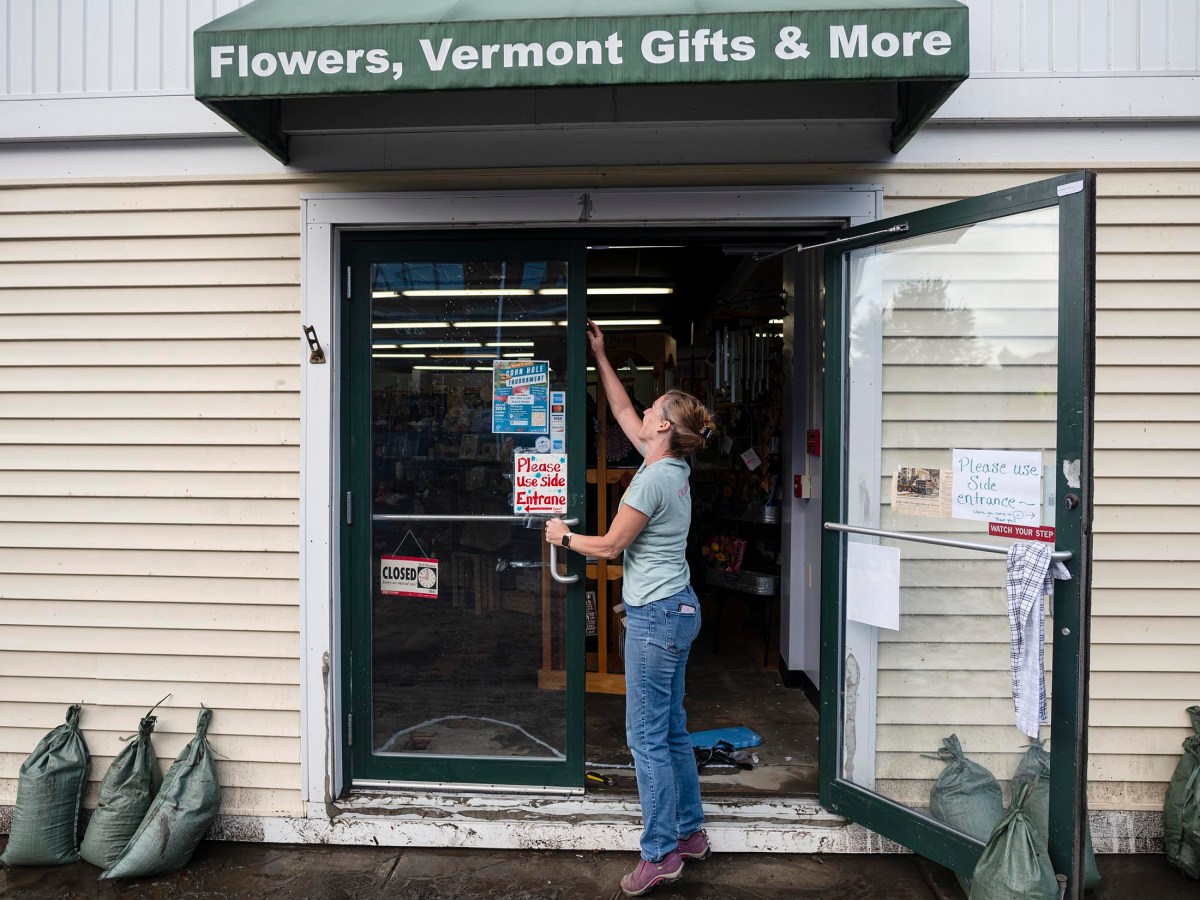
White lives in Barre’s North End, a low-lying residential and industrial neighborhood along the Stevens Branch and Route 302, roughly bounded by the Berlin Street bridge on one end and the Willey Street bridge on the other. The neighborhood saw intense flooding in the July 2023 and 2024 storms. The July 2023 storm damaged over 200 homes in Barre, according to the city.
In the destruction, Gov. Phil Scott, who was born and raised in Barre, also saw an opportunity. An infusion of federal recovery funding could do more than just help Barre clean up from the floods. It could also be used to transform one of the city’s flood-prone neighborhoods, creating new housing to replace what was lost and making the surrounding communities more resilient when the next big storm came.
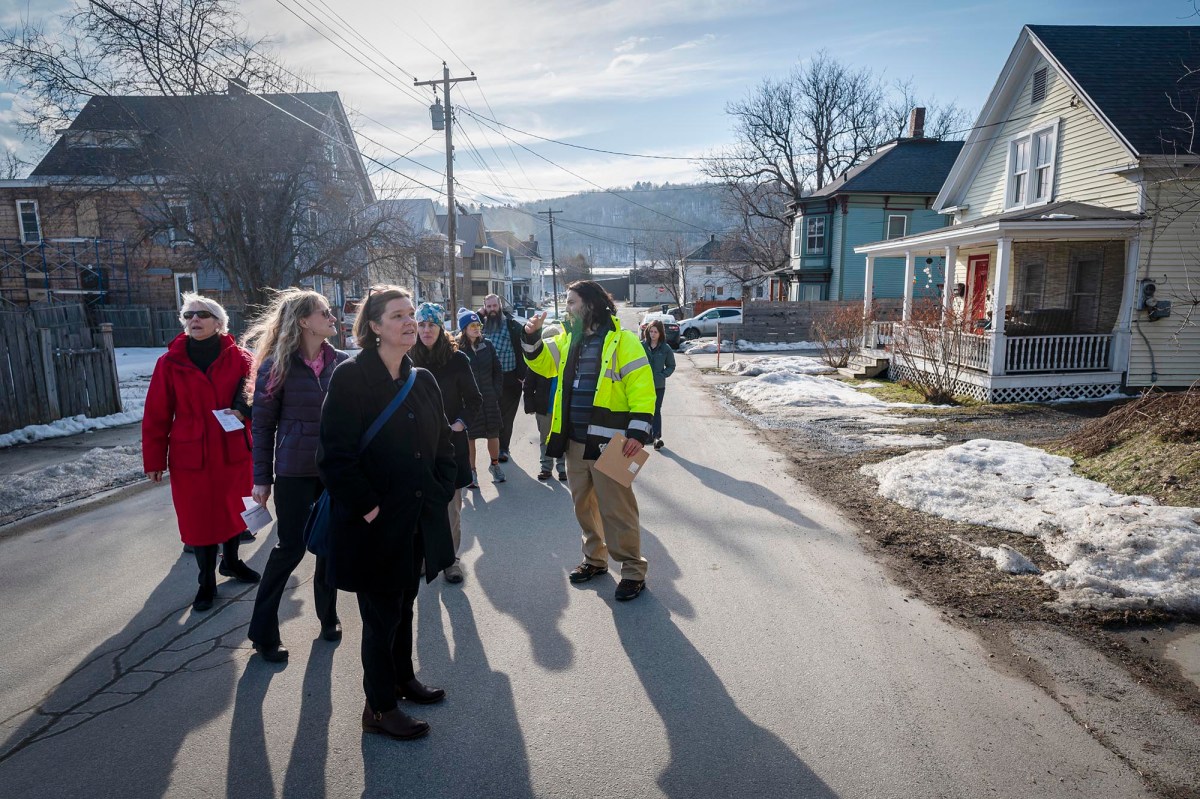
That’s the vision he pitched to the Barre City Council in October 2023. He brought plans for the city’s North End: an ambitious proposal to tear down about 19 buildings in the part of the neighborhood that saw heavy flood damage, turn the area into a park and build more than 200 units of new housing around the edge of the flood zone.
“We’re trying to take advantage of an opportunity that’s before us, and make lemonade out of lemons,” Scott told the Barre City Council at the time.
At the same City Council meeting, Doug Farnham, the state’s chief recovery officer, identified the North End as “one of the major projects we’re going to have to undertake in the next couple of years.”
Two and a half years later, though, little of the governor’s vision — or any other vision — for the North End has come to fruition. A reluctance to approve buyouts, state denials for funding and stalled mitigation projects have left the neighborhood’s residents, many of whom have faced two floods in less than three years, with diminishing options. And amid an ongoing housing crisis, some residents can’t afford to leave.
The most recent setback came when the state’s Agency of Commerce and Community Development denied funding applications for two recovery projects in Barre’s North End. The denials were finalized and announced in late April.
“We just basically said, ‘Pause’”
For David White, the North End resident, 2023 wasn’t his first flood. In 2011, a few months before Tropical Storm Irene devastated many Vermont communities, intense flash flooding caused extensive damage to the city. White says his house faced damage, but he chose not to move away.
“I was a little naive, I guess,” he said. “I figured, ‘Well, I’m probably good for a bit.’”
But in 2023, severe flooding inundated that same house, where he lives with his mother, who is now in her 80s. White owns the house; he and his mother live in a first-floor apartment and his daughter and son-in-law live upstairs, while a tenant rents the back of the house. The apartment where White lives, along with the first floor of the tenant’s apartment, were both left uninhabitable, he said.

Photo courtesy of Vermont Agency of Transportation
It was over six months before White moved back into his apartment, he said. In the interim, he spent time in a friend’s camper and a state-funded hotel room, while his mom stayed with his sister.
White applied for a Federal Emergency Management Agency buyout after the 2023 storm. The program uses a mix of state and federal funds to purchase properties impacted by flooding on the condition that the site is permanently preserved as green space, undeveloped land with grass, trees or other natural features.
While buying flood-prone houses can offer financial relief to homeowners, and turning that land into green space can boost flood resilience, buyouts present a problem for Barre and other communities with limited space for development in parts of the city less prone to flooding.
Without the option to develop on the flood-prone land in the future, a buyout permanently removes housing stock and reduces the tax rolls –– losses that Barre has said it can’t afford. That can leave property owners caught in the middle, facing repeated floods without a viable option to leave.
Of 67 citywide applications for FEMA buyouts, the city has approved 27, or about 40%, according to City Manager Nicolas Storellicastro.
Of 18 applications in the North End, only one was approved, he said.
“We’ve been very, very, very, very careful about the buyouts we approve, because we just don’t have a lot of land to give away,” Storellicastro said in an interview.
White’s buyout application was among those the city denied.
In the North End in particular, the city was reluctant to approve buyouts on individual properties until it had a clearer plan for the neighborhood’s redevelopment, Storellicastro.
“Every buyout intake that came in from the North End, we just basically said, ‘Pause,’ because we know we want to rebuild housing there.”
“How many times do I have to rebuild?”
Although the city did not approve White’s buyout, it was interested in purchasing his property through a different funding source. In January 2025, Vermont received nearly $68 million in federal funding from the Department of Housing and Urban Development to support recovery from the 2023 floods.
That funding is more flexible than typical FEMA funding. That made it a unique opportunity for Barre to potentially purchase some North End properties without the restrictions of a FEMA buyout, meaning the city would be able to build there in the future.
It seemed like a solution to the tension around buyouts the city has faced since 2023: The funding could offer some relief to homeowners who wanted buyouts, without permanently compromising the city’s ability to develop housing.
“Here’s this one funding stream that’s a really good resource,” Storellicastro said of the HUD funds. “It does this thing that we can’t really get funded through FEMA.”
Among other North End projects, the city hoped to use the funds to buy White’s and a few other houses, with the intention to eventually tear them down and build new, flood-resilient housing on the lots, which sit near the edge of the flood zone. White was on board.
Along with that project, Storellicastro also hoped the city would receive HUD funds for another project in the neighborhood. That project would have seen the city buy some North End properties, for which the city had previously denied FEMA buyouts, and turn them into green space. The city would have also provided grants to some homeowners who want to elevate their homes.
But while other projects in Barre received over $11.8 million of the HUD funding, the North End projects missed out. They were passed over in the initial round of funding. In the second round, the results of which were announced April 24, the projects were denied again.
That’s left White with few remaining options. Facing the probability of future flooding, he’s decided to try to sell his home.
“It doesn’t leave me really any choice,” he said. “I’ve been through this three times. I’m too old to keep doing this, you know? How many times do I have to rebuild?”
“Square peg, round hole”
State officials said that a big part of why the North End projects didn’t get funded was because the projects don’t address one of state officials’ key recovery goals: creating new housing outside of the floodplain.
“It became clear that, in addition to the housing shortage that already exists, that these floods really exacerbate that,” said Nate Formalarie, deputy commissioner of the Vermont Department of Housing and Community Development, which helps administer the federal HUD funds.
“And that’s where we wanted to focus.”
While the department set aside some of the funds for mitigation, infrastructure and planning projects, the majority was dedicated to new housing creation.
Formalarie estimated that projects supported by the first round of HUD funding will create more than 200 units of new housing, some in Barre. Second-round projects have the potential to create up to 220 additional units of housing, he said. The new housing will help alleviate some of the pressure exacerbated by the approximately 250 buyouts in progress across the state, Formalarie said.

The North End project that would have turned some properties into permanent green space while funding elevations of other buildings was a poor fit for the program’s goals, Formalarie said. That’s because it focused more on protecting existing housing than on creating new housing out of harm’s way.
“I think it was a bit of a square peg, round hole,” said Patricia Moulton, who works in the state’s Office of Disaster Recovery. She said that despite the rejections, she thought all of the proposed North End projects would be good for the neighborhood.
“They are good resilience projects for the North End, for sure,” she added. “It would be great if we could find the right fit for funding to accomplish them.”
Formalarie said that for the project that would have purchased White’s and some of his neighbors’ houses to make way for future flood-resilient development, Barre’s application didn’t include clear plans for how the site would be redeveloped.
Storellicastro said he had been clear with the state that the city intended to develop new flood-resilient housing on those parcels, but that finding a developer to commit to the project before it was funded was nearly impossible.
“They couldn’t afford anything else in Vermont”
Formalarie and other state officials said they wanted to see a more unified, cohesive vision for the North End.
“It was a few buyouts here and there, and then elevating a few select properties and leaving others where they are,” Formalarie said. “So it wasn’t kind of a full-scale redevelopment or reenvisioning.”
That kind of comprehensive plan has been hard to create, though, according to Storellicastro, because the city has to contend with the wishes and needs of individual residents.
While some residents, like White, are interested in buyouts, others don’t want to leave, Storellicastro said. Some are hesitant to leave because of the lack of affordable housing in Vermont, he said.
That leaves them stuck between recurrent floods and an ongoing housing crisis.
“Even if they were to get a buyout, they couldn’t afford anything else in Vermont,” Storellicastro said. “So for most of them, it was just lack of options.”
Formalarie also said the amount of federal funding was far from what was needed to address recovery needs across the state.
For Storellicastro, the denial was hard news to deliver to a neighborhood that has seen repeated floods and little progress.
“When they express their frustration about feeling forgotten,” he said, “I can’t refute that. You know, I can’t point to anything that we can say like, ‘Look, this is a meaningful, significant thing we’ve done differently that’s going to change things the next time there’s a flood in your neighborhood.’ And by golly, it hasn’t been for lack of effort.”
“If the next flood comes … then what happens?”
The lack of funding leaves the future of the North End’s recovery unclear. Storellicastro hopes to seek other funding sources, such as federal flood mitigation money, for some of the projects, but those processes will be more competitive, he said.
State and city officials agree on at least one thing: This will not be the last time the neighborhood floods. Extreme precipitation has increased in the Northeast over the past half century, and the trend is expected to continue as the climate keeps changing.
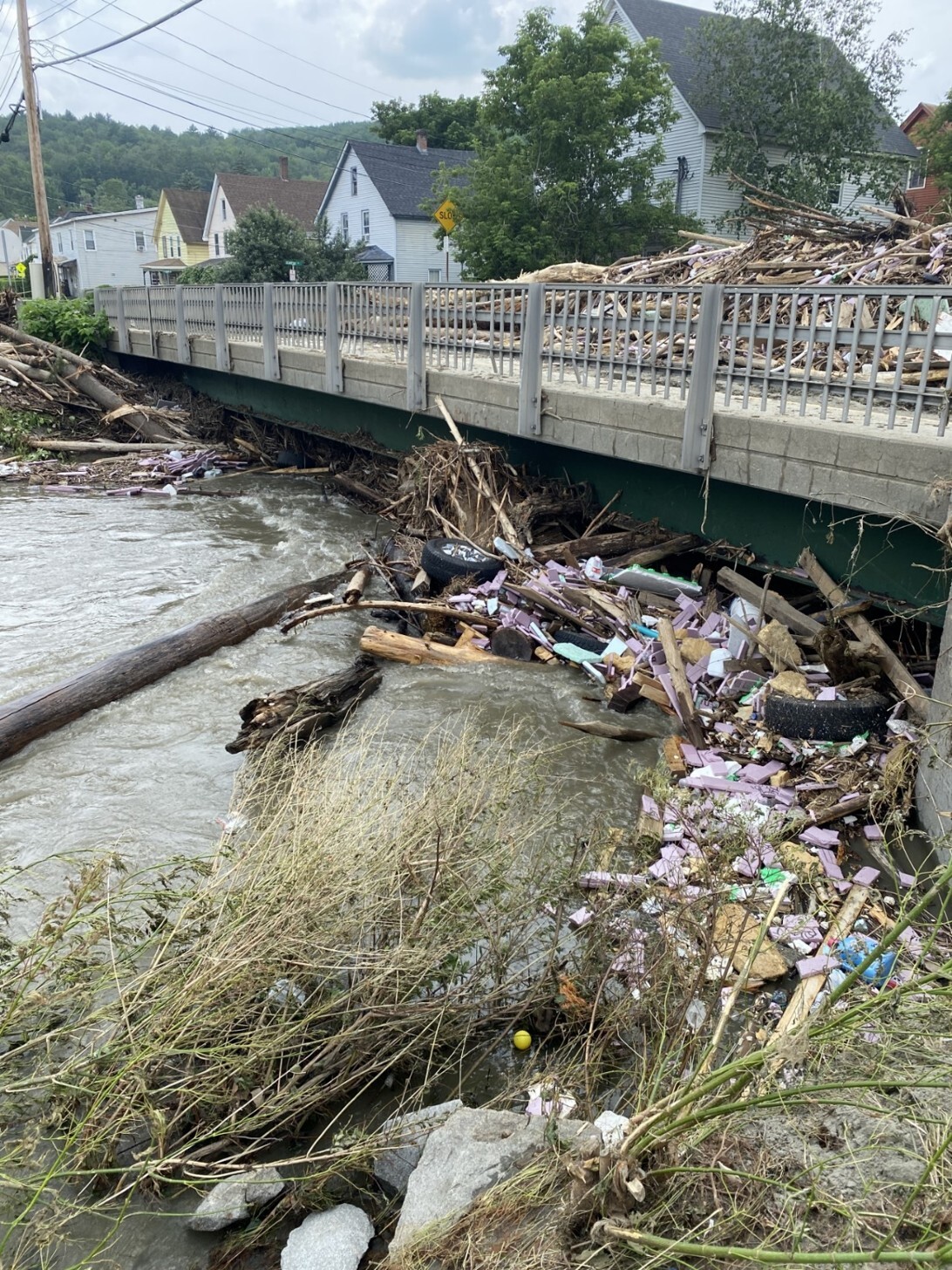
A flood mitigation project that would benefit the neighborhood has also stalled. The Berlin Street bridge, which spans the Stevens Branch just a few blocks from White’s house, acted more like a dam during the 2023 floods, when debris caught underneath the bridge contributed to water rising upstream.
Storellicastro said that although the bridge has contributed to flooding in the North End, the City Council has yet to decide on a plan to address the issue due in part to concerns from community members in other parts of the city about longer travel times if the bridge is removed.
The lack of progress on both mitigation and recovery has left White feeling disheartened.
“I feel like the North End here has been abandoned,” he said.
State officials can understand the feeling.
“I can only imagine how incredibly frustrated and disappointed these people are, and I appreciate that 100% because they’re in harm’s way,” Moulton, the recovery officer for central Vermont, said of the HUD funding denials.
“The biggest concern is, if the next flood comes and floods them again, then what happens?”
White hopes he won’t be around to find out. After the most recent funding denial, he’s decided that he’s on his own. He’s going to try to sell his house and get out, maybe to higher ground, or maybe out of state, where the housing is less expensive.
White expects finding a buyer to take time and knows he won’t get as much as he hoped for the house, given the neighborhood’s reputation for flooding. But he doesn’t see another choice.
“I don’t know what else I can do through my own power,” he said. “Staying here is not an option.”
And while selling may be the path forward for him, it’s not a solution for the neighborhood’s underlying vulnerability.
“Unfortunately, that doesn’t resolve the problem for the next guy,” White said. “I kind of feel sorry in a way, for anybody else, but I don’t know what else I can do. I can’t rely on my state. Can’t rely on my city officials. Because they’ve all failed miserably.”