Jon Margolis is VTDigger’s political analyst.
[N]ow that the latest turmoil at the University of Vermont is over, or at least in abeyance, it is time to consider — with malice toward none and charity for all — who did the right thing.
No one did. Charity does not require blindness.
Start with the guys (apparently men, apparently not students) who put up signs celebrating their whiteness in places where they would be most likely to provoke the anger of non-whites.
Among the messages: “Innocent Lives Matter Not Guilty Ones.”
Uhhh, guys: there’s no such thing as a guilty life. Some people get convicted of breaking the law. They are then guilty of that offense. This guilt does not transform their lives into “guilty ones.”
Now let’s consider the officials, UVM President Tom Sullivan and Burlington Police Chief Brandon del Pozo.
They both blew it.

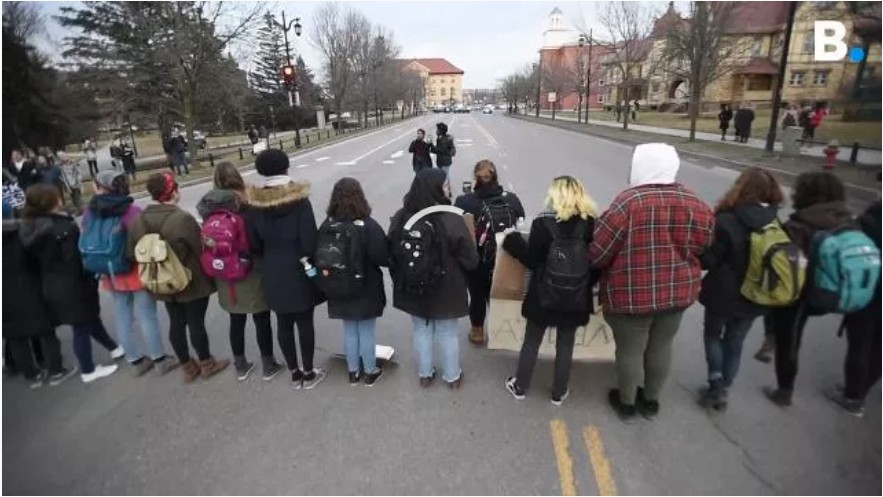
Sullivan should have met with students when their protests began on Feb. 20, instead of merely emailing and issuing official statements. Yes, he’s a busy man who might have been lulled by the fact that the 200 to 300 demonstrators were a smidgen of UVM’s more than 10,000 undergraduates, most of whom paid the protests no mind as they went about their usual routines.
All the more reason to meet. As much as anything, the students wanted recognition and respect. An early meeting might have calmed things down at least to the extent of not giving 100 or so students the idea of blocking Main Street during the evening rush hour on Feb. 22, a protest the Burlington Police merely observed.
Del Pozo later said dispersing the demonstrators might have been “seen as the state using force to stifle political speech.”
Or maybe as minimal enforcement of the law, not to mention clearing the way to the only nearby hospital. Del Pozo agreed that “the action was unlawful,” and “widespread disruptions cannot become the norm.”
In other words, this won’t be allowed again, which comes close to admitting he was wrong the first time.

As to the protesting students, the charity begins by recognizing that they are in their late teens and early 20s, and therefore take themselves far too seriously. Furthermore, the protest leaders are African-Americans, young black people in a sea of Vermont whiteness on campus and off. That’s not an easy thing to be.
The signs posted by those provocateurs boasted that they were “White Privelaged And Proud of It.” Forget the misspelling. What’s important is that the sign-posters don’t understand that the great privilege of being white means you don’t have to think about being white.
That’s the real power of white privilege. Not that whites make more money. They do. But what is even more valuable in day-to-day life is that white people can be entirely indifferent to their race, and most of them are most of the time.
Being non-white (or non-Anglo) and being indifferent to your race (or ethnicity) is somewhere between difficult and impossible, and perhaps more difficult in Burlington than in Brooklyn or Birmingham, where there are more people who look more like you.
More than half a century ago, author James Baldwin said “to be a Negro in this country and to be relatively conscious is to be in a rage almost all the time.” There has been a lot of progress since, but it still seems likely that relatively conscious non-white people are aware of their minority status almost all the time. It’s a burden the rest of us don’t have to bear, meaning the rest of us should try to remain aware of it.
And while the students have not been very clear or very specific about their complaints (they really need better public relations advice) there’s little reason to doubt that some of those complaints are valid. Vermont is not an island. The U.S. Education Department’s Civil Rights Division reported recently that complaints of racial harassment and discrimination in schools — including colleges — rose by 25 percent last year.
Besides, the university has conceded that some of the demands of the protesting students are legitimate, and is moving to satisfy them — trying to recruit more minority faculty, expanding diversity training, improving diversity courses. To some students, these steps are insufficient, and it’s not clear how effective they’ll be; the effects of diversity training, like those of motivational speaking, sometimes wear off quickly. Still, UVM administration and faculty are not claiming everything is peachy-keen and that nothing need be done.
None of which lets the student protesters entirely off the hook, and from the position of another privilege (that of age), some appraisal and some advice.
You guys blew it, too. When people try to provoke you, the smart thing to do is ignore them. Then you win and they lose. Instead, you got provoked. They won. You lost.
You also seem unaware that all of you — regardless of race — are privileged. Assuming you pass your exams, you will graduate from a prestigious university. That means you will be able to make a very good living, and do it — unlike a cop, a waiter or a construction worker — sitting down, indoors, where it’s warm in the winter and cool in the summer, and without having to lift heavy objects.
On top of that, you (or some of you) seem not to realize that the UVM administration cannot patrol every lamppost and phone poll. Signs will be posted.
And a civics lesson: When a judge determines that someone who had been accused of shouting racial insults in the library should not be prosecuted, that result is not “a clear case of white supremacy culture.”
It is a clear case of the due process of law. The judge has seen the evidence and knows the law. You have not and do not. Due process of law protects everyone, but especially the poor and powerless. No one has been railroaded into the pokey on flimsy grounds more than African-Americans, Hispanics, Native Americans and political dissenters. This time, the law annoyed you; one day it may save you.
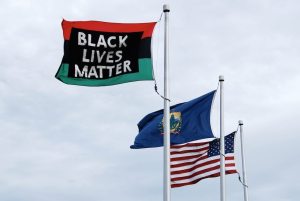
Nor does UVM have the power to change the laws so that the guy shouting in the library or the drunk kid who stole the Black Lives Matter flag a while back can be charged with a hate crime. That’s not what the law says, and your insistence on prosecuting them suggests a desire for revenge rather than justice.
A natural instinct. But there was a guy a few years back who called for “a method which rejects revenge, aggression, and retaliation.” This fellow said folks should try to understand the people who enrage them.
“The foundation of such a method,” he said, “is love.”
A little dreamy if not downright mushy for social justice warrior 21st century college students? Maybe, but that’s what Dr. King said.