


The news was included in a recent filing by an attorney for the U.S. Securities and Exchange Commission that also states Quiros is willing to give up ownership of other assets that had been known to federal regulators.
Those assets include a New York City condo and two properties in Newport that he had plans to develop, plans that have been shelved following the investor fraud allegations.
The move will allow a court-appointed receiver to sell the two Newport properties and prevent the condo from falling into foreclosure. The latter would have risked a loss to the receivership of millions of dollars in equity in that property, according to the filing.
The transactions, the document states, will also “bring cash and several million dollars of real property into the Receivership estate for the benefit of investors and creditors.”
In April 2016 the SEC filed a lawsuit against Quiros and Bill Stenger, Jay Peak’s CEO and president, alleging they operated a “Ponzi-like” scheme through the EB-5 immigrant investor program. The SEC alleges the two men misused $200 million raised from investors meant to fund massive upgrades to Jay Peak and other development projects in Vermont’s Northeast Kingdom.
The SEC froze Quiros’ assets. Michael Goldberg, the court-appointed receiver, was put in charge of overseeing them.

However, the SEC was not aware of the account he kept in Colombia.
Robert Levenson, an SEC attorney, wrote in the filing that in response to recent questions from the government, “Quiros identified additional real property he either owns or in which he has an interest that the Commission and the Receiver did not know about.”
“Quiros represented he has not withdrawn or spent any money from that account since the inception of this case and has provided supporting documentation of this,” Levenson wrote.
A second undisclosed account is at a U.S. branch of the same bank.
“Quiros represented that after the freeze was imposed, the bank closed the account and issued him a cashier’s check for $104,000,” the SEC attorney wrote. “Quiros stated in his interrogatory answers and through his counsel he does not know what happened to the check, but is taking steps to have a new check reissued.”
The bank was not identified in the filing.
The receiver, Levenson wrote, will place money from the two accounts in a trust once he receives the funds.
Quiros also disclosed to the SEC that in 2014 he and wife sold a recreational vehicle they jointly owned, with the buyer paying them $1,000 to $2,000 a month since that time. The payments continued after the asset freeze went into effect in April 2016.
“Quiros’ attorneys stated he deposited those payments into a checking account in his wife’s name on which he later was added as a signatory,” Levenson wrote. “Quiros then withdrew the money each month and paid condominium fees and expenses on two condominiums in which he has a partial interest – one in Colombia and one in Puerto Rico.”
The filing added, “In total, it appears Quiros spent $28,000 since April 2016, $14,000 of which was his and subject to the freeze, and $14,000 Quiros stated was his wife’s money and … not subject to the freeze.”
Quiros has agreed to turn over to the receiver a final $14,000 “balloon payment” due this month on the RV to repay money he spent after the asset freeze went into effect, according to the filing.
In May 2016, shortly after the SEC lawsuit was filed, federal Judge Darrin Gayles approved $15,000 in monthly expenses for Quiros, a Miami businessman, paid by the Jay Peak receivership. Gayles is presiding over the SEC in federal court in Miami.
The specifics on the properties noted in the recent filing that Quiros has agreed to turn over to the receiver include:
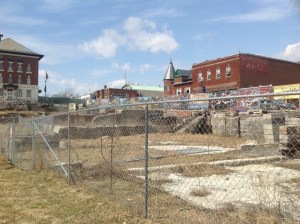
• Land outside Newport known as the Bogner property. Quiros had planned for that 25-acre site to be home to AnC Bio Vermont, a $110 million biomedical research center. Some site work was done at the property. The SEC has called AnC Bio “nearly a complete fraud.”
• The Setai Condominium in New York City, which the SEC alleges was bought with investor funds. Quiros last summer took a mortgage of a little more than $1 million out on the property in an effort to pay his legal bills. However, a judge only approved the use of $80,000 to pay those bills with the remainder going to the receiver. “The note on the mortgage is due on August 1, 2017,” the recent filing stated. “If Quiros does not make the payment, the lender may attempt to take control of the condominium and potentially several million dollars in equity in the unit that could inure to the Receivership estate will be lost.” Quiros bought the property for $3.8 million.
Levenson, the SEC attorney, wrote in the filing that he is seeking the judge’s approval to “modify” Quiros’ asset freeze to allow the property transactions to take place. No ruling has been made on that request.
The receiver, Levenson added, will “undertake efforts to sell all three as quickly as possible.”
Funds from those sales are also slated to put into a trust held by the receiver.
The attorney is also asking the judge to allow an additional payment of $175,000 to Quiros’ current attorneys for defense fees and costs, with the funds coming from the proceeds of an earlier nearly $1 million IRS refund check Quiros received. That refund money is currently held in trust by the receiver. Earlier this year, $100,000 was also taken from that same account to pay Quiros’ current lawyers.
If Quiros is successful in his lawsuit against his insurance company seeking coverage for his attorney fees, he will use those funds to repay $275,000 into the IRS trust account held by the receiver.
Legal fees have been subject to a great deal of court filings for Quiros. He fired his previous legal team earlier this year, still owing them more than $2 million. Those attorneys have submitted a slew of court motions in an effort to secure payment — so far to no avail.
Melissa Visconti, Quiros’ new attorney, changed her client’s strategy when she took over the case. Rather than litigating issues with the receiver and SEC, Visconti said the intention now is to cooperate.
The latest filing by the SEC is termed an “unopposed motion,” with the SEC, receiver and Visconti all agreeing to it.
Levenson and Goldberg could not be reached Wednesday for comment. Visconti, in an email, declined to comment.
