Peter Sterling, the chief of staff for Senate President Pro Tem Tim Ashe, D/P-Chittenden, contacted several media outlets Tuesday to say a recent “frequently asked questions” document from Scott’s spokesperson is inaccurate.
The assertion comes as top lawmakers negotiate with the administration in advance of a legislative session next week called in response to Scott’s veto of the state budget over the health care issue. Leaders of the House and Senate met with Scott’s administration Tuesday but did not reach a deal. People involved in the talks say they hope to have a deal later Wednesday.
Sterling outlined two scenarios in which he says the cost of health care would go up for school workers under Scott’s plan. In one case, he said a worker with a spouse and one child would spend more money on premiums and copays from giving birth. In another, he said a worker with one spouse and one child would spend more to have a child spend the night in the hospital.
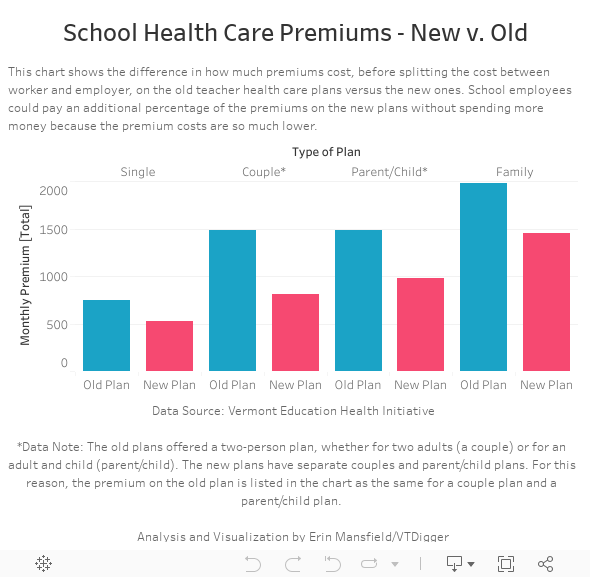
School employees — including teachers and support staff — are scheduled to move to health care plans Jan. 1. The new plans have a lower premium cost than current plans and were chosen specifically so schools would not be liable for paying the so-called Cadillac tax under the federal Affordable Care Act.
In April, Scott proposed that there be a statewide negotiation of those new health care plans so the state could make sure workers would pay 20 percent of the cost of the new premiums. He has said repeatedly the state can save $26 million without costing teachers more money.
As part of the deal, Scott has proposed to require both teachers and support staff to pay the first $400 of their health insurance costs. In the case of school employees who have another person on their plan, they would pay the first $800, and so on.
In a news release Monday, Scott’s spokesperson, Rebecca Kelley, repeated that the plan “is designed to keep school employees whole by limiting any change in exposure to costs.” Additionally, she said, “The governor’s proposal is a better deal for school employees than the status quo!”

The situation assumes the para-educator makes $14.75 per hour and has a spouse and one child. The situation also assumes the para-educator was paying 10 percent of the current health care premium, which is lower than what the average teacher or para-educator pays throughout the state.
In the second situation, Sterling said a teacher with a spouse and a child would spend an additional $1,010 under the proposed plan for a child to go to the emergency room, spend one night in the hospital, and get discharged with crutches.
The scenario assumes the teacher pays 20 percent of the current health care premiums and will then pay 20 percent of the new health care premiums. The teacher would save $90 on premiums per year and spend $1,200 out of pocket on the hospital stay.

The Vermont School Boards Association, which has allied with Scott in the health care debate, does not dispute the veracity of Sterling’s individual scenarios but does dispute whether they are being used appropriately.
“This conversation has been about averages,” said Nicole Mace, the executive director of the association. “You can imagine scenarios outside of these averages.”
On average, support staff do pay a slightly lower amount of their premium than full teachers, according to data from the school boards group. However, the premium shares vary more than premium shares for teachers.
On average, according to a VTDigger analysis of data from the Vermont School Boards Association, teachers pay around 15 percent of their health care premiums. Support staff, including people such as para-educators, pay around 14 percent of their health care premiums.
In Grand Isle County, on average, support staff pay 5 percent of their premiums, versus 17.8 percent for teachers. In Addison County, on average, support staff pay 7.17 percent, while teachers pay 14.82 percent. In Franklin County, support staff pay an average of 20.41 percent, but teachers pay an average of 14 percent.
A VTDigger analysis of current and future premiums shows that employees who are paying 8 percent or 10 percent of their current premiums would see an increase in their monthly payment — whether they choose the single plan, couples’ plan, parent/child plan or family plan.
There are at least 67 districts where support staff pay 10 percent or less of their health care premiums, according to data from the Vermont School Boards Association. There are 26 districts for which the Vermont School Boards Association did not have data on support staff premium share.
Employees who currently pay 15 percent of their premiums — which is close to the average of what teachers pay across the state and a little higher than what support staffers pay — would not see an increase in premiums, according to VTDigger’s analysis.
Kelley’s press release Monday also said the new plans would cover between 95 percent and 97 percent of the cost of health care services. “This means the modeled health care plans in the Governor’s proposal have more value and cost less than current plans,” she said.
Sterling said Blue Cross Blue Shield of Vermont, which administers what is essentially a self-insured plan for the Vermont Education Health Initiative, has analyzed only single-person plans, not couples’ plans, parent/child plans or family plans.
Nonpartisan lawyers for the Legislature said the same thing in a memo May 17. Blue Cross had run estimates based on two different sets of data and came up with a value of 97 percent using national data, and 95 percent using state-level data, according to the memo.
Andrew Garland, the vice president of external affairs for Blue Cross Blue Shield of Vermont, declined to comment. He said questions on the plan should be directed to VEHI because Blue Cross only provides administrative services.
On Tuesday, Kelley said in a news release responding to Sterling: “The governor is committed to the merits of his proposal and doing the right thing for all Vermonters based on the evidence supporting his position, which includes the analysis and facts cited in the frequently asked questions sheet yesterday. We are fully confident in the facts informing this policy discussion.”
Kelley said if Ashe has concerns, he can address them during the ongoing negotiations.
The Legislature is scheduled to convene from June 21-22 for a special session, when lawmakers will be expected to pass a compromise on teacher health care.