

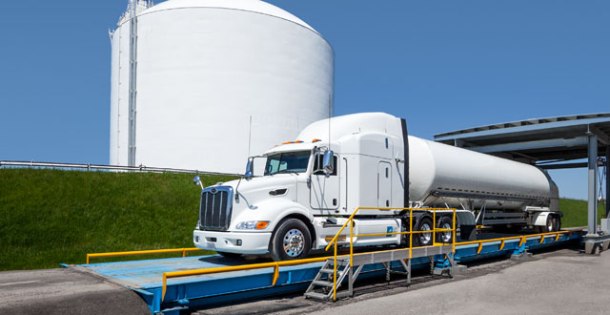
Gaz Metro — Quebec’s largest natural gas distributor — has tripled production at a liquefied natural gas facility in Montreal.
The $7 billion company owns Vermont Gas Systems as well as Green Mountain Power, which is Vermont’s largest electric distribution utility.
The Quebec government has invested $50 million in the $118 million plant expansion, which brought the plant’s production capacity to 9 billion cubic feet a year, up from 3 billion a year. Gaz Metro completed the expansion in late April, after two years of planning and construction, according to company representatives.
The new production is meant to serve Quebec’s heavy industries in the province’s northern reaches, executives say. The Quebec government has plans to continue expanding its natural gas distribution networks, for both economic reasons and expected environmental benefits of the fuel compared with other fossil fuels, according to the province’s energy policy.
The product is transported by truck and kept at temperatures around minus 260 degrees Fahrenheit to keep the fuel in a liquid state. As a liquid it requires far less volume than it does at room temperature, where it is a gas.
A Vermont business that already transports natural gas by truck, Colchester-based NG Advantage, says Quebec’s plans don’t appear to be a threat to the company.
“I think it’s very unlikely that has an effect” on NG Advantage’s business, said the company’s co-founder and board chairman, Tom Evslin.
NG Advantage sells compressed natural gas, which is much easier for small customers to work with than liquid natural gas, Evslin said. Liquid natural gas is more expensive, harder to use and potentially hazardous, because it’s so exceedingly cold, he said.
Because a tanker truck can hold twice as much liquid natural gas as compressed gas, liquefaction is a good choice when the fuel needs to be carried long distances, Evslin said, but that’s just not the case for most places in Vermont.
At least one other company has in the past tried to sell LNG in Vermont, but without much success, Evslin said.
But selling LNG to Vermonters isn’t part of Gaz Metro’s business plan, said Martin Imbleau, Gaz Métro’s senior vice president of operations, transport and development of new energies.
The company has no current clients in Vermont, Gaz Metro “is not engaged in any discussions” with potential Vermont clients, and “we don’t think Vermont [is likely] to play a significant role” in the sale of the plant’s expanded offerings, Imbleau said.
Other New England markets, in particular Massachusetts and New Hampshire, are far more likely to benefit from the expansion, he said.
The LNG that Gaz Metro exports into the United States will probably serve large industrial clients, Imbleau said, including energy suppliers who would employ it “for peaking purposes.”
In other words, customers would buy LNG at times during the year when demand is low, and store it until peak demand over the winter drives up the cost of energy. When it’s costly to purchase additional natural gas, these customers can vaporize their LNG stores, burn it, and avoid peak prices, he said.
Although Gaz Metro isn’t aggressively seeking Vermont clients, the product is available, Imbleau said.
“If you’re a large industry, and you use propane or diesel to generate electricity, or because your processes need diesel or oil,” it might be worth looking into a switch to LNG, Imbleau said.
Quebec’s investment in the plant expansion is just that — an investment, and not a subsidy, Imbleau said. Quebec residents are taking on the financial risk that results from such investments, and their government anticipates a return on it, he said.
That return is likely to come from the expanded ability to serve distant, remote and large industrial customers in the northern portions of the province, Imbleau said.
One of the first customers benefiting from the expansion is a diamond mine about 600 miles north of Montreal, he said.

