

[R]UTLAND — Sharon Davis, president of the city’s Board of Aldermen, cast the tie-breaking vote Monday night for a measure that calls for looking into establishing a 1 percent local option sales tax to help fund the city’s pension liabilities.
“I am not currently a fan of the local option tax,” Davis said. “But, I’m not adverse to simply having a discussion about it.”
Davis’ vote came after the other 10 members of the board split on whether to send the idea of a 1 percent local option sales tax to the board’s Finance Committee for further review.
City Treasurer Wendy Wilton suggested the board explore the possibility of such a tax at the board’s meeting Monday night.
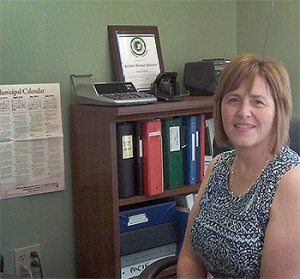
The board has committed, the treasurer said, to budgeting about $650,000 annually to fund the city’s pension liabilities and a local option tax could help offset that expense, taking that burden off property taxpayers.
“In order to be able to fund that going forward,” Wilton said of the pension liabilities, “I recommend that the board really look very carefully at adopting a local option tax.”
The city is looking to pay down costs associated with its now-closed pension fund that several years ago had been seriously underfunded, Wilton said. New employees are now signed up with the Vermont Municipal Retirement System to receive their pensions.
Wilton told the board that the 1 percent local option sales tax would replace the current 1 percent rooms, meals and entertainment tax that has been in place in the city for more than a decade and brings in about $450,000 a year.
The new 1 percent sales tax would be added to the current state sales tax of 6 percent on purchases in the city. It would raise more than $1 million in total, enough to cover the retiring of the current rooms and meals tax and paying for the pension liability.
Having the local option sales tax cover the $650,000 pension liability, Wilton estimated, would save 6.5 cents on the city property tax rate.
And a local option tax, Wilton added, would be not be paid only by Rutland residents, but by all those who make purchases in the city. Neighboring Rutland Town, she said, has a 1 percent local option sales tax in place.
Alderman William Notte said this isn’t the right time to talk about instituting such a new tax.
“I don’t think that’s the message we want to put there to businesses in the city, businesses thinking of coming into the city and people who live in this area who are deciding where to spend their dollars,” Notte said.
Alderman Ed Larson agreed. “It’s not the time to be sending that message to the public,” he said.
Alderman Gary Donahue said it’s at least worth having the discussion.
“That doesn’t mean we have to pass it,” he told his fellow board members. “You’re sticking your head in the sand. … We should at least have one meeting on it.”
Alderman Tom DePoy also supported sending to the board’s Finance Committee to at least study it.
“We have to weigh the pros and cons of it,” DePoy said. “One way or another that $650,000 is going to have to be paid for the pension.”
Notte questioned whether it would even be possible for the city to institute a local option sales tax.
Imposing a local option sales tax in Rutland would require residents approving a change to the city charter and a vote of the Legislature endorsing it, according to the state Tax Department.
The 1 percent local option sales tax was set up when the state adopted Act 60, an education funding law, in 1997. It was meant to help towns that paid in more to the education fund than they received in return.
Notte said Monday night that since Rutland is not one of those communities, and receives more in education funding than it sends in, he didn’t think it was all that likely that the Legislature would approve the city establishing a local option sales tax.
He added, “It’s going to be very difficult to make the changes in Montpelier we would need to be able to put this tax forward in Rutland City.”
A meeting of the board’s Finance Committee to take up the matter has not yet been set.
