

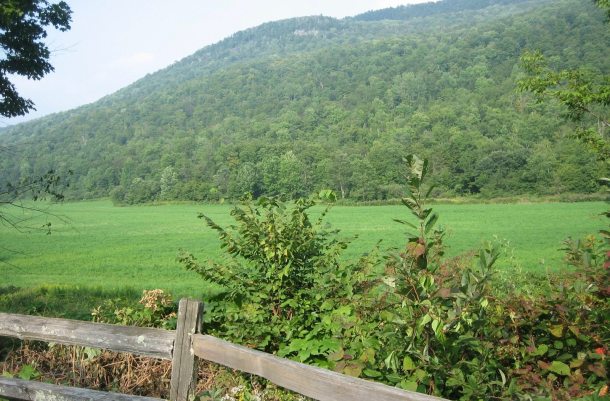
The bill, H.233, would require that large developments be engineered to minimize fragmentation of forest blocks.
The Committee on Natural Resources, Fish and Wildlife is scheduled to vote on it Thursday.
Developers could, under the bill, divide a 200-acre parcel into five 10-acre pieces and a 150-acre piece, but the bill would discourage subdivision of the same 200 acres into 20 10-acre lots. Environmental advocates say large parcels, especially when connected to others, are essential to preserving habitat for wildlife and maintaining functional forests.
Nearly 1,000 Vermonters work in the forestry industry, and supporters of the bill say it would protect those jobs while reducing environmental harm associated with large-scale development.
“You don’t have to look very far south to see where forest fragmentation has tipped the balance away from productive forests,” said Jim Shallow, conservation and policy director at Audubon Vermont. States like Connecticut and New Jersey suffer from forests where wildlife can’t migrate freely, and where tracts of land are too small for foresters to practice their trade, he said.
Parcels that are too small for wood harvest are difficult for landowners to keep ownership over, because they lack that easy source of income, Shallow said.
These are some of the reasons the state seeks to fight forest fragmentation through its policies, said Jamey Fidel, general counsel and forest and wildlife program director at the Vermont Natural Resources Council.
“In my opinion, this is a very pro-forestry bill,” he said.
Environmental advocates say the bill also addresses a gap in land use law — namely, that the regulations governing most large developments in Vermont do not account for the effects on the state’s forests. The bill would add impacts to forestland to the 10 existing criteria by which development proposals are judged under Act 250.
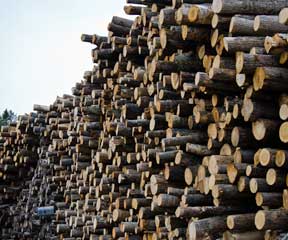
Vermont’s forestry industry is already suffering from the loss of five pulp mills from the region in recent years, said Robbo Holleran, a Chester-based forester. The industry is critical to healthy forests, but it’s growing increasingly hard to make a living in, he said.
The pulp mills were important because they could give foresters and landowners a return on “junk” wood that isn’t otherwise sellable, he said.
“Trying to grow good trees is like gardening: You’ve got to pull the weeds out,” he said. “Three years ago you could sell the weeds and a logger could make a living doing it. All of a sudden you can’t, and there’s no light at the end of the tunnel.”
The bill further threatens the industry by making it harder for landowners to keep the forests they have, Holleran said.
Holleran said he knows of at least six owners of large tracts of land “who have had it” and are looking to get out because of what he describes as onerous regulations affecting landowners in Vermont.
“These are people with money who could afford to stay here, but they’re smart enough to know that’s not the best choice,” Holleran said.
Fidel said the bill arose from years of outreach and collaboration among loggers, foresters, environmental advocates, legislators and state officials, and that it’s hoped to help both wildlife and foresters.
When land is divided, he said, the resulting parcels are often too small to enroll in the state’s Current Use program, which gives tax breaks to people and companies that own large sections of forestland.
His organization has worked with more than 400 Vermont landowners, giving them advice on managing their land to benefit birds, Shallow said. The average parcel size for these landowners is 200 acres. Colleagues in some other Northeastern states “consider a large parcel 25 acres or 40 acres,” he said, and that isn’t large enough to make forestry profitable.
“That’s really hard to manage these for forest products to get a return,” he said.
The bill doesn’t set out to stop or even avoid development of forestland, Fidel said. But with H.233, developers will be required to engineer their projects “thoughtfully,” Fidel said, and to preserve what forest remains.
Holleran said that’s a large quantity. About 150 years ago, only 25 percent of the state was forested and the rest was pasture, he said. Today, 78 percent is forested, down from 80 percent a couple of decades ago.
“There’s people saying that’s a crisis? We’ve got bigger things to worry about,” he said.
But a decrease of 2 percent represents a trend that’s worth arresting, Shallow said. “That’s the first time in 100 years we’ve seen the forests decrease,” he said.
Holleran said the bill is premature and lawmakers should wait for the results to come in from another bill, titled H.424, which would establish a study group to find what improvements may be made to modernize Act 250.

