

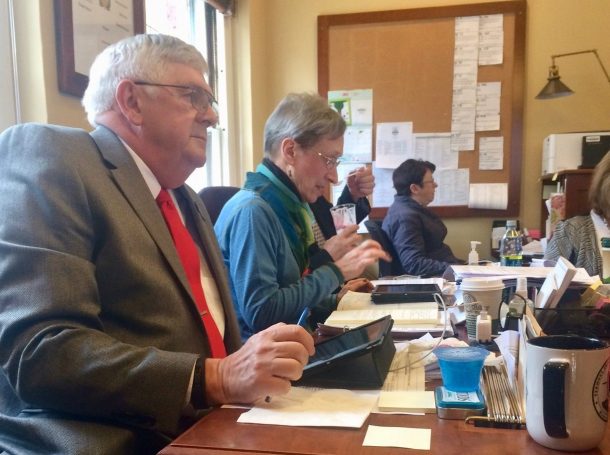
The vote was unanimous with two of the 11 committee members absent. The bill goes next to the House Appropriations Committee and then to the full House. If passed, as expected, differences in the House and Senate versions will have to be ironed out by a conference committee.
The measure would set up a commission with a five-member board and part-time executive director that would essentially funnel complaints to the proper authority. The commission would have no power to investigate or issue penalties.
Supporters describe the proposal as a good first step. Critics, including Secretary of State Jim Condos, say the commission would be too weak. Skeptics, including Rep. Ron Hubert, R-Milton, the vice chair of House Government Operations, contend the commission is unnecessary.
In addition to establishing an ethics commission, the bill, S.8, prohibits campaign contributions from those who have sole-source contracts of $50,000 or more with the state. The bill prohibits lawmakers from becoming lobbyists for one year after they leave office. It restricts high-ranking state officials’ ability to profit off their state work. In addition, candidates for statewide office, and for the Legislature, would have to disclose certain financial information and associations.
One key difference between the Senate-passed version and the current House version is that the House committee dropped a requirement that candidates would have to disclose their federal tax returns. The two chambers also have different recommendations about what organizations should appoint the commission members, though both agree the chief justice should appoint the chair.
Rep. John Gannon, D-Wilmington, a member of Government Operations and former investigator for the federal Securities and Exchange Commission, said it was important to set up a framework that could be expanded upon later if necessary.
“I think it’s a great first step,” Gannon said. “Getting something through both the Senate and the House this year is really important.”
Last year, the Senate passed an ethics commission bill, but too late in the session to be taken up by the House. This year the Senate made it one of the first bills it passed.
Rep. Maida Townsend, chair of Government Operations, led an examination of the Senate bill that lasted weeks. Late Tuesday afternoon, she urged a committee vote.
“We’ve been living with it far too long,” she said.

The commission is expected to cost about $100,000 a year. Condos said it needs three times as much to be effective.
“I think it’s destined for failure,” Condos said, arguing that the duties far exceed those of a part-time director, overall resources are insufficient, and lawmakers put a sunset of two years (in the Senate version) or three (House) to pay for the commission. Condos also said a weakness of the bill was that it doesn’t cover ethical violations at the municipal level, the target of most complaints his office receives.
Townsend, a South Burlington Democrat, told Condos she’d heard Vermonters echo the concern the commission wasn’t strong enough: “With all due respect, I get it.”
She added a moment later: “We all know this would be a small step. But it’s still a step, and we know it’s not done.”
Gannon said he heard from other lawmakers that the bill and commission were unnecessary because of a belief little corruption occurs in Vermont.
“I think we’re dodging the bullet,” he said in an interview. “At some point, sometime, someone is going to get caught doing something they’re not supposed to be doing, and I think we should be proactive in putting in a strong ethics bill, not reactive and wait for that situation to happen.”
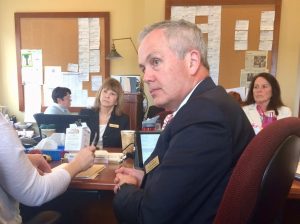
“You just have to look around this country and see that legislators, the administration, of various states have had serious, significant ethical issues, and I think this is an opportunity for us to be proactive in trying to address ethics before it becomes a problem,” said Gannon, a freshman. He called the legislative process frustrating. He spent hours researching other states and was a go-to member of the committee.
Hubert paused for a few seconds before he voted for the bill in committee. In an interview, he said the commission and the bill were unnecessary.
“I think it’s a solution looking for a problem,” Hubert said. “I think if you have it, you’re going to look for problems. I don’t believe it’s an ethics bill. It’s an invasion of privacy bill. … What (interest groups) really want is tax returns.”
Hubert had a testy exchange during earlier testimony with Paul Burns, the executive director of the Vermont Public Interest Research Group. Burns had sought to have the committee attach a separate bill calling for presidential candidates to be required to release their tax returns in order to be placed on the ballot. The committee decided against adding that measure.
Hubert worried that requiring too much financial information would scare off people from running for office, noting dozens of House seats in the last election went unchallenged.
The commission would not cover ethical conduct of members of the Vermont House or Senate. Each body has its own ethics boards and now also require their members to disclose limited financial information.
Condos, however, said the public should have somewhere to report ethical concerns about lawmakers because their own ethics boards amount to “the fox guarding the henhouse.”
Under the provisions in both chambers’ bills, the commission would collect statistics on the type of complaints received and report to the Legislature once a year.
Advocacy groups, including VPIRG and Campaign for Vermont, have vowed to try to get the bill strengthened, though that appears unlikely given comments by the committee chairs.
“I just think we need to get past the fluff and put some meat on the bones,” Condos said.
Asked why there was legislative resistance, Condos, a former state senator, said some members don’t want to acknowledge or see conflicts of interest, including with some of their own votes.
“It’s a new area,” he said. “Legislators don’t like to think that legislators are a problem or their municipal officials, but I think we can — by just what’s been going on — say there are problems.”
Townsend told committee members she would report the bill when it comes to the full House because she anticipated pushback and questions.

