[T]he Vermont State Board of Education last week approved district merger proposals from communities in Windsor Central Supervisory Union and the White River Valley Supervisory Union.
The four mergers will change the way education is delivered to students in 23 towns in two supervisory unions located in the Upper Valley area of central Vermont.
The White River Valley Supervisory Union towns proposed three mergers that involve 10 separate school districts with five different operating structures and 60 minutes of drive time from one end of the supervisory union to the other. The towns vote in April.
Just two years ago, the White River Valley Supervisory Union was formed when two supervisory unions came together. They then were faced with further governance consolidation under Act 46.
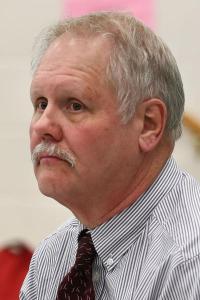
“I appreciate how challenging this has been for you. You were one of the last supervisory union mergers, and then you were immediately hit with Act 46,” Education Secretary Rebecca Holcombe told the White River group.
“I want to call out the fact that you really focused on education goals before you got to a solution,” Holcombe said.
Bruce Labs, the superintendent of the White River Supervisory Union, told the state board this was never about saving money. “Student opportunity has been No. 1 and giving them something they can’t get right now,” Labs said.
Nearly 1,500 students attend schools in the supervisory union, and more than 200 are tuitioned to schools elsewhere.
The White River Valley Supervisory Union towns that are merging will combine 10 separate districts, each with its own board, into three school districts with three school boards.
Voters in the Windsor Central Supervisory Union towns of Barnard, Bridgewater, Pomfret, Killington, Reading and Woodstock will decide whether to merge into a single district with a single board on Town Meeting Day. The unification proposal invests more in curriculum, offers elementary school choice and creates town-level parent advisory committees to facilitate community input.
Bethel, Rochester and Royalton plan to form the White River district and operate all grades, pre-kindergarten through 12.
Tunbridge and Chelsea would merge into the First Branch district, operate a pre-K through eighth grade school, and tuition out high school students.
Granville and Hancock are moving to a unified K-12 all-tuition district. If the two towns combine, they will have about 100 students attending 25 different schools.
That leaves three districts without an affiliation — Sharon, Stockbridge and Strafford. These communities are not merging districts with any other schools in the region.
Windsor Central Supervisory Union
Justin Shipman, the Windsor Central Act 46 study group chair, told board members that the research showed the supervisory union was faced with sinking enrollments and large gaps in student performance at the local elementary schools.
Over a 10-year period, supervisory union enrollments have dropped from 1,196 students to 982.
Six elementary schools in the union feed into the same middle and high schools. At one school, 75 percent of students were proficient in math, reading and writing. At another, only 27 percent of students were found to be proficient.
School board members said the gap was too big.
Malena Agin, a Woodstock board member, said they hadn’t seen the data this way before because each district had focused just on their own local school. “Moving forward we will have an opportunity for these discussions and see why these variabilities exist and what we can do to make these gaps much smaller,” Agin said.
Shipman said board members gathered more data from each school and began to figure out how to improve the elementary schools so that students are better prepared for middle and high school.
“It was a huge cultural shift for us,” Shipman said. “If we don’t start reaching out to our neighbors and see how this whole tapestry weaves together we will miss an opportunity.”
The new unified district will invest in curriculum across all the schools. Their goal is for students to perform in the top 5 percent in Vermont.
“We are all very proud of our schools and our outcomes, but there is room to improve,” Shipman said. “We want to keep that in line of sight and understand if we are missing something and make sure we address it.”
White River Valley Supervisory Union
The White River Valley proposal seeks to comply with Act 46 by merging into the fewest number of school districts “practicable.” Under the plan, seven town districts will be consolidated into three new districts.
The three merged districts would each have their own name: the White River Unified Valley district would operate all grades PreK-12; the First Branch Unified School district operates two PreK- 8 schools and then tuition high school students. The Granville Hancock Unified District will tuition all grades preK-12.
Bethel, Rochester and Royalton will operate all grades prek-12 with one budget and school board. The three towns previously had three boards, their own K-12 schools and three separate budgets. Starting in 2018, they will each continue to offer K-5 programs, but all students will go to Bethel for grades 6-8 and Royalton High School.
Lisa Floyd, chair of the White River district, said that it was important to each community to retain the local pre-K through 5 elementary schools in order to “keep the littlest learners close to home.”
The new district plans to create a unified middle school in Bethel and unified high school in Royalton.
Currently, academic offerings are limited. Floyd’s son, for example, attends Whitcomb Junior High School in Bethel, which only has 13 students in his grade. There aren’t enough students to field some varsity teams and they have to recruit from the middle schools, Floyd said.
“We see the greater numbers (of students) as a way to make it possible for us to offer more curricular offerings and extra-curricular ones, too,” Floyd said.
“We want world languages – that is not happening in all of our schools – unfortunately, where you live is impacting the education you are getting in our district. We want STEAM (Science, Technology, Engineering, Arts and Music) and advanced math and sciences,” Floyd said. They want to offer more AP courses as well as arts and music in the high school, as well.
The Rochester School had 128 students in K-12 last year with just 30 students in the high school.
The study committee wants to turn the high school wing into an environmental and experiential learning center. Floyd said they hope to offer an environmental management, tourism and humanities courses for students from any of the schools in the district. Rochester will begin offering an outdoor program that high school students can choose to attend for a semester.
“Our geography is not in our favor,” said Floyd. “There is a mountain range in front of Rochester.”
For that reason, the committee paid close attention to transportation needs and plans to have late night buses as well as spectator buses for events. “We are interested in creating as much equity as possible in terms of transportation and busing. We think we can make it workable and manageable.”
Rochester would see the biggest tax benefit from a merger to the tune of a $1,118 reduction in taxes for people who own a $200,000 home. Bethel residents with the same property value would save $576 and Royalton $42. But most important, Floyd said is the increased opportunities for the students.
The next merger of Tunbridge and Chelsea into the First Branch Unified School District with one school board and one budget operates grades perk-8 then offers school choice.
Right now Chelsea operates preK-12. If residents approve the merger, they will close the high school and give students school choice. In 2015, there were only 58 high school students at Chelsea.
“These small numbers meant that offerings were limited and the cost per student was relatively high,” the report states. By tuitioning out upper level students, the district may save money. Still, committee members say closing the high school grades could be the biggest barrier to unification.
Kathy Galluzzo, chair of the First Branch study group, said that the merger could save $256,000. Both the Tunbridge and Chelsea schools will retain a small schools grant from the state, which amounts to $135,000 for Chelsea and nearly $100,000 for Tunbridge.
“We have been working together” already, Galluzzo said, pointing to a joint sports program and a fall exploratory week.