

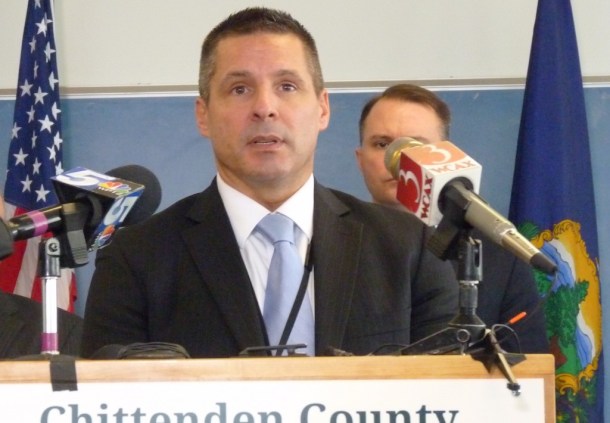
Among those who didn’t support it were the Vermont State Police, while the governor has not taken a firm position.
The bill would allow people over 21 to possess up to two ounces of marijuana. It would also allow an adult to grow two mature marijuana plants and seven immature plants per household.
Law enforcement officials, including the Vermont State Police, testified Thursday in opposition to the legislation in the House Judiciary Committee. Others, including the Vermont chapter of the American Civil Liberties Union and a former longtime prosecutor in the state, spoke in favor.
Despite the strong stance by the state police, Gov. Phil Scott has not taken a position on the bill, according to his spokesperson. In the past, he has been cautious on legalization efforts.
“On legalization in general, his stance always has been — not never, but not now,” said Rebecca Kelley, the governor’s spokesperson. She said the governor would seek out the advice of law and health officials before taking a position on any specific bill, including the Department of Public Safety.
“He’ll look at each one that crosses his desk and evaluate it based on whether his concerns are addressed, public safety and public health consequences,” Kelley said Friday.
Some law enforcement officials said no new law was needed.
“Quite frankly I think the decrim law that’s on the books now works fine,” Vergennes Police Chief George Merkel, president of the Vermont Association of Chiefs of Police, told the committee.
He was referring to legislation in 2013 that decriminalized possession of up to an ounce of marijuana, making it a civil penalty.
Maj. Glenn Hall of the Vermont State Police echoed Merkel’s comments.
“The reality is that this is a big money business and there is a lot of money to be made in selling marijuana,” Hall said Thursday after testifying. ‘If you can legally cultivate it, there are going to be people that will sell marijuana for a profit.”
Both Hall and Merkel said 2 ounces of marijuana is quite a bit for one person to possess, both saying that an ounce is equivalent to 60 marijuana cigarettes, or joints.
“We feel that the legislation will undoubtedly result in an increase in usage for both adults and youth,” Hall said.
Robert Sand, a Vermont Law School assistant professor and former prosecutor for 22 years including 16 in Windsor County, told the committee the issue is about personal rights and autonomy.
“Marijuana is not benign, but that there is a far more greater damaging thing to the fabric of society and that’s hypocrisy,” he said. “And from the days of Reefer Madness through the War on Drugs through the Rockefeller drug laws, even through the Clinton crime bill, we’ve used marijuana as this tool, this wedge to separate people in society and to define people as being ‘other’ or different.”
Jay Diaz, staff attorney at ACLU of Vermont, testified that the legislation would make the “everyday marijuana user” feel less like a criminal.
“It’s another positive step in the right direction,” he said after testifying. “We certainly need to get somewhere where we don’t have a black market, which encourages crime, but at this time, Vermont does not seem ready to go there.”
The bill, H. 170, has been termed by some backers as “Decrim 2.0,”referring to the 2013 marijuana legislation.
Rep. Maxine Grad, D-Moretown, and the committee’s chair, said following the hearing Thursday that more testimony on the bill is expected.
Asked if she believed the committee would eventually approve and advance the legislation, Grad replied, “I do think it will come out, and I think it will come out favorably.”
Grad is a sponsor of the bipartisan legislation with fellow committee members Chip Conquest, D-Wells River, and Tom Burditt, R-West Rutland.
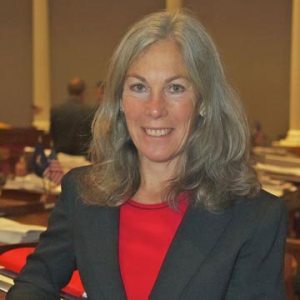
Unlike past failed legislative efforts, the bill does not call for creating a legal retail market operating under a regulatory system.
“I think why this bill is structured the way it is, is because it’s politically feasible right now,” Cahill told the committee, adding that in the not-so-distance future the Legislature will need to take up establishing a regulated marijuana market. Polls show support for legalization and surrounding states have passed or are considering legalization of some kind, he noted.
Grad has said she didn’t propose such a system for regulating marijuana as part of this legalization bill because establishing a licensing structure is outside the committee’s focus.
“Here in Judiciary, we look at crimes, we look at sentencing,” Grad said in an interview after proposing the legislation.
“If the broader goal is incremental change, this is an increment,” David Cahill, Windsor County state’s attorney, testified Thursday.
Cahill said while he supported the legislation’s marijuana legalization component, it does create a system where marijuana use is permitted, but buying and selling it is outlawed.
The question will later become, he said, as a prosecutor: how does he deal with that seller when it come times for sentencing.
He then added, “Are we supposed to throw them in jail, are we supposed to give them a fine, are we supposed to give them a pass because they are feeding a market that the Legislature said is OK.”
Testimony on Thursday also included a great deal of discussion over how much marijuana one plant could produce, with answers provided throughout the day ranging from a low of 3 ounces to as much as 17 ounces.
A major variable in the marijuana yield from one plant, witnesses said, depended on the growing conditions and expertise of the grower.
Highway safety also emerged as a key issue as it did during debate on marijuana legislation last year. Merkel and Hall testified Thursday that the proposal this year for legalizing up to 2 ounces of marijuana would increase the number of impaired drivers on Vermont roads.
They also talked of the lack of a roadside test to determine if someone is impaired from marijuana use. Often, Merkel and Hall said, those cases are quite time-consuming and involve calling specially trained officers to scenes.
Diaz and Sand told the committee that driving issues can be handled under existing laws that prohibit impaired driving.
Ginny Burley, a prevention specialist with Central Vermont New Directions Coalition and a board member of Prevention Works! Vt, also testified.
“My main point is that we can’t consider moving with any sort of substance bill without throwing in prevention,” she said. “If we’re going to do anything with any substances, in this case marijuana, it’s critical we have a strong prevention piece in place.”
Matt Simon, of the Marijuana Policy Project, also spoke, agreeing with some of the other supporters who said it’s a move forward.
“Ultimately,” Simon said, “we do believe that marijuana should be legal for adult use, that there should be a regulated and taxed market, treated similarly to alcohol.”
VTDigger senior editor and reporter Mark Johnson contributed to this story.
