

This story by Mark Rondeau was first published in the Valley News on Aug. 26, 2026.
A team of attorneys has filed a class-action suit in federal court on behalf of Shaftsbury and Bennington residents suffering from well contamination from PFOA.
The suit was filed Tuesday in U.S. District Court, District of Vermont, against Saint-Gobain Performance Plastics Corporation, 3M Company, E.I. Dupont De Nemours Company and others.
It lists eight local individuals as class representatives, who live in either Bennington or Shaftsbury. The suit, just under 70 pages long, includes a demand for a jury trial.
The suit says the plaintiffs and the class they represent have suffered, and are suffering, damages “arising out of Defendants’ manufacture, distribution, sale, use, handling, release, discharge and disposal of perfluorooctanoic acid (‘PFOA’) and products releasing PFOA, a known toxic, perfluorinated chemical,” at two local manufacturing plants.
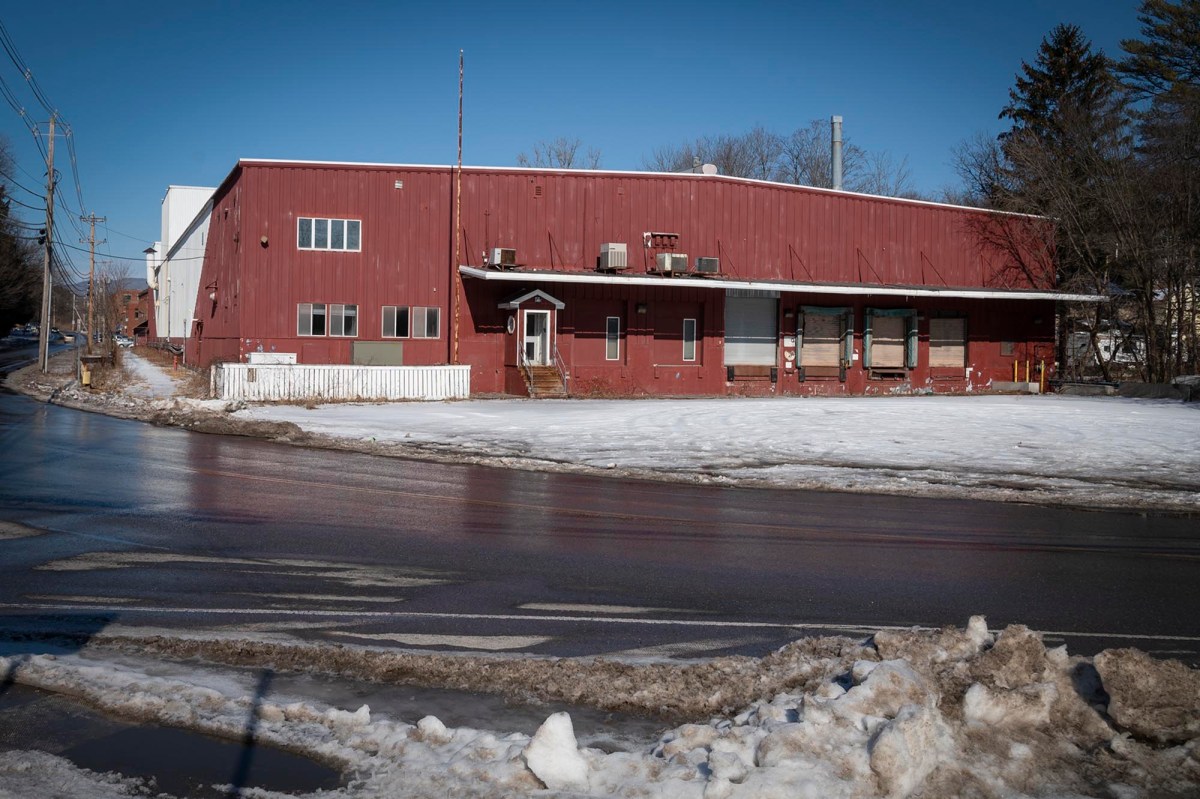
PFAS, of which PFOA is part, are man-made compounds that have been used in a wide range of industries since the 1950s, are persistent in the environment, and are harmful to human health. Two former ChemFab facilities, owned by Saint-Gobain Performance Plastics, were located on Northside Drive and Water Street and operated in Bennington from 1969 to 2002.
Their operations resulted in “the severe contamination of the local groundwater aquifer, soils, and private drinking water supply wells with PFOA in and around Shaftsbury and Bennington,” according to the suit.
Bringing the suit are David F. Silver and Alexander M. Dean, of Barr, Sternberg, Moss, Silver & Munson, P.C., of Bennington, along with attorneys from two firms which specialize in such cases, Faraci Lange, LLP, Rochester, New York and Davis, Johnston & Ringger, PC, Asheville, North Carolina.
In April, representatives of the three firms spoke with local residents with contaminated wells at a meeting at Bennington College.
‘The science is very clear’
This is the second class-action suit filed due to contamination alleged to come from these plants. Sullivan v. Saint-Gobain Performance Plastics, brought in 2016 and settled in 2022, was a successful federal class action on behalf of Bennington residents.
“The reason we’re doing a second suit is because over time it’s become clear that outside the original area of contamination that was the subject of the 2016 lawsuit, there was further contamination that increased over time,” Silver said in an interview on Wednesday. “And the science is very clear that Saint-Gobain’s use of the PFOA in their process, and then burning it off in their smokestacks, and then letting that out into the atmosphere is what caused the PFOA to settle into the ground and eventually get its way into the groundwater and the soil.”
Testing of wells in the last few years has discovered more well contamination. This includes in southeastern Shaftsbury in the East Road area near the border with Bennington. In Bennington, more contamination has been found on Rocky Lane, Middle Pownal Road, South Stream Road, Coleville Road, Niles Road, and Fuller Road.
“Since 2023, approximately 25 wells in Shaftsbury and 100 wells in southern Bennington have tested positive for PFOA. Testing coordinated by the State of Vermont remains ongoing,” according to the suit.
The class action is brought on behalf of the following classes: Those suffering from property devaluation due to groundwater contamination, those suffering from property devaluation due to soil contamination, those suffering from nuisance due to having a contaminated well, and a medical monitoring class.
As detailed in the suit, the medical monitoring class includes, in part, individuals “who resided and ingested tap water for at least six months at a property located in the Town of Shaftsbury and/or Town of Bennington that was supplied with drinking water from a private well contaminated with PFOA, and who have suffered an accumulation of PFOA in their bodies as demonstrated by blood serum tests disclosing a PFOA level in their blood at or above 2.00 ug/L.” (micrograms per liter)
Under relief, the suit seeks a declaration that the defendants “acted with negligence, gross negligence, and/or willful, wanton, and careless disregard for the health, safety, and property” of the member classes and an award of an amount more than $5 million to compensate the injured parties.
In addition, relief sought in the suit includes an injunction requiring the defendant to connect each impacted water supply within the zone of contamination onto municipal water; establishment and implementation of remedial measures sufficient to prevent further PFOA contamination; establishing a long-term medical testing protocol for plaintiffs and class members “to monitor their health and diagnose at an early stage any ailments associated with exposure, inhalation or ingestion of PFOA.”
The suit also seeks an award of the cost to fund a court-supervised, long-term medical monitoring program and the awarding of punitive damages and attorney fees.
‘Get things rolling’
“We brought this suit now because we want to get things rolling for the people that are dealing with the contamination,” Silver said.
Some of the affected residents have point-of-entry water treatments systems (POETS) and others are drinking bottled water.
“And not only that, them and their families have been drinking this contaminated water for years, and it’s a known carcinogen as well as associated with other diseases,” he said.
“I’m a member of this community, and I know many people who are affected, and they’ve actually contacted me over the last few years,” Silver said. “Large groups of people in Shaftsbury and in parts of Bennington, and they’re worried not only about their health, but about how this contamination is affecting their property values, which of course it will.”
The suit also includes the manufacturers of the chemicals, 3M and Dupont.
“It’s quite clear when you read the complaint, which sets it out pretty clearly, that for decades and decades these corporations knew that PFOA was a toxic chemical that would be harmful to humans, and that they did not take the precautions, or that they didn’t tell anybody about it, and they just made billions and billions of dollars selling a product that they knew was going to hurt people and hurt the environment,” Silver said. “And we believe that Saint-Gobain knew as well. So, we think the science is really clear. The evidence is really strong.”
