


More than $5.3 million was spent by statewide candidates and their allied political action committees during Vermont’s primary season. It was the most expensive primary in Vermont’s history, and it was fueled by outside groups, a lift in the cap on individual contributions from $2,000 to $4,000, and an unprecedented sum fueled by a wealthy self-funded candidate.
This year is the first since 2010 that the governor’s seat has been vacant. Five candidates in the Democratic primary that year spent $1.7 million.
The biggest spender this season was Republican Bruce Lisman, who sunk nearly $1.85 million of his more than $50 million fortune into a prickly gubernatorial bid against Phil Scott. In all, the former Wall Street businessman spent more than $2.1 million and $907,285 of that went toward TV and radio ads.
The candidates submitted final campaign finance filings Monday for the primary race.
Lisman also relied on affluent donors from his days as a Wall Street executive.
He received $2,000 from Edmund Hajim, a former investment banker at Lehman Brothers who is the president of Diker Management. Richard Ader, CEO of the asset management firm U.S. Realty Advisors, and Neal Garonzik, former vice chairman of Chase Manhattan Corp., each gave Lisman $4,000.
Lisman also received $4,000 from New York lawyer E. Miles Prentice, who served as the chairman of the Center for Security Policy’s board of directors for a number of years. The center has been frequently criticized for engaging in anti-Muslim conspiracy theories, including promotion of the notion that a top Hillary Clinton aide, Huma Abedin, is an undercover agent for the Muslim Brotherhood.
Lisman also returned $1,000 from Richard Harriton, the former chairman of the securities clearing subsidiary of Bear Stearns, who, according to The New York Times, was barred from the securities industry in 2000 after defrauding investors of $75 million.

After prodding on WDEV’s Open Mike from a caller about the Harriton connection, Lisman said he had returned the check. Campaign finance reports show Harriton’s $1,000 was returned by the Lisman campaign on Aug. 4, the same day he was on the show.
Lisman won 18,055 votes and spent $118 for each ballot cast.
Scott spent nearly a third less than Lisman and won by more than 20 points. Scott has raised $988,299 so far in this campaign, with 72 percent of his donations in amounts less than $100, according to his campaign. He spent $805,515 in the primary battle with Lisman.
Scott received $4,000 donations — the maximum allowed — from a number of sources, including the Vermont Auto Dealers Association, real estate developer Patrick Malone, and RAI Services Co., a subsidiary of tobacco company Reynolds American.
He received thousands more from companies that, like his firm Dubois Construction, work in the contracting industry. Scott got donations from Barrett Trucking, Benoit Electric and Green Mountain Paving & Sealcoating. He received $2,000 from Wal-Mart.
Scott also received $1,500 from the Eli Lilly and Co. Political Action Committee and $1,000 from Pharmaceutical Research and Manufacturers of America. He also received $1,500 from Thunder Road co-owner Ken Squier and a total of $4,000 from the Vermont Fireworks Co.

Scott goes into the general election against Democrat Sue Minter with $158,318 cash on hand. The Republican Governors Association, through a Washington D.C.-based PAC, A Stronger Vermont, is poised to spend generously on the nominee.
A Stronger Vermont has sunk $350,000 so far into ads and opposition research for Scott. Of that, $200,000 was recorded Aug. 10, the day after Scott won the primary. That same day, the first PAC ad for Scott went up on the air. The spending includes money directed at advertising efforts as well as more roughly $15,000 to Old Dominion Research Group, an established GOP investigative firm out of Virginia.
On the Democratic Party side, the winning candidate, Sue Minter brought in more than $1 million throughout primary season, and spent nearly all of it. More than $568,000 was spent on advertising by the former transportation secretary, who had never run a statewide race.
Minter heads into the general election with less money on hand than Scott, just over $70,000. (Her disclosure report was not posted on the Secretary of State’s website until Tuesday because of technical problems at the Secretary of State’s office, the Times Argus reported.)
Her affluent donors include Philip Lintilhac, a leader of the Lintilhac Foundation, which supports environmental causes in Vermont. The governor’s brother, Jeffrey, donated $2,600 during the campaign, former Shumlin Chief of Staff Liz Miller donated $2,000, Rep. Paul Poirier donated $1,500, former Department of Financial Regulation Commissioner Susan Donegan donated $500, Peter Clavelle, the former mayor of Burlington, gave Minter $175, writer Chris Bohjalian gave her $330 and former Speaker Gaye Symington donated $250.
Her out-of-state supporters include Russell De Berlo, who heads an investment firm in Boston and pitched in $1,000, as well as Geraldine Laybourne, a television executive who gave Minter $2,500. Mark O’Friel, an investment banker in New York, gave Minter $4,000.
Minter also benefitted from a PAC, Vermonters for Strong Leadership, which spent $120,000 on her behalf in the days leading up to Aug. 9. The PAC was largely funded by Women Vote!, an offshoot of Emily’s List, a national political organization aimed at electing women. Emily’s List endorsed Minter early in the primary season, and put $125,000 into the PAC. The PAC’s other donors include Swanton wind developer Travis Belisle, who gave $5,000. Two Vermont environmental activists, Lola Van Wagenen and George Burrill, donated a combined $5,000.
Minter finished with 49 percent of the vote in a three-way race.
The two candidates who finished directly behind Minter — Matt Dunne and Peter Galbraith — each spent sizable sums.
Dunne, who finished with 37 percent, raised more than $1 million throughout his primary campaign and spent more than $998,000. He made 30 media buys totaling more than $616,000.
While Dunne had repeatedly called out other candidates for funding their own campaigns, he put up $99,000 of his money in the days leading up to the primary.
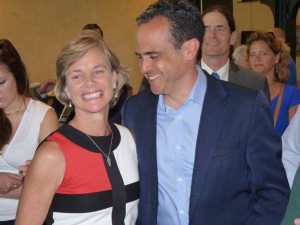
The final days of Dunne’s campaign featured a $220,000 media expenditure made independently by a friend, Reid Hoffman, a Silicon Valley billionaire who attended the Putney School with Dunne.
Dunne’s donors included ice cream moguls Ben Cohen and Jerry Greenfield, who each pitched in $1,000 in the final weeks of his campaign. Dunne’s final filing with the secretary of state’s office, which dates the contributions, shows a flood of donations recorded in the waning hours of his campaign.
While Galbraith entered the race a good six months after his two competitors, he still spent more than $371,000. Nearly $250,000 of that went toward ads. About half of Galbraith’s fundraising total, which was $404,000, came from the candidate himself.
He finished with 9 percent of the vote.
A former diplomat, Galbraith had a number of high-profile donors from international and natioanl political circles.
Galbraith received $1,000 from Donald Blinken, the U.S. ambassador to Hungary between 1994 and 1997. James Blanchard, the former Democratic governor of Michigan and U.S. ambassador to Canada, pitched in $1,000 to Galbraith, while former New York Gov. Eliot Spitzer gave $500.
Rep. Chris Van Hollen, D-Md., a former colleague who served as a staffer with Galbraith’s at the U.S. Senate Committee on Foreign Relations, pitched in $2,000 through his campaign account for U.S. Senate.
In the race for lieutenant governor, the three Democrats in the primary spent a combined total of half a million dollars.
The winner wound up not being the biggest spender.
Lieutenant governor’s race
Sen. David Zuckerman, a Progressive who sought the Democratic nomination, raised $175,000 throughout the primary season, and $24,000 in the last month. He spent $153,000, including $57,000 for mass media buys. He has roughly $20,000 going into the general election against Republican Randy Brock.
Zuckerman’s biggest supporters included wind developer David Blittersdorf, who contributed $1,350. Ben Cohen gave the maximum allowed, $4,000; Jerry Greenfield gave $1,000; and former Burlington Mayor Peter Clavelle donated $338.
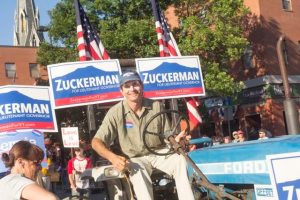
Burlington Rep. Kesha Ram, who came in third, spent the most. She raised $227,000, including $40,000 in the last reporting period, which began July 15. She spent $217,000, including almost $75,000 on mass media.
Ram received $2,000 from Democracy for America, a political organization that began with Howard Dean’s run for president in 2004, and $665 from Shelburne philanthropist Lola von Wagenen.
House Speaker Shap Smith, who started campaigning in May, finished second and spent the least in the race. He raised $44,000 in the past month, bringing his total campaign haul to $166,000, which included $30,000 he raised for a run for governor before he dropped out when his wife was diagnosed with cancer. He entered the lieutenant governor’s race after her treatments concluded. He spent $132,000 on the campaign, about $45,000 of that on mass media.
Smith’s support included $2,000 from Gov. Peter Shumlin’s leftover campaign funds, $500 from Sen. Richard Mazza, D-Colchester, $500 from Sen. Jane Kitchel, D-Caledonia, $400 from Rep. David Deen, D-Westminster, and $200 from State Treasurer Beth Pearce.
Chris Motter, the CEO of the company that manages the Watchtower properties in Colchester, was the only one who gave the maximum $4,000 to the Smith campaign.
Brock reported raising $18,000 in the past month, bringing his total haul to $80,000, of which he’s spent $66,000. He received $2,500 from the Republican State Leadership Committee and $500 from the Vermont Auto Dealership Association. His individual supporters include entrepreneur Tom Evslin and John O’Kane, a former IBM lobbyist, who each gave $1,000.
Although there was no heated primary battle in the attorney general’s race, both Republican Deborah Bucknam and Democrat T.J. Donovan have begun ramping up fundraising ahead of the general election.
Donovan, the Chittenden County state’s attorney, has raked in $31,612 since the last reporting deadline July 15. Out of the $336,045 Donovan has raised, he has spent more than $110,000. He heads into the general election with $225,631 on hand.
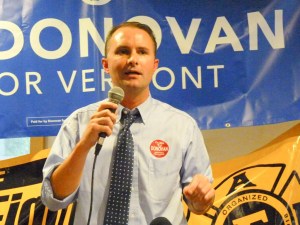
Donovan’s contributions include thousands from lawyers and firms from all across the country, including former Massachusetts Attorney General Martha Coakley, who gave $250. George Soros, the Democratic super-donor, gave Donovan $4,000.
His corporate donors include a number of unions, as well as thousands from the soft drink industry, with the Vermont Wholesale Beverage Association giving $1,500 and Coca-Cola providing $1,000.
Donovan also took in $1,000 from the Vermont Retail Druggists, $2,500 from Microsoft and $250 from Wal-Mart.
Bucknam has seen much less money come in, just $49,908 so far in this election, which includes $20,000 she has loaned her campaign. She has spent more than $21,000 and heads into the general election with roughly $28,000 on hand.
Her contributors include a handful of New England lawyers, as well as Republican U.S. Senate candidate Scott Milne, who donated $250.
PACs build steam
Thousands of dollars poured into the world of Vermont political action committees.
The Heat PAC, run by Matthew Cota of the Vermont Fuel Dealers Association, has brought in $6,700 from local oil outfits throughout the state. The Vermont GOP, which has been aggressively advertising against the idea of a carbon tax, received $1,000 from the Heat PAC this month.
The Vermont House Republicans PAC has raised just under $3,000 this election, though all but $500 has been spent. The GOP’s Senate PAC has raised nearly $15,000 this campaign; roughly half of that has been spent.
The Common Sense Leadership PAC, an ally of Vermont Republicans, has taken in more than $35,000 this election season and heads into the general election with roughly $10,000 on hand. The donors of the PAC include tobacco company Altria, which has given $2,000, as well as a number of Republican legislators.
The Gun Sense Victory Fund, which has raised nearly $22,000 during this campaign, gave $1,000 to Minter three days before the primary. Minter has made gun control a priority, while Scott has repeatedly said no changes are needed to the state’s firearms laws.
The issue, which has found new resonance with Vermont Democrats in the wake of recent shootings, has been rejected as relevant by Scott and Republican leaders in the Legislature.
That mounting pressure may spell big spending by groups on both sides of the gun issue in the months leading up to the general election, which is less than 90 days away.
(An earlier version of this story misstated the relationship between the Vermont GOP and the Common Sense Leadership PAC.)


