

[V]ermont’s designated mental health agencies say they will need an extra $7 million a year to comply with new federal overtime rules scheduled to take effect in December.
Hundreds of employees at the state-funded private mental health organizations are working more than 40 hours a week but aren’t currently eligible for overtime pay because they are salaried and earn between $23,000 and $47,000 a year.
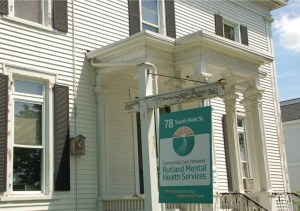
Julie Tessler, the executive director of the Vermont Council of Developmental and Mental Health Services, said a new federal overtime rule means those workers must either get raises, work fewer hours or be paid for the overtime hours.
Currently, under the federal Fair Labor Standards Act, white-collar salaried workers paid more than $23,660 a year are not eligible for overtime pay if they work more than 40 hours in a week. About 10,000 workers in Vermont will be affected by the new rule, according to the U.S. Department of Labor.
The new federal overtime rule will go into effect Dec. 1. It means employers must pay workers making less than $47,476 a year time-and-a-half overtime pay if they work extra hours. Alternatively, employers can raise the workers’ salaries above the threshold to avoid paying overtime.
“The majority of our staff don’t make that much, and the nature of human services is you’re working with clients whose needs go up when they’re in crisis,” Tessler said. “A lot of our workers regularly work more than 40 hours a week, even in weeks when our clients are not in crisis.”
Tessler said therapists often see patients throughout the day and fill out paperwork in the evenings and on weekends. She said if a patient calls in crisis after 5 p.m., when the offices are closed, someone on staff will usually pick up the phone to talk with the person.
“The biggest thing is we simply don’t have an extra $7 million to put into it, and we really need state government to respond,” she said. Otherwise, Tessler said, “We’re going to have to say to our staff, ‘Sorry, don’t pick up the phone after 5.’”
In February, the alliance Vermont Care Partners released a report saying the so-called designated agencies that provide regional mental health, substance abuse and disability-related services have had a 27 percent turnover rate for three years and had been facing multimillion-dollar budget gaps since fiscal year 2011.
“Increasingly, we are seeing our staff leave this system for higher-paying jobs with better benefits within the public education system, the hospital system, and for positions working for the state of Vermont,” the report said.
Jenna Trombly, the human resources director at the Clara Martin Center in Randolph, was part of the team that wrote the February report. She said this is one of the biggest expenses designated agencies have faced in years.
“Help,” Trombly said. “We need more resources in this system.”
The designated mental health agencies are largely funded through Medicaid. The agencies bill for services, such as therapy, when patients come in, and they receive lump-sum payments from Vermont’s umbrella Medicaid budget.
Melissa Bailey, the deputy mental health commissioner, said the state has asked Tessler and other agency representatives to “dig into” the estimate that they will need $7 million to comply with the new overtime law.
“I’m concerned about the impact that has on the clients,” Bailey said. “I’m concerned about staff not making a livable wage, whether that’s at the designated agencies or any of our other providers in other ways.”
Human Services Secretary Hal Cohen said in a statement: “We look forward to partnering with the (mental health agencies) to determine a more final figure. From there, the (Agency of Human Services) will be better able to understand the issue and determine how to best address it.”
Cohen did not say if the Shumlin administration would propose to increase funding to the mental health agencies, and he said it would be premature to say how the state will propose to address the issue.
Cohen said he “will not know what the fiscal picture looks like” until the agency creates a budget for fiscal year 2018 and the Legislature approves a new budget next year.

