


[N]ORTHFIELD — The horrors of war haunted the grounds of Norwich University last week.
By design.
In fact, the ghosts were invited.
They held center stage at the Colby Military Writers’ Symposium on Wednesday and Thursday. The annual event draws in authors and experts to the Northfield campus who share their experiences and wisdom with cadets in the classroom and the public as well.
It’s powerful.
On purpose.
Here’s why: Norwich President Dr. Richard Schneider, a Vietnam veteran and retired Coast Guard Rear Admiral, takes seriously the job of shaping the next generation of military leaders and citizen-soldiers.
He will also be the first to tell you he hopes that training is never needed.
Frequently Schneider has said: “War should be the last resort.”
So instead of a rah-rah celebration of military successes, the Colby Symposium provides these future decision makers with presentations to ponder — often first-hand accounts — of where past campaigns went wrong and about some of the terrible consequences of going to war, both on the battlefield and for those that make it back home.
Lessons they hopefully will take forward years after they depart the campus of the nation’s oldest private military institution for conflicts in lands far away.
This theme of this year’s symposium — the 21st and named after the former CIA director William Colby — was “Going to War: The Cost to Families, Communities, and Nation.”
Here are some of the questions this year’s authors and experts left the cadets to contemplate:
— The consequences of asking an 18-year-old leading a convoy to choose between stopping when a Vietnamese villager throws their child in front of your speeding truck or keeping going, knowing if you stop, harm may come your platoon’s way.
— How do you cope when the eyes of an enemy you killed years before appear on a highway late at night?
— Can you press on after wanting to be a Navy SEAL since you were 14 years old and a sniper’s bullet shatters your face during an ambush in Iraq?
— The depth of betrayal when a commanding officer sexually assaults a female under his charge.
The cadets and public were also schooled on the importance of Pakistan from this year’s Colby Prize winner, an expert on the partition of India in 1947 that led to Pakistan’s creation. An unusual pick, but timely, given Pakistan’s significance as a terrorist haven. It is also neighbors with Afghanistan, where the U.S. has been involved militarily since shortly after Sept. 11, 2001.
Mixed in was some wisdom from Ben Patton, the grandson of General George S. Patton and son of an equally highly-decorated father, who is “completing the circle” by trying to help veterans with post-traumatic stress in a way his ancestors didn’t understand.
In interviews with VTDigger, six of the conference guests shared their stories, the lessons they’ve learned and the messages they hoped the cadets would take with them as the nation’s future military leaders and soldiers.
KARL MARLANTES
Karl Marlantes grew up in a small logging town in Oregon. High school football player, student body president, he went to Yale and was partway through his Rhodes Scholar studies when he went to Vietnam. In the jungles, he killed many, but is profoundly affected by the shooting death of a Vietnamese soldier at very close range.

“It was the locking of eyes. He was a human instead of just some other animal or some abstraction,” Marlantes said.
A Marine with a chestful of medals, Marlantes has deep sorrow in his eyes. His book, Matterhorn: A Novel of the Vietnam War, was on the New York Times Top 10 Bestseller List in 2010, a Colby winner, and author Sebastian Unger called it one of the most profound books about Vietnam. Marlantes’ second book, What It Is Like To Go To War, published in 2011, discusses life as a veteran after returning home and is regarded as equally important.
His biggest message is whether you’re shopping in the mall or pulling the trigger, everyone bears responsibility for what happens in war and the aftermath for the soldier.
“Our whole country killed that kid,” he said of the Vietnamese he locked eyes with before killing.
Almost 50 years later, Marlantes welled up recalling the story.
JASON REDMAN
Jason Redman grew up in a military family and wanted to be a Navy SEAL since he was 14. He almost washed out of the brutal SEAL training on the Thursday of “Hell Week” but dug deep. Seventy-five percent don’t make it.

In 2007, outside Fallujah, Iraq, Lieutenant Redman’s assault team walked into an ambush. He was hit at least eight times, a bullet exploding the right side of his face. He and his team only escaped after requesting US bombers target their position.
He refused to let anyone in the room who would show pity. An injured amputee came and was, Redman said, clearly inspired.
“I learned something when I was lying in that bed. You can lead from any situation. And I realized if I stay positive, that if I drive forward and not get into this woe-is-me and all the other things that people tend to do when they suffer these catastrophic moments, that I could set the example for so many of these other young kids that were going through this hardship,” Redman said, “that’s how I drove through and never looked back.”
Initially, he was angry, mostly when people would ask what happened and assumed he’d been in a car accident, not imaging it could be a war wound.
Redman persevered, surgeons reconstructed his face and rebuilt his nose. Today, he runs a nonprofit that helps wounded warriors and families of the fallen. He wrote The Trident: The Forging and Reforging of a Navy SEAL Leader. He is also an inspirational speaker.
“You need to build a mindset that says okay, when things goes wrong, I’m going to continue to drive forward because that is what’s going to get you to the other side,” Redman said. “So many people quit just on the verge of success and they don’t even realize it because by the time that you get to that point, you’re so tired of continuing to drive forward.”
“My mantra is never quit. Keep moving forward,” he said.
JON COFFIN
Jon Coffin is a retired Colonel with the Vermont National Guard and a man of great empathy. A psychologist, he works with veterans after they come home, after they’ve had to make decisions no human should have to make, like whether you stop or keep going when a baby or young child is thrown in the path of your truck.
“Having had to make that decision, I’ll never be the same. God and country and flag didn’t help much on how I handled stopping or not stopping when a kid gets thrown under my vehicle. It’s too immediate,” he said.
Efforts to dehumanize the enemy, such as slang terms, go only so far.
“When someone throws their baby in front of your vehicle, and you’re not supposed to stop, and you look in their eyes as they turn to watch you make your decision, all of the objectification and dehumanization goes out the window for that split second,” Coffin said.
“And that split second changes your life because you don’t have the luxury anymore of looking at that as a logistical or strategical problem. You’ve got the curse of looking at: I’m a human being. They are throwing their kid in front of the (truck) and I’ve got to decide whether to run them over or to stop and risk my troops lives,” he said.
Coffin is angry politicians cavalierly say they’ll send troops into harm’s way when the consequences to the soul are so profound.
“These aren’t boots on the ground,” he said. “This is you and me going to ground. We’re there either because we think someone’s going to kill us or ruin our way of life. And we’re going over there to kill people.”
The final decision to go to war, he said, should be decided by a group of veterans, one from each state, who would have to sign off before any troops are sent in.
“We know what we’re doing in combat,” he said. “I’m not sure we know what we’re doing get out of combat.”
BENJAMIN PATTON
Benjamin Patton’s first impression of his famous grandfather was George C. Scott, who played the iconic World War II general in the movies. Ben never met his grandfather, George S. Patton, who died shortly after the end of the war. Ben’s father was an equally-decorated general in Korea and Vietnam. He was the subject of Ben’s book: Growing Up Patton: Reflections on Heroes, History, and Family Wisdom.

A documentary filmmaker, Benjamin Patton worked at Public TV. Now, he runs an organization that helps veterans make movies, the collaboration helping to draw many into further therapy to help deal with post traumatic stress. Patton calls it “combining the therapeutic value of narrative with the robust power of digital media.”
His grandfather famously ridiculed two soldiers who said they suffered from post-traumatic stress, sending one back to the battlefield, slapping the other in the face. Ben said his father had a similar incident where he showed no understanding of post-traumatic stress.
In a way, he said, his work today is an attempt to close that wound.
“I’m sensitive to the needs of families and military families and I saw it as an opportunity to circle back and work with veterans, in care of veterans, in a kind of healing way that maybe wasn’t possible for my grandfather and my father,” Patton said.
“So it sort of seemed like completing the circle.”
KIRSTEN HOLMSTEDT
Kirsten Holmstedt, a journalist, was living in North Carolina near the Marine’s Camp Lejeune when the Iraq war started in 2003. That’s when she began her research on women in combat that led to Band of Sisters: American Women at War in Iraq and later The Girls Come Marching Home.
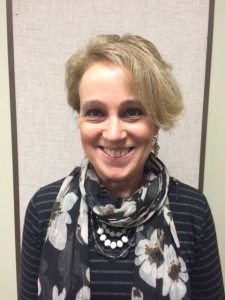
One benefit, she said, that women have dealing with post-traumatic stress compared to men is their willingness to open up.
“They talk and they get more out than the men do and are more likely to go to counseling,” she said, “though if you’re in the dark spot, you’re not going to speak to anyone, but if you can get out of that spot and start speaking, women definitely have an advantage.”
One disadvantage coming home, she said, is that mothers are expected to immediately take care of their children, with “no switch from going to soldier to motherhood. You have to figure it out.”
Her new book coming out in May, Soul Survivors, deals with sexual assault in the military. She focuses largely on the trauma women have felt and the betrayal by a commanding officer in an environment that prides itself on people watching out for one another.
“They buried it. They left. They got kicked out because of psychological impact to them. They just couldn’t handle it anymore. A lot get out. It’s just too much to handle,” Holmstedt said. “It’s sad. And oftentimes the perpetrator gets moved to another unit and doesn’t necessarily get kicked out or put in the brig. So he’s still walking around somewhere and the woman can run into him and that’s scary.”
The numbers are horrifying, she said: one in four women in the military report they’ve been sexually assaulted.
NISID HAJARI
The winner of the Colby Prize this year is Nisid Hajari, an editorial writer on Asian issues for Bloomberg News. His book, Midnight’s Furies: The Deadly Legacy of India’s Partition, outlines the reasons behind the 1947 separation that led to the creation of Pakistan.

The Colby Prize goes to a first-time author for making “a major contribution to the understanding of military history, intelligence operations, or international affairs.”
Colby executive director and well-known author Carlo D’Este called the book “timely.”
Hajari said he was flattered and surprised, that it seemed an unusual choice compared to past winners, typically books about World War II, Korea, Iraq or Afghanistan.
The tension between India and Pakistan still exists today and both countries have nuclear weapons. Pakistan is also where groups like the Taliban and terrorist organizations have set up camp, exploiting the weak government.
“I think it’s very important to understand the roots of this mentality,” Hajari said of the partition of India and creation of Pakistan. “Even if it seems like an event that has nothing to do with us, its repercussions have a huge influence over our own security, over our military and our strategic position in the world,” he said.
