

“It came to me,” he recalls today. “This is where the house goes.”
And so, with time and toil, sprung a foundation, a frame with a vaulted ceiling, a loving wife and daughter, a third novel and a contract for yet another. Payne worked on the latter book for four comfortable years. Then his publisher rejected it — canceling a $50,000 completion payment and demanding back a $165,000 advance he’d already spent.
That wasn’t the way the story was supposed to end. Payne suddenly was juggling five-figure credit card bills, a burned-out thyroid, four stress-fractured molars followed by four root canals, four crowns and single shots of vodka that spilled into doubles or double doubles or, on particularly bad days, triple doubles.
By the year 2000, Payne’s wife, exasperated and expecting a son, announced she was moving to their native North Carolina with or without him. Payne, deciding to follow, sought packing help from his younger brother, George A. — a first name and middle initial inherited from his grandfather.
Reunited after living five years and 700 miles apart, the two siblings found themselves wrapped up in masking tape and memories.
“In the middle of a bad thing,” Payne remembers thinking. “I got back my brother.”
The duo set out southbound in two trucks. The writer eyed the highway before him and, through rearview mirrors, his brother driving in a sport utility vehicle behind.
Windshield, left mirror, right mirror, Payne’s eyes alternated every 10 to 15 seconds, four times a minute for 12 hours. Then, between blinks, he saw his brother’s SUV fishtail. Flip over. Seemingly fly at 75 miles per hour into a guardrail.
“I’m sorry,” he recalls a firefighter saying through a wail of sirens. “Your brother’s dead.”
That’s when seemingly everything else ended — and began anew.
‘Once upon a time, in the Official Version
The author, now 62 yet anything but retiring, starts with a story.
“Once upon a time in that gray-shingled house on Ruin Creek in the little amber room we shared, George A. slept beneath me in the bottom bunk and we had matching cowboy quilts and college pennants thumb-tacked to the wall. On summer nights we kept the windows open and could hear the creek below …”
After his life fell apart, Payne decided to reassemble the pieces on paper. Sitting down to write, he began with his childhood in the small tobacco town of Henderson, N.C.
“Once upon a time, in the Official Version, we were blessed and happy, our parents young, privileged and good-looking, we, their children, bound for special destinies like they’d had.”
At age 14, for example, Payne went to study at Phillips Exeter Academy, an elite boarding school in New Hampshire. Back home, a family that boasted about turn-of-the-century ancestors who owned the town’s first car now could talk up their latest boy’s early success in Latin and basketball.
The teenager knew differently. On the trip there, his father drank Scotch after Scotch before retiring to their shared hotel room, where the student woke in the dark to the sounds of shattering glass, creaking bedsprings, his mother crying and, finally, his father yelling at him — “Get back in bed or else I’m going to kill you” — before crashing facedown unconscious on the floor.
“You misunderstood,” he remembers his grandmother telling him on the phone when he tried to report the disturbance the day after. She said the same thing when someone dared refer to history books that assert the town’s first car — a steam-powered 1899 Mobile — wasn’t owned by Payne’s ancestors but by a man named E.G. Davis.
That wasn’t the way the story was supposed to end, the author learned early from his elders.
‘We need you to come home’
In 1975, having graduated to the University of North Carolina at Chapel Hill, Payne received a call from his mother.
“David, honey, your brother’s sick,” he recalls her saying.
“What do you mean, sick?” he replied.
“We need you to come home,” she responded.
Payne returned to find his 17-year-old sibling in a psychiatric ward. Maybe it was because he had mono, said his now-divorced mother, or maybe it was because he smoked marijuana the night before and was reacting badly. It would take a second spell five years later before they learned the real reason: George A. had a chronic and severe case of bipolar disorder, a brain illness also known as manic depression.
And so began the cycle: an uncontrolled high, followed by a crippling low, several weeks locked in a hospital, then home to rise like a phoenix until another fall.
Between breakdowns, George A. became a stockbroker, married, fathered two sons and bought a BMW to drive them from their posh house to private school.
But the periodic disconnects that doctors label “psychosis” grew worse. In 1980, he stripped out of his clothes, shredded his credit cards and announced he was off to rescue U.S. hostages in Iran. In 1991, he made a series of manic unauthorized stock trades, was sued, and lost his job, wife and home.
‘It’s time to write about George A.’
George A. moved in with his mother. That wasn’t the way the story was supposed to end, the now successful author thought. He figured his brother would yet again recover and rebound.
But as Payne built a house, family and career in Vermont, his sibling languished on a sofa watching ticker tape crawl on television financial channels, only leaving his mother’s to lose himself nightly at a bar.
George A. was still there nine years later when Payne needed help moving in 2000. The brothers spent eight days packing up a 26-foot U-Haul and a Ford Explorer with a rental trailer before setting out.
On Nov. 8, 2000, at 3 p.m. on Virginia Interstate 81, Payne glanced at the rearview mirror and glimpsed his brother’s vehicle drift slightly toward the shoulder. Maybe he’s reaching for the radio or a lighter, the writer thought as his eyes returned to the windshield.
Then he looked again.
Payne wasn’t quite sure what was happening as ambulance lights flashed and police radios squawked and a firefighter created sparks as he cut into the crushed SUV.
“I’m sorry — your brother’s dead.”
That wasn’t the way the story was supposed to end, the author thought six years later when, lifting a triple vodka and vermouth to his lips, something in him said, “It’s time to write about George A.”
‘The darkness is what changed me’
“I now, writing this, am thinking of the vodka in the freezer, glancing at the clock on my computer — 1:30 p.m., September 9, 2006, a little early, but I’ve been at it since 5 a.m. and didn’t sleep so well last night and haven’t, if the truth be known, in 15 years or longer. Life consists of so much struggle after all, and I look forward to my brief reprieve, the little private party that begins each day at an uncertain hour, that makes me feel, for the first 30 minutes, maybe 45, as though life is what it should have been …”
A dozen pages later, his mind sobered up.
“How were these lots assigned and these decisions made?” he wrote. “By whom? And why? Who I Am is all bound up with Who We Were.”
And so, following Ernest Hemingway’s practice to “write hard and clear about what hurts” — Payne began to chronicle a family history of alcoholism, affairs, abortion, abuse, suicide and mental illness.
“What happened to us, what is the nature of the dark force?” he asked a blank page. “For me this has always been the overwhelming question, and I set out to tell the story not because I understand it but because I don’t and want to.”
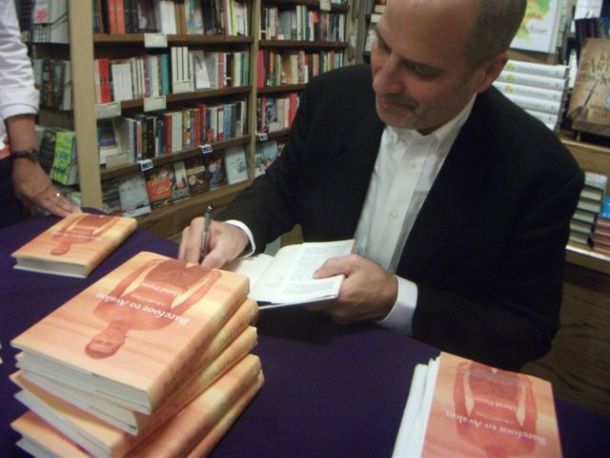
Payne’s resulting book, “Barefoot to Avalon: A Brother’s Story,” was recently released by Atlantic Monthly Press and just named a nominee for the Pat Conroy Southern Book Prize.
“I don’t want you writing about this,” he quotes his mother early in the 304-page hardcover. But by the acknowledgments at the end, he recognizes her eventual support, as well as that of his former wife, his children and the new love of his life.
“Can I move forward without any anxiety?” he says when asked if he’s at peace. “I wouldn’t go that far. But this book was a cathartic experience. I’m in a good place.”
One, like a lotus, that sprouts from the murkiest of depths.
“It’s taken me a lifetime to get here, and the strange thing is this truth which I resisted longest and found most shaming feels like my treasure, a jewel, if a dark one,” he concludes in his book. “I wanted others to see the brightness in me, the goodness and commitment, but the darkness is what changed me. The dark jewel comes out of the mud and is mud in substance and by unbearable heat and pressure the mud is turned to consciousness, and consciousness to spirit. And maybe that is what we’re here for.”
